
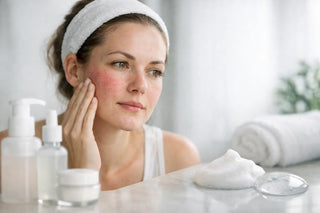
Rosacea rarely tolerates guesswork. Skin that feels calm one week can suddenly react to a new texture, fragrance or active ingredient the next, which is why finding the best cleanser for rosacea is less about trends and more about precision. A good formula should remove daily build-up without leaving the skin hot, tight or visibly more flushed than before.
What makes the best cleanser for rosacea?
Rosacea-prone skin is typically defined by sensitivity, but that word can be too vague to be useful. In practice, the skin barrier is often more reactive, more prone to water loss and less tolerant of common triggers such as fragrance, alcohol-heavy formulas, harsh surfactants and over-cleansing. The best cleanser for rosacea respects that reality.
That usually means a low-foaming or non-foaming texture, a short and sensible ingredient list, and a formula designed to support the skin barrier rather than challenge it. Cream cleansers, milk cleansers and gentle gel-cream textures tend to be more suitable than strongly foaming washes. Cleansing oils can work beautifully for some, particularly if make-up or SPF needs to be removed, but they must rinse cleanly and avoid essential oils or perfumed components that can provoke stinging.
It is also worth separating cleansing performance from the feeling of cleanliness. Many people associate a foam-rich wash or a squeaky finish with efficacy. For rosacea, that sensation is often a warning sign. Skin should feel comfortable after cleansing, not stripped.
Ingredients to look for and ingredients to approach carefully
Barrier-supportive ingredients are usually a wise place to start. Glycerin, ceramides, squalane, colloidal oatmeal, panthenol and niacinamide are all commonly found in gentle cleansers designed for reactive skin. These ingredients do not need to make a dramatic promise. Their value lies in reducing the chance that cleansing itself becomes a trigger.
Niacinamide can be particularly helpful because it supports barrier function and may help reduce visible redness over time. That said, some very reactive skins do better with simpler formulas first, especially during a flare. More ingredients are not always better.
On the other side, fragrance is one of the most common issues. This includes both synthetic fragrance and natural essential oils. Natural is not automatically gentler, and citrus oils, mint and eucalyptus can be especially problematic for rosacea-prone complexions. High levels of denatured alcohol, strong acids in rinse-off cleansers and aggressive exfoliating beads are also worth avoiding.
Sulphates are not universally unsuitable, but stronger surfactants can be too much for skin that is already prone to burning or flushing. If a cleanser leaves the face tight within minutes, it is probably not the right fit, however elegant the packaging or premium the positioning.
If you plan to introduce active ingredients alongside your cleanser, our active skincare ingredients guide can help you choose carefully.
Choosing by skin type, not just by diagnosis
Rosacea does not present in the same way for everyone. One person may struggle with persistent redness and dryness, while another deals with papules, oiliness and sensitivity at the same time. The right cleanser depends on those details.
If your skin feels dry, warm and easily irritated, a cream or lotion cleanser is often the most reliable option. These formulas tend to cushion the skin as they cleanse and are less likely to disturb an already fragile barrier. They can be particularly useful in colder weather, after in-clinic treatments or during a flare.
If your skin is combination or oilier, a lightweight milk or gentle gel cleanser may feel more comfortable than a rich cream. The key is to choose one that removes excess oil without pushing the skin into rebound sensitivity. Rosacea and oiliness can coexist, and using an overly drying cleanser to chase shine usually worsens matters.
If you wear long-wear make-up or generous daily SPF, a two-step evening cleanse may help, but only if both products are gentle. A mild cleansing balm or oil followed by a non-foaming cleanser can be effective. Rubbing with a flannel, repeated cleansing or using very hot water defeats the point.
Texture matters more than many people realise
Consumers often focus on ingredients first, but texture is just as revealing. A cleanser that glides easily, rinses without residue and does not require vigorous massage is usually preferable for rosacea-prone skin. Mechanical friction can aggravate redness even when the formula itself is well designed.
Cream cleansers are often ideal for very sensitive or mature skin because they combine comfort with adequate cleansing. Milk cleansers offer a lighter version of that experience and can suit those who dislike anything too rich. Micellar waters can be useful in certain circumstances, particularly for a quick morning cleanse, but they should not always be left sitting on highly reactive skin unless the formula is specifically well tolerated. Many people with rosacea do better when they rinse micellar products away.
Foaming cleansers are not automatically excluded, but they need careful scrutiny. A soft, low-lather foam can be acceptable. A dense or squeaky-clean finish usually is not.
How to test a new cleanser when your skin reacts easily
Introducing a new cleanser should be handled with the same care as introducing a serum. Patch testing along the jawline or behind the ear for several days is sensible, especially if your rosacea is active. If there is stinging, persistent heat or visible worsening, stop early rather than trying to push through.
It can also help to change one product at a time. If you start a new cleanser alongside a retinoid, exfoliant or treatment cream, it becomes difficult to know what is actually responsible for any reaction. Rosacea management is often a process of removal and refinement rather than adding more.
When testing, pay attention to the ten minutes after cleansing. Immediate comfort matters. So does how your skin behaves later in the day. A cleanser may feel pleasant at first but still leave the complexion drier and more reactive by afternoon.
Common mistakes when shopping for the best cleanser for rosacea
One of the most frequent errors is buying according to redness claims alone. Packaging that promises calming, anti-redness or sensitive-skin benefits can still contain fragrance, exfoliating acids or a surfactant system that is too assertive. The formulation matters more than the marketing language.
Another mistake is over-cleansing. Many rosacea sufferers do well with a simple rinse or very gentle cleanse in the morning, followed by a more thorough but still mild cleanse in the evening. Washing repeatedly throughout the day, particularly after every flush, can increase irritation.
There is also a tendency to assume that expensive always means better. At a premium retailer such as John Bell & Croyden, curation matters because quality should reflect thoughtful formulation, not just prestige. The best cleanser for rosacea is the one that your skin can use consistently without protest.
When a cleanser should do less
A cleanser does not need to treat rosacea directly to be the right choice. In fact, many of the best options are deliberately understated. Their role is to cleanse effectively while protecting the skin barrier and preparing the complexion for the rest of the routine.
This is where restraint becomes valuable. A cleanser packed with exfoliating acids, active botanicals and resurfacing claims may sound impressive, but rosacea-prone skin often benefits more from a formula that simply cleans well and leaves the barrier intact. Treatment steps can then be considered separately, ideally with professional guidance where needed.
A simple routine around your cleanser
Even the gentlest cleanser can struggle if the wider routine is working against it. Lukewarm water is preferable to hot. Pat the skin dry rather than rubbing. Follow promptly with a moisturiser that supports the barrier, and use broad-spectrum SPF daily, as UV exposure is a common trigger for rosacea.
If your skin is flaring, it can be wise to scale back to essentials for a period: cleanser, moisturiser and sunscreen. That pause often makes it easier to identify whether a cleanser is genuinely suitable or merely less irritating than the product before it.
For persistent redness, visible capillaries, papules or ongoing discomfort, it is worth seeking advice from a GP, pharmacist or dermatologist. Rosacea is manageable, but it can overlap with other concerns, and what looks like sensitivity is not always straightforward.
The best cleanser for rosacea is rarely the most dramatic product on the shelf. It is the one that leaves the skin settled, balanced and ready for the day ahead - a quiet standard of performance that, over time, makes every other step in your routine easier.