
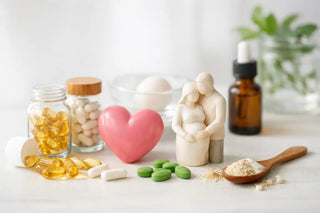
Trying to conceive often begins long before a positive test. For many couples and individuals, the search for the best supplements for fertility starts at the point where lifestyle, nutrition and timing all deserve closer attention. Supplements cannot replace medical care or guarantee pregnancy, but the right nutritional support can help address common gaps and create a stronger foundation for reproductive health.
What to know before choosing the best supplements for fertility
Fertility is rarely shaped by a single factor. Age, underlying health conditions, menstrual regularity, sperm quality, thyroid function, stress, body weight, sleep and alcohol intake can all play a part. That is why supplement choices should be thoughtful rather than excessive.
A well-chosen fertility supplement routine tends to focus on nutrients with a clear physiological role in hormone production, egg and sperm development, ovulation, implantation support and early fetal growth. It is also worth remembering that needs differ. A woman preparing for pregnancy has different priorities from a man looking to support sperm motility, and someone with polycystic ovary syndrome may benefit from a different approach again.
The most sensible starting point is usually a high-quality preconception formula, then targeted additions where there is a known need. Premium formulations can be especially helpful here, as they often provide more considered dosing, better nutrient forms and fewer unnecessary extras.
The nutrients most often prioritised
Folic acid and methylfolate
Folate is the cornerstone of preconception nutrition. It supports cell division and is essential in the earliest stages of pregnancy, often before someone realises they have conceived. In the UK, women trying to conceive are generally advised to take 400µg of folic acid daily up to the 12th week of pregnancy, though some may be advised to take a higher dose under medical supervision.
Some supplements use methylfolate, an active form of folate, which may suit certain individuals, although it is not automatically better for everyone. The most important point is consistency and an appropriate dose.
Vitamin D
Vitamin D deserves attention in fertility support, particularly in the UK where low levels are common. It plays a role in hormone regulation, immune function and reproductive health in both women and men. Deficiency may be associated with poorer fertility outcomes, though supplementation is most useful when it corrects an actual shortfall.
For people trying to conceive, vitamin D is often included within a preconception formula, but separate supplementation may be appropriate depending on current intake and test results.
Zinc
Zinc is involved in cell division, DNA synthesis and reproductive hormone function. For men, it is often discussed in relation to sperm count and quality. For women, it supports general reproductive health and is frequently included in fertility-focused multi-nutrients.
As with many minerals, more is not necessarily better. Long-term high-dose zinc can affect copper balance, so a measured formula is preferable to self-prescribing large amounts.
Selenium
Selenium supports antioxidant defence and thyroid health, both of which can influence fertility. In men, it is commonly included in formulations aimed at sperm motility. In women, it may be useful where thyroid function is under review, though supplementation should stay within safe limits. Also, Selenium contributes to normal thyroid function and antioxidant protection, but supplementation should remain within recommended levels and may not be appropriate for everyone with thyroid conditions.
Iodine
Iodine is essential for healthy thyroid hormone production, and thyroid health matters greatly in conception and pregnancy. A preconception supplement may include iodine, but not everyone should take it automatically. Those with known thyroid disorders should check with a GP, pharmacist or specialist before adding it.
Omega-3 fatty acids
Omega-3s, especially DHA and EPA, are often chosen for their role in cell membrane function, inflammation regulation and fetal brain development. They are not a universal fix, but they can be a useful part of wider preconception support, particularly if oily fish intake is low.
Quality matters with fish oil. Look for a reputable source with good purity standards and clearly stated DHA and EPA content.
Best supplements for fertility in women
For women, the priority is usually a well-designed preconception supplement that includes folate, vitamin D and selected minerals at sensible levels. This creates a reliable nutritional base without asking you to manage six separate bottles.
There are, however, a few targeted additions that may be considered depending on individual circumstances.
Coenzyme Q10
CoQ10 is frequently discussed in relation to egg quality, particularly for women in their mid-thirties and beyond. The reasoning is linked to mitochondrial function, which supports energy production within cells, including eggs. Evidence is still evolving, and CoQ10 is not a guaranteed route to better fertility, but it is a commonly selected nutrient in more advanced preconception routines.
Myo-inositol
Myo-inositol may be especially relevant for women with polycystic ovary syndrome or irregular ovulation. It is often used to support insulin sensitivity and menstrual regularity, which can in turn improve ovulatory function. This is an area where targeted supplementation can make more sense than a general fertility blend alone.
Iron and B vitamins
If periods are heavy, iron status may be worth reviewing. Low iron can affect general wellbeing, energy and pregnancy readiness. B12 and other B vitamins may also matter, especially for those following plant-based diets. These nutrients are often present in preconception formulas, but individual testing can guide whether further support is needed.
Best supplements for fertility in men
Male fertility is sometimes treated as an afterthought, yet sperm health is a major part of the picture. Sperm take around three months to develop, so any supplement routine should be given time before expectations are judged.
Men’s fertility formulations often centre on zinc, selenium, vitamin C, vitamin E, folate, CoQ10 and sometimes L-carnitine. The aim is usually to support antioxidant protection, sperm motility and normal reproductive function.
Antioxidants
Oxidative stress can affect sperm quality, which is why antioxidants feature so prominently in male fertility supplements. Vitamin C, vitamin E, selenium and CoQ10 are common choices. That said, piling together multiple antioxidant products can become excessive. A single, considered formula is usually the more elegant approach.
L-carnitine and CoQ10
These ingredients are often selected for motility support. They are not essential for everyone, but where sperm motility is a known concern, they may be included in specialist formulations. Again, this is best done with some guidance rather than guesswork.
How to choose a fertility supplement well
The strongest fertility supplements are not always the ones with the longest ingredient list. A better test is whether the formula is coherent. Does it provide evidence-backed nutrients in useful amounts? Are the ingredient forms clearly stated? Is it designed for women, men or shared preconception support? Does it duplicate other products you are already taking?
For many shoppers, quality and curation matter as much as ingredients. A trusted pharmacy and wellbeing retailer such as John Bell & Croyden offers an advantage here, because the product selection tends to be more deliberate, with less room for trend-led excess and more focus on formulations that justify their place.
It is also worth checking whether a supplement is suitable during pregnancy, not just before it. Some fertility-focused products are intended only for the conception stage and should be switched once pregnancy is confirmed.
Energy, nutrition and absorption all influence fertility. Our guide to energy support supplements provides additional context.
When supplements may not be enough
Supplements can support fertility, but they should not delay proper assessment. If you are under 35 and have been trying for a year without success, or over 35 and have been trying for six months, it is sensible to seek medical advice. Earlier support is also wise if periods are absent or very irregular, there is known endometriosis or PCOS, there has been previous miscarriage, or there are concerns about sperm health.
A few cautions matter here. High-dose vitamin A should be avoided when trying to conceive unless specifically prescribed. Herbal fertility products may sound appealing but can be less predictable, especially alongside prescribed medicines. And if you have a thyroid condition, take anticoagulants, or are undergoing fertility treatment, supplement choices should be checked professionally.
The role of diet and routine
While fertility supplements may provide support, they are most effective when combined with strong foundational health habits. Research shows that reproductive health is influenced by overall lifestyle factors, including a balanced and varied diet, adequate protein intake, healthy fats, stable blood sugar regulation, sufficient sleep, moderate caffeine consumption, and limiting or avoiding alcohol.
For men, stopping smoking and reducing exposure to excessive heat, such as frequent hot tubs, saunas, or prolonged heat around the groin area may help support sperm health. For women, accurately tracking menstrual cycles and ovulation patterns can often provide more meaningful insights into fertility than relying solely on additional supplements.
Optimising these core health behaviours can play an important role in supporting natural fertility for both men and women.A refined supplement strategy is therefore not about taking every product available, but about understanding what is foundational, what should be targeted to individual needs, and what may be unnecessary.
The most helpful approach is often the least dramatic: begin with a strong preconception formula, add only what suits your circumstances, and give the process enough time to work alongside the rest of your health routine. Fertility support is rarely about one miracle ingredient. It is about choosing carefully, staying consistent and knowing when expert advice should lead the way.