
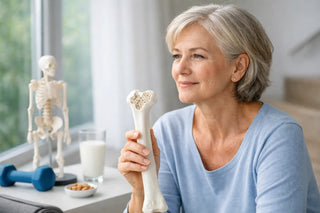
A broken wrist after a minor fall, a gradual loss of height, or a new stoop can feel like isolated changes. They may, however, be signs that deserve attention. Bone health after menopause is a long-term consideration, not simply a question of adding one supplement to a daily routine. The years around and after menopause are a valuable time to understand your individual risk and build habits that support strength, balance and independence. For the wider picture of this stage, our practical guide to menopause and perimenopause sets out the full context; this article focuses on protecting your bones.
Oestrogen has a protective role in keeping bone breakdown and renewal in balance. When levels fall after menopause, bone loss can accelerate, particularly in the first few years. This does not mean osteoporosis is inevitable, nor that healthy bones can only be supported through medical treatment. It does mean that a considered approach - combining food, movement, lifestyle choices and, where appropriate, clinical assessment - is worthwhile.
For most women, protecting bone health involves four key areas: understanding personal risk, eating well, staying active and seeking treatment when needed.
Why bone health changes after menopause
Bone is living tissue. Throughout life, old bone is broken down and new bone is formed. After menopause, the rate of breakdown can outpace replacement, leaving bones less dense and more fragile over time. Osteoporosis is often called a silent condition because it may cause no symptoms until a fracture occurs.
Age is only one part of the picture. A parent who had a hip fracture, an early menopause, low body weight, smoking, drinking more alcohol than recommended, long-term steroid treatment and conditions that affect nutrient absorption can all raise risk. Rheumatoid arthritis, coeliac disease and an overactive thyroid are among the health conditions that may also be relevant.
It is also worth remembering that a fracture following a fall from standing height, or less (sometimes called a fragility fracture), should not be dismissed as bad luck. A wrist, shoulder, spine or hip fracture can be a prompt to ask for a bone health assessment.
Assess your personal risk rather than guessing
A GP can consider your medical history, medicines, family history and lifestyle, and may use a fracture-risk assessment to estimate your likelihood of a fracture over the next decade. If indicated, they may arrange a DEXA scan. This low-dose X-ray measures bone mineral density, usually at the hip and lower spine, and helps guide decisions about monitoring or treatment.
Not everyone needs a scan at the same age. It depends on your risk factors and whether the result would change what happens next. Do not wait for a scan to start supporting your health, but avoid self-diagnosing osteoporosis from symptoms alone. Back pain and loss of height have many possible causes and need proper assessment.
Speak to your GP promptly if you have had a low-impact fracture, have lost noticeable height, developed a curved upper back, or have been taking oral corticosteroids for three months or longer.
While assessment helps identify people who may need monitoring or treatment, everyday habits remain important for everyone. Nutrition, movement and lifestyle choices all contribute to long-term bone health.
Build meals around calcium, protein and variety
Calcium is needed for the maintenance of normal bones, and it is the mineral most associated with skeletal health. UK guidance for adults generally recommends 700mg of calcium a day, and many people can meet this through a varied diet. Dairy foods such as milk, yoghurt and cheese are useful sources. Fortified plant drinks can be an alternative, but check the label: not every oat, almond or soya drink contains added calcium, and the calcium can settle at the bottom of the carton.
Other useful choices include calcium-set tofu, tinned sardines or salmon with bones, leafy green vegetables, sesame and tahini, beans and fortified breakfast cereals. Absorption differs between foods, so dietary variety is more useful than relying on one supposedly perfect ingredient.
Protein is sometimes overlooked in discussions of bone health after menopause. Adequate protein helps preserve muscle, which supports bones and reduces the likelihood of a fall. Include a source at each meal where possible, such as eggs, fish, poultry, yoghurt, lentils, beans, tofu or lean meat. For people eating less with age, recovering from illness or following a restrictive diet, this deserves particular attention.
Calcium supplements can be helpful when food intake is consistently low, but more is not automatically better. High-dose supplements may not suit everyone, especially people with a history of kidney stones or certain kidney conditions or those taking medicines that may affect calcium balance. A pharmacist or GP can help determine whether a supplement is appropriate and whether the dose complements, rather than duplicates, your diet.
Vitamin D is a practical priority in the UK
Vitamin D contributes to the normal absorption and use of calcium and to the maintenance of normal bones and muscle function. In the UK, sunlight is not usually strong enough for the skin to make sufficient vitamin D from October to March. Public health guidance advises adults to consider a daily 10 microgram vitamin D supplement during autumn and winter, and throughout the year for people with very little sun exposure, darker skin, or who cover most of their skin outdoors. Some people may already be taking prescribed vitamin D following investigation of a deficiency and should follow the advice of their clinician rather than increasing doses independently. If you take regular prescription medicines, a pharmacist or GP can advise whether vitamin D supplements are appropriate alongside your treatment.
Some people need a different dose following a blood test or because of a diagnosed deficiency. Avoid taking multiple products that contain vitamin D without checking the combined amount. Multivitamins, bone formulas and cod liver oil may all contribute. Cod liver oil also contains vitamin A, which should not be taken in high amounts over long periods without professional advice.
Nutrition is only one part of protecting your bones. Regular movement provides a different type of stimulus that helps maintain strength and stability.
Choose movement that asks something of your bones
Bones respond to load. Walking is an excellent foundation for cardiovascular health, mood and mobility, but it may not be enough on its own to maintain bone density in higher-risk areas. The most effective routine is one you can sustain safely and enjoy.
Weight-bearing exercise, central to bone health, includes brisk walking, stair climbing, dancing, tennis and jogging. The right level depends on current fitness, joint health and fracture risk. If you have osteoporosis or have experienced vertebral fractures, high-impact exercise and movements involving repeated, forceful spinal bending or twisting may need modifying. A physiotherapist or qualified exercise professional with osteoporosis knowledge can offer tailored guidance.
Strength training is equally valuable. Resistance bands, free weights, weight machines and bodyweight exercises can help maintain the muscles that pull on and support bone. Aim to work major muscle groups on two or more days each week, progressing gradually and prioritising good technique.
Balance deserves its own place in the plan. Tai chi, yoga adapted to your needs, single-leg standing near a stable support, and strength exercises that challenge the legs can all help reduce falls risk. If you feel unsteady, have poor vision or take medicines that make you dizzy, speak with a healthcare professional rather than simply pushing through.
The overlooked elements: smoking, alcohol and falls prevention
Stopping smoking is one of the most meaningful lifestyle changes for bone health as well as heart and lung health. Alcohol also has a place in the conversation. Keeping within the UK's recommended limit of no more than 14 units a week, spread across three or more days, is a sensible ceiling for most adults. Regularly exceeding this can affect bone strength and increase the chance of falls.
Falls prevention is not a concession to ageing. It is practical risk management. Have your eyesight checked, wear supportive footwear, improve lighting on stairs and remove loose rugs or trailing cables. If you have had falls, feel faint when standing, or notice dizziness after a medicine change, seek advice. These small adjustments can be as protective as any nutrient.
When treatment may be part of the answer
Lifestyle measures can make a meaningful difference, but they are not always enough on their own. Some women may also benefit from medical treatment to reduce fracture risk.
If a DEXA scan and fracture-risk assessment show osteoporosis or a high fracture risk, a clinician may discuss prescription treatment to slow bone loss or strengthen bones. The choice depends on your fracture history, kidney function, other conditions and personal preferences.
Menopausal hormone therapy may also help prevent bone loss for some women, particularly when it is being considered for menopausal symptoms. It is not suitable for everyone, and its benefits and risks should be reviewed individually with a clinician. Do not start or stop prescribed treatment on the basis of a supplement label or a general health article.
A thoughtful routine now can make a material difference later. Choose one action this week - book the conversation you have been putting off, add resistance work to your diary, or review whether your vitamin D intake suits the season - and let that be the beginning of a more confident approach to your future strength.