
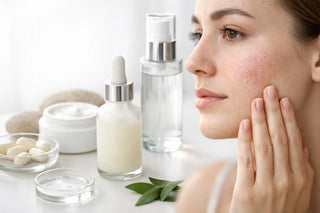
When skin suddenly feels tight after cleansing, looks oddly shiny yet rough, or starts reacting to products it once tolerated well, the barrier is often the first thing to consider. In that context, ceramides for damaged barrier support are not a trend-led extra. They are one of the most credible, well-established ingredients for helping skin feel calm, comfortable and properly resilient again.
What a damaged skin barrier actually means
The skin barrier is the outermost layer of the epidermis, often described as a brick-and-mortar structure. The skin cells are the bricks, while lipids such as ceramides, cholesterol and fatty acids form the mortar that helps hold everything together. When that structure is intact, it helps keep moisture in and irritants out.
When it is disrupted, skin can lose water more quickly and become more vulnerable to friction, weather, over-cleansing and active ingredients. That is when you may notice dryness, flaking, stinging, redness, rough texture or a sudden increase in sensitivity. Some people also experience breakouts at the same time, which can make a compromised barrier easy to misread.
Barrier damage is not always dramatic. Sometimes it is the cumulative result of using too many exfoliating acids, retinoids and strong cleansers at once. Sometimes it follows cold weather, indoor heating, travel, illness or naturally dry skin. The common thread is that skin is no longer functioning as efficiently as it should.
Why ceramides for damaged barrier care matter
Ceramides are lipids that occur naturally in the skin. In healthy skin, they make up a significant portion of the barrier and help prevent transepidermal water loss. Put simply, they are part of what keeps skin cushioned, hydrated and less reactive.
In skincare, ceramides are used to replenish what stressed or dry skin may be lacking. They do not work in isolation as a miracle fix, but they do support the barrier in a way that is both sensible and evidence-led. That is precisely why they are so widely recommended by dermatologists and pharmacists for dry, sensitive and overtreated skin.
The immediate benefit is often comfort. Skin feels less tight, less raw and more supple. Over time, with consistent use, ceramide-rich formulas can help improve softness, reduce visible flaking and make skin more tolerant of the rest of a routine.
That said, not every barrier issue is solved by ceramides alone. If skin is inflamed, infected or affected by an underlying condition such as eczema or rosacea, a broader treatment approach may be needed. Ceramides are supportive, not universally curative.
How ceramides work in a routine
Ceramides are most effective when they are part of a formula designed to support barrier function as a whole. You will often see them paired with cholesterol, fatty acids, glycerin, hyaluronic acid, squalane or soothing ingredients such as colloidal oatmeal and panthenol. This combination tends to make sense because barrier repair is not only about replacing one missing component. It is about creating the right environment for skin to retain moisture and recover.
Texture also matters. A lightweight ceramide serum may suit skin that is dehydrated but still combination or blemish-prone. A richer cream or balm may be more appropriate for skin that feels persistently dry, flaky or vulnerable after retinoids or winter weather. Neither is automatically better. The right choice depends on how compromised the skin feels and what it will realistically tolerate twice a day. If you are interested in using or are already using retinoids, read our guide to Retinol for Sensitive Skin.
There is also a practical point worth making. Ceramides are rarely dramatic overnight ingredients. Their strength lies in consistency. If your skin barrier is damaged, the most effective routine is usually the least complicated one.
What to use alongside ceramides
A well-chosen ceramide product works best in a routine that stops adding stress. Start with a gentle cleanser, preferably one that does not leave skin squeaking or tight. Follow with a ceramide-focused moisturiser or serum, then use a broad-spectrum SPF during the day. In the evening, the same barrier-supportive moisturiser can be enough for many people.
If skin is very dry, applying moisturiser to slightly damp skin can help trap water more effectively. In some cases, an occlusive layer on top, such as a balm, can provide extra protection overnight. This tends to be especially useful in cold weather or after accidental overuse of exfoliants.
Humectants can also be helpful. Ingredients such as glycerin and hyaluronic acid draw in water, while ceramides help keep that moisture in place. Used together, they can be particularly beneficial for skin that feels both dehydrated and fragile.
Niacinamide is another ingredient that often pairs well with ceramides, as it can support barrier function and help reduce redness. Even so, strength matters. If your skin is already stinging, a simpler formula may be wiser than a highly active serum, however well formulated it may be.
Ingredients like ceramides are often used to support the skin barrier, especially when incorporating active ingredients into your routine. To understand how different ingredients work together, see our guide to active skincare ingredients and how they work together.
What to avoid while your barrier recovers
If the barrier is compromised, restraint matters as much as product choice. Strong exfoliating acids, retinoids, abrasive scrubs and foaming cleansers can all prolong irritation if introduced too aggressively or layered without care. Fragrance is not an automatic problem for everyone, but highly sensitised skin often does better with less potential for irritation.
This is where many routines become counterproductive. Someone notices dryness or breakouts, adds more actives to correct the problem, and ends up with angrier skin. A damaged barrier generally responds better to simplification than escalation.
It is also sensible to watch water temperature and cleansing habits. Very hot water and repeated washing can worsen dryness, especially on already vulnerable skin. The same applies to frequent sheet masks, peel pads or trend-driven multi-step routines that sound sophisticated but leave skin overwhelmed.
How to choose ceramides for damaged barrier support
The label matters less than the overall formulation. A product that highlights ceramides but sits in an alcohol-heavy or overly active formula may not be ideal for genuinely sensitised skin. Look instead for barrier-focused moisturisers, creams and serums that are designed for dryness, sensitivity or post-treatment recovery.
For reactive skin, cream textures are often the safest starting point. They tend to be straightforward, easy to layer and less likely to contain unnecessary extras. For oily or congestion-prone skin, gel-cream or lotion textures with ceramides can offer support without feeling overly rich.
Packaging has a role too. Airless pumps and tubes can help preserve formula stability and are often more hygienic than repeatedly dipping into a jar, though a jar is not inherently problematic if the product suits your skin and is used sensibly.
At John Bell & Croyden, this is often where curation matters most. Shoppers are not simply looking for a fashionable ingredient. They are looking for formulas that balance efficacy, skin tolerance and texture in a way that feels considered.
How long do ceramides take to work?
Some improvement in comfort can happen quickly, sometimes within a few days. Skin may feel less tight, look less flaky and become easier to cleanse and moisturise without stinging. More meaningful recovery usually takes longer, often a few weeks of a very steady routine.
If there is no improvement after that, it is worth reconsidering the wider routine. The issue may be ongoing irritation from another product, environmental stress, over-cleansing or a skin condition that needs more specific care. Persistent redness, cracking, weeping or burning should not be ignored.
Are ceramides suitable for every skin type?
Broadly, yes. Dry and sensitive skin benefit most obviously, but ceramides can also be useful for oily, blemish-prone and mature skin. Barrier disruption does not only happen to visibly dry skin, and many people using acne treatments or retinoids need barrier support even if they still produce excess oil.
The main variable is formulation. A very rich ceramide cream may feel excellent on mature or dry skin and too occlusive for someone who prefers lighter textures. That does not mean ceramides are wrong for them. It means the vehicle should change.
There is also a difference between supporting the barrier and treating every skin concern at once. If your priority is pigment, acne or fine lines, ceramides may not be the headline act. Even so, they often make those active-led routines more tolerable and therefore more sustainable.
Healthy skin is rarely the result of doing more. More often, it comes from knowing what skin needs, what it does not, and when to let a quiet, well-formulated product do its work.