
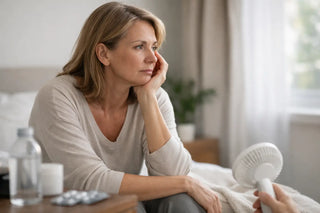
Changes in your periods, sleep, mood or temperature regulation can sometimes be among the earliest signs of perimenopause. Perimenopause: early signs and what helps is a useful conversation to have early, because symptoms can begin gradually and vary considerably from one person to another. For the wider picture, including treatment options, our practical guide to menopause and perimenopause sets out the full context.
Perimenopause is the transition before menopause, when the ovaries begin producing hormones less consistently. It commonly starts in the forties, though it may begin earlier or later. Menopause is reached after 12 consecutive months without a period; until then, fluctuating hormone levels can affect cycles, temperature regulation, mood, skin and more.
There is no single test that can neatly confirm perimenopause for everyone. Your age, changing periods and wider symptoms often provide a clearer picture than a one-off hormone blood test, since levels can shift from day to day. A GP, pharmacist or menopause specialist can help you consider what is happening and which support is appropriate.
Perimenopause early signs to look out for
A change in periods is often the first clue. Cycles may become shorter or longer, bleeding may be lighter or heavier, or periods may occasionally be missed. Some people notice only minor alterations at first; for others, the shift is more pronounced.
Hot flushes and night sweats are among the best-known symptoms. A flush can bring a sudden feeling of heat, sweating, a faster heartbeat and facial redness. At night, this may interrupt sleep and leave you fatigued the following day. Not everyone has flushes, and their frequency and intensity can change over time.
Sleep difficulties may occur even without night sweats. You might wake more often, struggle to return to sleep or find that sleep no longer feels restorative. As tiredness builds, concentration, patience and energy can understandably feel in shorter supply.
Mood changes are also common. Some people experience heightened anxiety, irritability, low mood or a sense that their usual resilience has dipped. Brain fog - such as forgetting words, losing a train of thought or finding multitasking harder - can be particularly frustrating for busy professionals and carers. These symptoms are real, but they can have several causes, so they deserve considered support rather than dismissal.
Physical changes can include headaches, palpitations, joint or muscle aches, vaginal dryness, reduced libido and urinary discomfort. Skin may feel drier or more reactive, while changes in collagen can make fine lines appear more noticeable. Hair can also feel less full or become more prone to shedding. None of these symptoms automatically means perimenopause, but their timing and pattern are worth discussing with a healthcare professional.
What helps during perimenopause?
The most effective approach is individual. Your symptoms, medical history, priorities and whether you need contraception all matter. For some, a few practical adjustments make a meaningful difference. For others, prescribed treatment is the most appropriate and effective route.
Start by tracking the pattern
Keeping a simple record of periods, sleep, flushes, mood, headaches and any triggers can bring clarity. Note how often symptoms occur, how much they affect daily life and whether they relate to alcohol, caffeine, stress, meals or particular points in your cycle.
This record is useful when speaking with a GP or menopause clinician. It can also help distinguish a passing difficult week from a pattern that merits treatment. If pregnancy remains possible, remember that irregular periods do not necessarily mean contraception is no longer needed. Pregnancy can still occur during perimenopause. Continue using contraception until advised otherwise by a healthcare professional.
Protect sleep and temperature comfort
A cool, calm bedroom can make a practical difference where night sweats or overheating are an issue. Lightweight, breathable nightwear and layered bedding make it easier to adjust without fully waking. A consistent wind-down routine, limiting late caffeine and keeping alcohol modest can also support better sleep, though these changes will not resolve every hormone-driven symptom.
Some people choose to discuss sleep supporting supplements with a pharmacist. These should not be viewed as a treatment for hormone-related symptoms, but may form part of a wider conversation about sleep and wellbeing.
For some people, alcohol, spicy food, hot drinks and smoking make flushes more likely. Rather than restricting everything pre-emptively, use your symptom record to identify your own patterns. The aim is realistic comfort, not perfection.
Eat and move for long-term health
Perimenopause is a valuable point to revisit the foundations: regular meals, adequate protein, fibre-rich foods, fruit and vegetables, and sources of calcium and vitamin D. These habits support general health and bone health in particular, as bone and cardiovascular risks change with age.
Weight-bearing and resistance exercise support bone strength and muscle mass, while walking, swimming, cycling or other aerobic activity can benefit mood, sleep and heart health. Choose movement you can sustain. An ambitious routine that lasts two weeks is less helpful than one that becomes part of ordinary life.
If your diet is restricted, you have little sun exposure, or you are concerned about specific nutritional needs, a pharmacist or clinician can advise whether a targeted vitamin or mineral supplement is suitable. Supplements marketed for menopause may support nutritional intake, but they should not be presented as a replacement for assessment or treatment of significant symptoms.
Care for vaginal, bladder and skin changes
Vaginal dryness, discomfort during sex and recurrent urinary symptoms are common, yet often under-discussed. Regular use of a vaginal moisturiser can help maintain comfort, while a water-based lubricant may be useful during sex. Local vaginal oestrogen is a prescription treatment that can be highly effective for vaginal dryness and related urinary symptoms. A GP or prescribing pharmacist can advise on suitability.
For drier or more sensitive skin, simplify your routine. A gentle cleanser, a nourishing moisturiser and daily broad-spectrum SPF can support the look of the skin barrier. Where pigmentation, acne, redness or pronounced sensitivity appears, introduce active skincare carefully rather than adding several new products at once. This makes it easier to see what your skin tolerates.
Consider medical treatment without delay or stigma
Hormone replacement therapy, often called HRT, can be an effective treatment for troublesome perimenopausal symptoms, including flushes, sweats, sleep disruption and vaginal symptoms. It is available in several forms, including patches, gels, sprays and tablets. The best option depends on your symptoms, medical history and preferences.
HRT is not right for everyone, and the balance of benefits and risks should be discussed personally with a qualified prescriber. Some people cannot take it or prefer not to. In those cases, non-hormonal prescription options and tailored lifestyle support may still help. The key point is that you do not have to simply tolerate symptoms that are affecting work, relationships, confidence or quality of life.
At John Bell & Croyden, a pharmacist can be a helpful first point of contact for practical guidance on everyday wellbeing, intimate comfort, sleep-supporting routines and skincare choices alongside your wider care plan.
When to speak to your GP
Book an appointment and seek support early if symptoms of low mood, anxiety or changes in confidence are becoming difficult to manage, affecting your mental wellbeing, or leaving you exhausted. It is also sensible to seek advice if you are under 45 and think you may be perimenopausal. If you are under 40 and your periods have become irregular or stopped, further assessment may be recommended, including consideration of premature ovarian insufficiency (POI).
Do not assume that all bleeding changes are hormonal. Speak to a GP promptly if bleeding is very heavy, happens between periods or after sex, or if you bleed after having gone 12 months without a period. New chest pain, severe breathlessness, fainting, or palpitations with concerning symptoms need urgent medical assessment.
Perimenopause can be a period of change, but it need not become a period of uncertainty. Notice what is different, seek properly tailored advice and give yourself permission to choose support that makes daily life feel more like your own again.