
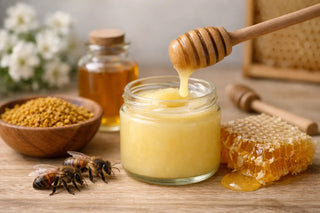
A queen bee is not born remarkable - she is fed differently. While every larva in the hive tastes a little royal jelly at first, only the future queen is fed it exclusively, throughout her development - and she grows far larger than the workers around her and lives dramatically longer. That single, striking difference in diet has made royal jelly a subject of fascination in traditional wellness for centuries. Here, royal jelly explained means looking beyond the queen-bee story to understand what it contains, what research can and cannot say, and who should approach it with care.
What is royal jelly?
Royal jelly is a thick, pale, slightly acidic secretion made by young worker honeybees. Bees feed it to all larvae during their first few days of development. Larvae chosen to become queens continue to receive it exclusively, while other larvae move on to a different diet.
It is not honey, pollen or propolis, though all four are bee-derived ingredients commonly found in wellness products. Honey is a carbohydrate-rich food made from nectar; pollen is collected from flowering plants; and propolis is a resinous material bees use within the hive. Our bee and hive related products range brings these together if you would like to compare them. Royal jelly is a specialised larval food, valued for its distinctive composition.
Fresh royal jelly is perishable and has a sharp, tangy taste. For this reason, it is often freeze-dried and supplied in capsules, tablets, sachets, ampoules or powders. Some formulations combine it with honey, vitamins or other bee products, so it is worth reading the full ingredient list rather than relying on the front-of-pack description alone.
Royal jelly explained: what does it contain?
Royal jelly is mostly water, alongside proteins, carbohydrates and small amounts of lipids. It also naturally contains B vitamins, minerals and a broad range of bioactive compounds. Its most discussed component is 10-HDA, short for 10-hydroxy-2-decenoic acid, a fatty acid used as a marker of royal jelly quality and authenticity.
The precise nutritional profile can vary. Bee species, forage, geography, harvesting methods, storage and whether the product is fresh or freeze-dried all affect the final composition. That variation matters when assessing research, because studies may use preparations that differ substantially from the supplement on a shelf.
Royal jelly also contains proteins known as major royal jelly proteins. These have attracted scientific attention, but a compound being biologically interesting is not the same as proving a meaningful benefit for people. A well-made supplement should state the amount of royal jelly per serving and, where relevant, whether it has been standardised for 10-HDA.
Why is it associated with vitality and skin health?
The queen bee's size, fertility and long lifespan compared with worker bees have given royal jelly a powerful wellness reputation. It is an appealing story, particularly for those interested in energy, healthy ageing and beauty from within. But human physiology is more complex than a bee colony, and the queen's development cannot be translated directly into a human health claim.
In traditional use, royal jelly has been taken as a general tonic. Modern interest often centres on skin appearance, menopausal wellbeing, energy and metabolic health. These are broad areas, and the standard of evidence differs considerably between them.
Laboratory and animal studies have identified antioxidant and anti-inflammatory activity in royal jelly constituents. Such findings can guide future research, but they do not establish that a supplement will deliver the same effects in daily life. Human trials are generally small, use different doses and formulations, and are often too limited to draw firm conclusions. The practical takeaway for a buyer is this: royal jelly does not carry authorised health claims, so any seller promising it will boost energy, slow ageing or fix a specific problem is going beyond the evidence. The traditional reputation is genuine and long-standing; proven effect claims are not. Knowing that shifts the useful question from "what will it do for me" to "how do I choose a good one".
What does the evidence suggest?
Some small clinical studies have explored royal jelly in relation to blood lipids, blood glucose, menopausal symptoms and markers associated with oxidative stress. A few suggest potential benefits, but results are inconsistent and do not support treating royal jelly as a replacement for prescribed medicines, a balanced diet or clinical advice.
For skin, royal jelly appears in both ingestible supplements and topical beauty products. As with many beauty supplements, results are likely to depend on the formula, the individual and the concern being addressed. Hydration, sun protection, a well-chosen skincare routine, sleep and nutrition remain the stronger foundations for skin health.
If you are considering royal jelly for a specific concern, it helps to set a proportionate expectation. It may be a considered addition to a wider wellbeing routine, rather than a single ingredient expected to transform energy, complexion or hormone-related symptoms. Those managing high cholesterol, diabetes or significant menopausal symptoms should speak to a GP, pharmacist or relevant clinician before changing their approach to care.
Choosing a royal jelly supplement
Product format is largely a matter of preference. Capsules are convenient and offer measured servings; powder may suit those who prefer to add supplements to food or drinks; and fresh or chilled preparations appeal to people seeking a less processed format. Fresh royal jelly requires particularly careful storage, usually refrigeration, whereas freeze-dried products tend to be more stable.
This is where a considered purchase pays off. When comparing royal jelly products, consider the daily amount provided, whether it is fresh or freeze-dried, any stated 10-HDA content, and the additional ingredients. A reputable brand is transparent about where its royal jelly comes from and how concentrated it is - fresh product kept warm on a shelf, or a label vague about quantity, is a reason for caution. A blend with honey may be pleasant to take but will have a different nutritional profile from a concentrated capsule. Those monitoring sugar intake should check sweetened liquids and spoonable preparations carefully.
Quality and traceability deserve attention. Choose products from established manufacturers that identify the ingredient clearly, provide storage guidance and avoid exaggerated therapeutic promises. As with any supplement, more is not necessarily better. Follow the labelled directions and allow time to assess whether the product suits you.
Royal jelly safety and who should avoid it
Royal jelly is not suitable for everyone. Allergic reactions can be serious, particularly in people with asthma or known allergies to bees, bee products, pollen or honey. Reactions have included wheezing, swelling, hives and, rarely, anaphylaxis.
Avoid royal jelly and seek urgent medical help if you develop breathing difficulty, throat tightness, facial swelling or widespread hives after taking it. Do not try a small amount at home to test a known bee-product allergy.
Speak to a pharmacist or clinician before using royal jelly if any of the following apply:
- You have asthma, hay fever that is severe, or an allergy to bee products, pollen or honey.
- You are pregnant, breastfeeding, or considering a supplement for a child, as safety evidence is limited.
- You take anticoagulants such as warfarin, or medicines for blood pressure or blood glucose.
- You have a long-term condition, are awaiting surgery, or are using royal jelly for a symptom that has not been medically assessed.
Royal jelly is most compelling when chosen with curiosity and discernment: a distinctive bee-derived ingredient with an intriguing history, rather than a shortcut to better health. For a premium wellness routine, select a clearly labelled product, keep expectations evidence-led and ask a pharmacist for tailored guidance where there is any uncertainty.