
The Fertility Disconnect: In Conversation with Gail Madalena, Fertility Nutritional Therapist at Wild Nutrition
More than a supplement company, Wild Nutrition is a wellness brand dedicated to supporting women through every life stage. At its heart is a more joined-up approach to wellbeing, combining science-led nutrition, expert guidance and personalised care.
It’s this perspective that shapes how the brand approaches fertility today. While fertility is often spoken about at the point of trying for a baby, the reality is, it starts much earlier.
That idea sits at the heart of The Fertility Disconnect, a new report exploring the gap between the families people hope for and the realities they face. We spoke to Gail Madalena, Fertility Nutritional Therapist at Wild Nutrition, to explore the findings.
What prompted Wild Nutrition to write The Fertility Disconnect?
Every month, we speak to hundreds of women at different stages of their fertility journeys. What’s clear is that while the desire to have children remains strong, the path to parenthood is becoming increasingly complex.
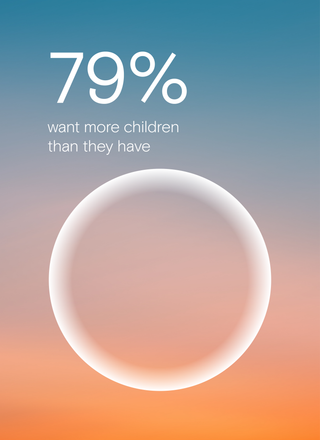
Our research shows that 79% of people want more children than they currently have, rising to 88% among those who already have one child, highlighting that this isn’t about changing desires, but the barriers people are facing.
We wanted to better understand that gap, so we brought together original data, expert insight and lived experience to create The Fertility Disconnect. We spoke to over 1,000 people who’ve tried to conceive in the last five years to understand why so many are finding it harder to build the families they envisioned.
One of the key themes is that fertility is being delayed. Is this a matter of choice?
Not entirely. It’s often assumed people are choosing to have children later, but the reality is more layered.
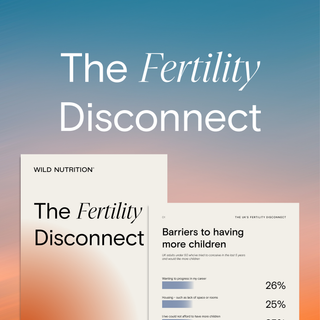
Many are navigating work pressures, financial instability or housing challenges that make earlier parenthood feel out of reach. In fact, 26% of respondents cited career progression as a barrier, with a further 25% pointing to housing affordability.
The problem is, fertility doesn’t wait. While life milestones shift, the biological clock keeps ticking. That’s where the disconnect really begins.
The report highlights that fertility starts before trying to conceive. Can you explain?
People often assume fertility begins the moment they decide to try. In reality, egg and sperm health are shaped months and years earlier.
By the time someone starts thinking about fertility, their body has already been responding to its environment for years.
Factors like nutrition, sleep, stress, hormone balance, cycle health and environmental exposures all play a role. This applies to both egg and sperm health, yet conversations still tend to focus more heavily on women. That’s why earlier awareness is so important.
Where are the biggest gaps in fertility education?
For many of us, fertility education has focused on preventing pregnancy rather than understanding it. That leaves significant gaps in body literacy.
We speak to many people who are unsure about their fertile window, unclear on how ovulation works, or unaware of factors that influence egg and sperm health. Without that foundation, it becomes much harder to make informed decisions when the time comes.
This gap is reflected in younger generations too, with 10% of Gen Z respondents telling us they know nothing about fertility.

How does this lack of awareness impact people emotionally?
It can be quite disorientating. Many people assume conception will happen relatively easily when they’re ready. When that doesn’t happen, it can feel deeply unsettling.
For many, this takes a real emotional toll, with 38% reporting a negative impact on their mental health. This becomes even more pronounced when journeys involve miscarriage, diagnosis or treatment, often compounded by a lack of open conversation and support.
The report also talks about fertility becoming medicalised. What does that look like in practice?
A surprising number of people told us their journey became medicalised over time, with 52% requiring some form of medical intervention.
For many, the path shifts from trying naturally to seeking clinical support. That might begin with GP visits and testing, and progress to treatments like IVF.
While these interventions can be incredibly valuable, they’re not always straightforward or accessible. Outcomes vary, costs can be high and access is often shaped by where you live or your personal circumstances.

Where does nutrition fit into this picture?
Nutrition underpins so much of reproductive health, yet 44% told us they only improved their diet once they started trying for a baby.
Key nutrients support everything from hormone regulation to egg and sperm quality. We also see how broader dietary patterns, such as high intake of ultra-processed foods, can influence inflammation and oxidative stress, both of which are linked to fertility outcomes.
The sooner you start supporting your body, the more opportunity it has to respond.
What would you like to see change as a result of this report?
Earlier support is key. That means better education, more open conversations and a broader understanding of fertility as part of overall health, not just something to address when problems arise.
That also includes bringing men more meaningfully into the conversation. Fertility is often still framed as a women’s issue, yet sperm health plays an equally important role. Earlier awareness and shared responsibility can help shift both outcomes and experiences.
We also need more equitable access to care and more inclusive systems that reflect the diversity of modern families.

Finally, how does this connect back to Wild Nutrition’s approach?
We believe supplements should work in harmony with the body. That’s why our Food-Grown® approach uses wholefood-based nutrients your body can recognise and absorb. The Fertility Disconnect is an extension of that. It’s about empowering people with knowledge earlier, so they feel informed, supported and better equipped for whatever their fertility journey looks like.
Read the full "The Fertility Disconnect" report here