
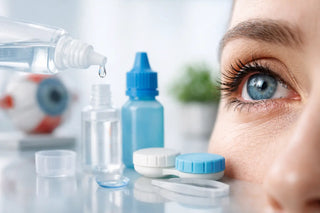
A gritty, burning feeling at the end of a screen-heavy day is not something to simply put up with. Dry eye can make reading, driving, wearing contact lenses and even applying make-up less comfortable. The best eye drops for dry eyes are not necessarily the most intensive formula on the shelf - they are the ones that suit the cause, frequency and severity of your symptoms.
For some people, a light lubricating drop used occasionally is enough. For others, especially those managing persistent irritation, contact lens discomfort or dry eye linked to age or medication, a preservative-free treatment or longer-lasting gel may be a more considered choice. Understanding the difference helps you select a product with confidence. If you want the fuller picture of what causes dry eye, our guide to dry eyes: causes and treatment options covers that side; this article focuses on choosing a drop.
What dry eye drops are designed to do
Natural tears are more complex than water. They contain an oily outer layer that slows evaporation, a watery middle layer for moisture and a mucus layer that helps tears spread smoothly across the surface of the eye. Dry eye can occur when the eyes do not make enough tears, but it also commonly occurs when tears evaporate too quickly or do not provide adequate lubrication.
Lubricating eye drops, often called artificial tears, supplement the tear film to relieve symptoms such as stinging, soreness, tiredness, blurred vision that clears when you blink, and a feeling that there is something in the eye. They can contain ingredients such as sodium hyaluronate, carmellose sodium, hypromellose or polyethylene glycol. Each works slightly differently, but all are intended to hold moisture on the eye's surface and improve comfort.
The right format matters as much as the active ingredient. Drops offer quick, light relief; gels provide more staying power; and ointments are usually reserved for night-time because they can temporarily blur vision.
Best eye drops for dry eyes by symptom and routine
For occasional dryness and screen-related discomfort
If your eyes become dry after long periods at a computer, in air-conditioned offices or during travel, a standard lubricating drop such as Murine Dry & Tired Eye Drops or A.Vogel Extra Moisturising is often an appropriate starting point. Choose a formula designed to refresh and hydrate without creating a heavy coating. These can be used as needed and are convenient to keep in a desk drawer, handbag or travel wash bag.
Screen use can reduce how often and how fully we blink, so drops work best alongside a few practical adjustments. Position screens slightly below eye level, take regular visual breaks and avoid directing fans or heating towards your face. If symptoms settle when your routine changes, you may only need drops intermittently.
For frequent use, choose preservative-free where possible
Preservatives help keep multi-dose bottles sterile after opening. However, some people find that frequent use of preserved drops makes their eyes feel more irritated, particularly when the eye surface is already sensitive.
Preservative-free eye drops, such as Hylo Tear or Hydromoor single-dose units, are a refined choice for regular use, sensitive eyes and moderate to more persistent dryness. They are available in single-dose units and in specially designed multi-dose bottles. Single-dose vials can be particularly useful when travelling or when you prefer a fresh, measured application, though they may be less convenient if you need treatment several times a day.
As a general guide, if you are using lubricating drops more than four times daily, a preservative-free formulation is worth considering. A pharmacist can help you compare the practicalities of each format.
For dry eyes that feel sore on waking or late at night
A gel drop, such as Systane Gel Drops or Théa Thealoz Duo Gel, has a thicker texture than a standard artificial tear and remains on the eye for longer. This makes it well suited to dryness that is more pronounced in the evening, overnight or on waking. It can also be useful when ordinary drops provide relief that fades too quickly.
The trade-off is clarity of vision. Gel drops may cause a brief haze just after use, so they are often best used when you do not need to drive, work on a screen or carry out tasks requiring sharp vision immediately afterwards. Eye ointments are thicker again and are generally a night-time option only.
For contact lens wearers
Contact lenses can contribute to dryness by affecting the tear film and by making the surface of the eye feel less comfortable in dry, heated or air-conditioned surroundings. Look for drops specifically labelled as suitable for use with contact lenses - Théa Hyabak and Hylo Tear are examples - or use them before inserting lenses and after removing them, according to the product directions.
Do not assume every eye drop is lens-compatible. Some products need lenses to be removed first, particularly if they contain preservatives. Redness-relieving drops should not be used as a routine answer to contact lens discomfort. A persistent red or painful eye needs proper assessment rather than cosmetic masking.
For an evaporative or gritty feeling
Some dry eye is linked to the oily layer of the tear film. When this layer is compromised, tears evaporate faster, often leaving the eyes feeling gritty, watery and sensitive to wind. Lipid-based eye drops and sprays, such as Optrex Actimist or Systane Balance, are formulated to support this outer layer and may be helpful where evaporation is a likely issue.
Warm eyelid compresses and gentle lid hygiene can also be valuable, particularly when symptoms are associated with blocked oil glands along the eyelid margins. This approach takes consistency: a single warm compress may feel soothing, but regular care is more likely to make a meaningful difference.
How to use eye drops well
Technique can determine whether a product delivers the relief you expect. Wash and dry your hands, tilt your head back, and gently pull down the lower eyelid to create a small pocket. Instil one drop without allowing the nozzle to touch your eye, lashes or skin. Close the eye gently for a moment rather than blinking rapidly, which can push the drop out.
If you use more than one eye medicine, leave at least five minutes between products so the second drop does not wash away the first. Use drops before gels or ointments. Always follow the pack instructions on storage, use-by dates after opening and whether contact lenses should be removed.
It is worth resisting the temptation to use vasoconstrictor drops regularly for redness. They may make eyes look whiter temporarily, but they do not treat dry eye and can lead to rebound redness when used repeatedly.
When eye drops are not enough
Dry eye has many contributors - menopause, ageing, blepharitis, allergies, some medicines, autoimmune conditions and previous eye surgery - which our causes and treatment guide covers in full. Persistent symptoms deserve a closer look, especially if you rely on drops every day without achieving reliable comfort.
Seek urgent medical advice for eye pain, a marked reduction in vision, light sensitivity, swelling, discharge, injury, a chemical splash, or a red eye in a contact lens wearer. These symptoms can indicate something other than straightforward dry eye and should not be self-treated with lubricants alone.
For ongoing but non-urgent symptoms, speak to a pharmacist, optometrist or GP. They can review potential triggers, current medicines and the type of product you are using. At John Bell & Croyden, a pharmacist can help narrow the eye care choice between everyday lubricants, preservative-free drops and more intensive gel formulations.
A well-chosen eye drop should make your eyes feel comfortably forgettable again. Give a suitable formula a fair trial, use it correctly and pay attention to patterns in your environment and routine - small changes often make the treatment work harder for you.