
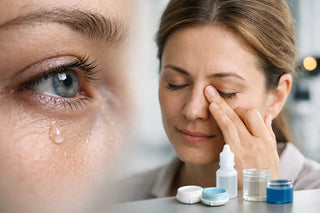
By mid-afternoon, dry eyes can make a screen, a contact lens or even a breezy walk feel surprisingly uncomfortable. Grittiness, stinging, watering and blurred vision are common complaints, but they are not simply signs of tiredness. Understanding the causes of dry eyes and the available treatment options can help you choose the right level of care, rather than repeatedly reaching for a product that does not address the underlying problem.
What dry eye feels like
Dry eye disease occurs when the surface of the eye is not adequately protected by a healthy tear film. Tears do more than add moisture. They provide a smooth optical surface for clear vision, wash away debris and help defend the eye from irritation.
The symptoms are not always as obvious as the name suggests. Eyes may feel scratchy, sore, red or heavy, and vision can fluctuate, particularly when reading or using a computer. Some people find their eyes water excessively. This is a reflex response to irritation, and those watery tears may not contain the oils and protective components needed to keep the eye comfortable.
Symptoms may be occasional, perhaps after a long-haul flight or an intense day at a laptop. When they become frequent, they deserve more considered attention. Persistent dry eye can affect contact lens comfort, concentration and the pleasure of everyday activities such as reading or driving at night.
Dry eyes: causes and treatment options
A stable tear film has three important elements: a watery layer, an oily layer and a mucus layer that helps tears spread evenly over the eye. Dry eye can develop when there are too few tears, when tears evaporate too quickly, or when the quality of the tear film is compromised.
One of the most common causes is meibomian gland dysfunction (MGD), where the tiny oil-producing glands in the eyelids become blocked or produce poorer-quality oil. These glands produce the oil that slows tear evaporation. When these glands become blocked or their oil becomes too thick, the tears evaporate more readily. This is particularly common with blepharitis, an inflammatory condition affecting the eyelids.
Modern working habits also have a role. People blink less completely when concentrating on a screen, and centrally heated or air-conditioned rooms can increase evaporation. Smoke, wind, air travel and prolonged reading can have a similar effect. Contact lenses may contribute, especially if they are worn for long hours or are no longer the most suitable type for your eyes.
Ageing is a significant factor, and dry eye is more common after the menopause. Hormonal changes can affect tear production and gland function. Certain medicines can contribute to dry eye, including some antihistamines, antidepressants, decongestants, medication for blood pressure and treatments for acne. Do not stop a prescribed medicine without speaking to the clinician who prescribed it.
Occasionally, dry eye is associated with a wider health condition. Autoimmune conditions such as Sjögren's syndrome, rheumatoid arthritis and lupus can reduce tear production. Skin conditions including rosacea may be linked with eyelid inflammation. Previous eye surgery, thyroid eye disease and an incomplete eyelid closure can also affect the tear film.
Start with the pattern, not the product
The most useful first step is to notice when symptoms occur and what improves them. If discomfort is worse in heated rooms or during screen use, evaporation may be the dominant issue. Crusting at the lash line, recurrent styes or a burning sensation on waking can point towards eyelid gland dysfunction. A feeling of dryness that persists in every setting, particularly alongside dry mouth or joint symptoms, is worth discussing with a GP or optometrist.
An optometrist can assess the eye surface, tear stability and eyelids, as well as checking whether your prescription or contact lens fit remains appropriate. This matters because red, uncomfortable eyes do not always mean dry eye. Allergy, infection, contact lens complications and other eye conditions require different treatment.
Everyday measures that can make a difference
Small adjustments are often valuable, especially where symptoms are mild or clearly linked to the environment. Positioning a screen slightly below eye level encourages a more complete blink. Taking regular visual breaks gives the eyes a chance to recover: look away from close work, focus into the distance and blink slowly several times.
Avoid directing a fan, car vent or hairdryer towards the face. A humidifier may help in persistently dry indoor air, while wraparound sunglasses can offer welcome protection outdoors. Staying well hydrated supports general wellbeing, although drinking extra water alone will not correct all forms of dry eye.
For contact lens wearers, it may be sensible to shorten wearing time while symptoms are active. Never use drops with lenses unless the product is specifically suitable for contact lens use. Your optometrist may recommend a different lens material, daily disposable lenses or a revised cleaning routine.
Pharmacy treatment options for dry eyes
Artificial tears are the usual starting point. Available as drops, sprays, gels and ointments, they replace moisture and improve comfort. The best format depends on both the nature of your symptoms and your routine.
Thinner drops are convenient for daytime use and may be sufficient for occasional irritation. More viscous drops and gels generally last longer, making them useful for more persistent symptoms, though they can cause temporary blurring. Ointments are often reserved for bedtime, when their richer texture can protect the eye surface overnight but would be impractical before driving or detailed work.
If you need drops frequently, preservative-free single-dose units or preservative-free multidose bottles are often a considered choice. Always follow the product instructions regarding use and shelf life after opening. Some preservatives can irritate an already sensitive eye surface when used many times a day. Drops containing lipids may be particularly helpful where rapid evaporation and meibomian gland dysfunction are suspected, as they support the oily layer of the tear film.
Eyelid care is equally important when blocked glands or blepharitis are contributing. A warm compress applied to closed eyelids for several minutes can soften the oils within the glands. Follow with gentle lid massage and a dedicated eyelid cleansing product or wipe. Consistency is more valuable than intensity: vigorous rubbing can worsen irritation. Allow several weeks of regular treatment before judging its effectiveness.
At John Bell & Croyden, a pharmacist can help you navigate the eye care choice between lubricating drops, gels, ointments and eyelid-care formulations, particularly if you are managing contact lenses or a complex medicine regimen. If one approach has not helped after a reasonable trial, do not simply layer on more products. Reassessment can reveal whether the cause has been missed.
When a clinician may recommend more
For moderate or severe dry eye, an optometrist, ophthalmologist or GP may suggest treatment beyond over-the-counter lubrication. Depending on the cause, this can include prescription anti-inflammatory eye drops, treatment for associated rosacea or eyelid disease, punctal plugs to reduce tear drainage, or specialist therapies aimed at meibomian gland dysfunction.
There is no single best treatment for everyone. A person with low tear production may need a different approach from someone whose tears evaporate quickly, while someone with allergy may need the allergy controlled before lubricants can be fully effective. The aim is not merely to make the eyes feel better for an hour, but to protect the ocular surface and restore lasting comfort.
Do not ignore these warning signs
Dry eye itself is usually manageable, but urgent assessment is needed if you have significant eye pain, marked sensitivity to light, a sudden change in vision, a very red eye, discharge, an eye injury or a foreign-body sensation that does not settle. Contact lens wearers should remove their lenses and seek prompt advice if redness or pain develops, as infections can progress quickly.
Book a routine eye examination if symptoms are persistent, keep returning despite self-care, or are accompanied by dry mouth, fatigue, joint pain or a new skin condition. A thoughtful assessment can spare you a cycle of temporary fixes and help preserve the comfort that makes clear, effortless vision easy to take for granted.