
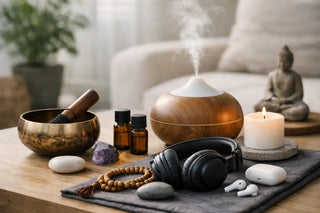
Stress rarely arrives with ceremony. More often, it shows up as a clenched jaw on the commute, a racing mind at 2am, or the sense that even small tasks demand more than they should. The appeal of mindfulness products for stress lies in their practicality. They can help turn an abstract intention - to feel calmer, sleep better, or reset after a demanding day - into something tangible and repeatable.
The challenge is that not every calming product is genuinely useful, and not every stress trigger responds to the same approach. Some people need support with sleep and evening overstimulation. Others are looking for a steadier daytime rhythm, better focus, or a simple way to punctuate a busy schedule with moments of quiet. The most effective products are usually those that fit naturally into daily life rather than asking for a complete change in routine.
What mindfulness products for stress actually do
Mindfulness products do not eliminate pressure, nor should they be mistaken for treatment when stress becomes persistent or unmanageable. What they can do, very effectively, is support the conditions in which the body and mind are more likely to settle. That may mean cueing slower breathing, encouraging a more restful bedtime ritual, reducing sensory overload, or creating a more deliberate pause between one demand and the next.
This is why the category is broader than many people expect. It includes products associated with sleep hygiene, aromatherapy, bathing, body care, supplements, and sensory comfort. The common thread is not trend-led wellness language. It is function. A well-chosen product should help signal calm, reinforce routine, and offer a credible benefit that suits the moment you need it.
Choosing mindfulness products for stress by need
A considered approach starts with identifying what stress looks like for you. If your mind feels busy but your body is tired, sleep-focused products may be the sensible place to begin. If tension tends to build physically through the day, bathing and body rituals may offer more immediate relief. If stress is linked to overstimulation, sensory products such as candles, essential oil blends, or pulse point applications can be especially effective because they create an instant environmental shift.
There is also the question of preference. Some people respond well to fragranced rituals and find scent deeply grounding. Others prefer unscented or more clinical options, particularly if they are sensitive to strong aromas. Likewise, a supplement designed to support relaxation may appeal to one customer, while another will prefer a topical product or bedtime tea because the ritual itself is what helps them unwind.
For evening decompression
Evening is often when delayed stress catches up. Once the noise of the day recedes, the nervous system can feel anything but quiet. In this setting, products that slow the transition into night tend to work best.
Bath soaks and magnesium-rich bathing products are a strong example. The benefit is partly physical - warm water encourages muscles to relax - and partly behavioural. A bath marks a boundary. It tells the body that the working day has ended. If chosen well, aromatherapeutic bath oils or salts can make that ritual feel less functional and more restorative.
Body oils, balms and pillow mists also sit comfortably in this category. They are not dramatic solutions, but they can be remarkably effective because they encourage repetition. A familiar scent used at the same time each evening can become a cue for rest. Lavender is the obvious reference point, but it is not the only one. Blends featuring chamomile, neroli, sandalwood or frankincense may feel more refined and, for some, more calming.
Sleep quality often underpins effective stress management. Our article on magnesium and sleep explores this relationship.
For daytime steadiness
Not everyone wants to feel sleepy. Many people are looking for calm without losing clarity, especially during demanding workdays. Here, lighter-touch products are often more appropriate.
Roll-on aromatherapy blends, pulse point oils and portable inhalation products can help create a brief, private reset between meetings or while travelling. Their value lies in accessibility. They require no preparation and can be used without disrupting the day. A hand cream with a sophisticated calming fragrance can serve a similar function, particularly for those who prefer their wellbeing rituals to feel discreet.
Hydration and nutritional support also deserve mention. Stress can coincide with irregular eating, excess caffeine and poor sleep, all of which can make the body feel more reactive. Supplements formulated for relaxation or nervous system support may be helpful, provided they are chosen carefully and used appropriately. This is where trusted retail curation matters. Quality, ingredient transparency and suitability all count.
The most useful product categories
Aromatherapy remains one of the most recognisable categories in this space, and with good reason. Scent can alter the feel of an environment almost instantly. Candles, diffusers and essential oil blends are best for home use, where they can shape a room and support a more intentional atmosphere. They are especially valuable if stress is tied to mental clutter or difficulty switching off after screen-heavy days.
Bath and body products offer a more physical route into calm. Bath oils, salts, shower oils and soothing body lotions help transform necessary routines into restorative ones. For customers who struggle to carve out time for mindfulness practices in the formal sense, this is often the most realistic entry point. There is no need to schedule a separate ritual if the ritual is built into what already happens each day.
Sleep-support products are another important category. This may include pillow sprays, calming teas, relaxation supplements and comfort-led toiletries used before bed. They work best when seen as part of a broader evening pattern rather than a single fix. If your room is too warm, your phone is still in hand, or dinner was late and heavy, even the finest sleep mist has limits. Good products help, but context matters.
There is also growing interest in tactile products - soft eye masks, heat packs, weighted accessories and other sensory comforts. These can be especially helpful for people whose stress is experienced physically. When the body is tense, something grounding and tangible can be more useful than something purely fragrant.
What to look for in a premium option
In a crowded category, refinement should mean more than elegant packaging. A premium mindfulness product for stress should justify its place through formulation, sensory quality and consistency of use. Fragrance should feel balanced rather than overpowering. Ingredients should be clearly presented. The product should be pleasant enough to return to regularly, because regularity is usually where the benefit emerges.
Texture matters more than it may seem. A body oil that absorbs beautifully or a bath soak that feels genuinely luxurious can make the difference between a product that is admired and one that becomes part of your week. Equally, if a candle tunnels badly, a diffuser smells synthetic, or a balm leaves an uncomfortable residue, the ritual quickly loses appeal.
This is where curated selection comes into its own. John Bell & Croyden occupies a middle ground between wellness aspiration and pharmacy-led credibility, helping customers choose products that feel indulgent without losing sight of efficacy.
A sensible way to build your routine
It is tempting to buy several products at once, especially when stress has begun to affect sleep, concentration and mood all at the same time. In practice, a simpler approach is often better. Start with the point of greatest friction. If sleep is suffering, begin there. If afternoons are the problem, choose something you can use during the day.
Then think in layers, not volume. One atmospheric product for the room, one body product for physical unwinding, and perhaps one portable option for use outside the home is usually enough. More than that can become clutter, and clutter has a way of undermining calm.
Pay attention to what you genuinely enjoy. If you dislike baths, do not buy bath salts because they look serene. If strong fragrance gives you a headache, choose gentler or unscented forms of support. Mindfulness is not about performing a certain aesthetic. It is about selecting tools that make it easier to feel present, settled and cared for in the middle of ordinary life.
There is no single best answer to stress, and no product should promise one. But the right product, used consistently and chosen with some care, can shift the texture of a day. Sometimes that shift is small - a deeper breath before bed, a quieter commute, a few minutes of real pause. Often, that is precisely where calm begins.