
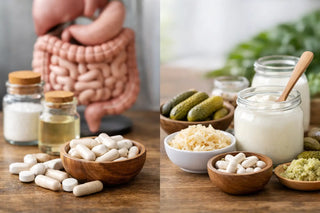
A rich meal, a rushed lunch at your desk, or a period of stress can all leave digestion feeling less than comfortable. When choosing a supplement, the question is often: digestive enzymes vs probiotics: what's the difference? Although both are associated with digestive wellbeing, they work in distinctly different ways - and selecting the right one starts with understanding what your body may need.
Digestive enzymes vs probiotics: the essential distinction
Digestive enzymes are proteins that help break food down into smaller components your body can absorb. They act during digestion, helping to process carbohydrates, fats and proteins from the meal you have eaten.
Probiotics are live microorganisms, often described as beneficial bacteria. When taken in adequate amounts, particular strains may support the balance and function of the gut microbiome - the vast community of microorganisms that lives largely in the large intestine. Because benefits are strain-specific, our guide to choosing probiotic strains is a useful companion.
Put simply, enzymes work on food. Probiotics work with the microbial environment in the gut. Both can have a place in a considered wellbeing routine, but they are not interchangeable.
What digestive enzymes do
Your body naturally produces digestive enzymes in the mouth, stomach, pancreas and small intestine. Amylase helps break down carbohydrates, protease works on proteins, and lipase helps digest fats. Other enzymes have more specific roles, such as lactase for lactose, the sugar found in milk and many dairy products.
A digestive enzyme supplement is usually taken with food. Its purpose is to support the digestion of particular meal components as they pass through the digestive tract. Formulations may contain a broad spectrum of enzymes, or focus on one concern, such as lactose digestion - our guide to digestive enzymes covers the types in more detail.
For example, someone who notices discomfort after dairy may wish to consider lactase before consuming lactose-containing foods. A broad-spectrum product may be more relevant for those who experience occasional heaviness after especially large or complex meals. The formulation matters: different enzymes are active at different pH levels, and the amounts included can vary considerably between products.
Digestive enzymes are not a substitute for medical investigation. Persistent bloating, pain, diarrhoea, constipation, unexplained weight loss or a change in bowel habits should be discussed with a GP or pharmacist, rather than managed solely with supplements.
When enzymes may be worth considering
Enzymes can be a practical option when discomfort appears closely linked to a specific food or meal. The timing is a useful clue. If symptoms tend to happen soon after dairy, beans, high-fat dishes or larger meals, a targeted enzyme may be worth discussing with a healthcare professional.
They may also suit those who want occasional, meal-led support rather than a daily microbiome supplement. Results, where felt, are generally linked to taking the product correctly with the relevant food. Taking enzymes several hours after eating is unlikely to offer the same benefit.
What probiotics do
Probiotic supplements contain selected strains of live bacteria, commonly from Lactobacillus and Bifidobacterium families, though product labels may use updated scientific names. These strains are chosen for their potential effects on digestive function, immune health or other defined outcomes.
A probiotic is not simply 'good bacteria' in the broadest sense. Benefits are strain-specific, meaning evidence for one strain cannot automatically be applied to another. This is why a premium probiotic product should clearly state the genus, species and strain where possible, alongside the number of live organisms supplied through the end of shelf life.
Unlike enzymes, probiotics are not designed to digest the food on your plate. Instead, they may influence the gut environment over time. Some people take them daily as part of a routine aimed at maintaining digestive comfort, particularly during travel, after dietary disruption or alongside a period of lifestyle change.
The response is personal. Some people notice a difference within a few weeks; others may not. A short period of mild gas or bloating can occur when first introducing a probiotic, particularly at higher strengths. Starting with the manufacturer's recommended dose and allowing time to assess tolerance is sensible.
Choosing a probiotic with purpose
The most appropriate probiotic depends on your reason for taking it. A product formulated for everyday digestive balance may differ from one positioned for travel, women's intimate health or use alongside antibiotics. Quality is about more than a high CFU, or colony-forming unit, count - our guide to choosing high-strength probiotics explains why. Strain selection, stability, packaging and storage instructions all deserve attention.
Some probiotics require refrigeration, while others are designed to remain stable at room temperature. Follow the label closely, as heat and moisture can affect live cultures. If you are taking antibiotics, a pharmacist can advise on whether a probiotic is suitable and how to separate doses - our article on when to take probiotics covers the timing.
Can you take digestive enzymes and probiotics together?
In many cases, yes. Because enzymes and probiotics have different roles, they can be used as part of the same routine if there is a clear reason for each. An enzyme may be taken with a meal, while a probiotic may be taken daily according to its directions.
That said, more supplements do not necessarily mean better digestive health. Introducing several products at once makes it difficult to tell what is helping, what is unnecessary and what may be causing discomfort. A more refined approach is to identify the pattern you want to address, choose one well-matched product, and review how you feel after a reasonable trial period.
Lifestyle still sets the foundation. Eating regularly, chewing thoroughly, introducing fibre gradually, drinking enough fluids and allowing time to eat without rushing can all support digestive comfort. For some people, specific fermentable foods, alcohol, excess caffeine or very fatty meals are more relevant triggers than a lack of supplements.
How to make the right choice for your symptoms
Consider whether your concern is meal-specific or more general. If you regularly react after a recognised food type, such as lactose-containing dairy, a targeted digestive enzyme may be the more logical starting point. If your aim is longer-term support for digestive balance, particularly following a disrupted routine, a strain-led probiotic may be more appropriate.
It is also worth looking beyond the front-of-pack claim. Check how and when the product should be taken, whether it contains allergens or dietary exclusions relevant to you, and whether it is suitable alongside your medicines. People who are pregnant or breastfeeding, have a long-term condition, have a weakened immune system, or are undergoing treatment should seek individual advice before beginning a probiotic or enzyme supplement.
For people with diagnosed conditions affecting digestion, including coeliac disease, inflammatory bowel disease, pancreatic disorders or confirmed food allergies, professional guidance is especially important. Supplements may support a carefully managed plan, but they should not delay diagnosis or replace prescribed treatment.
A considered approach to digestive wellbeing
Digestive enzymes and probiotics answer different questions: one is about helping break down a meal, the other about supporting the gut's microbial ecosystem. The most useful choice is therefore not the product with the most ambitious promise, but the one that fits your symptoms, diet and routine.
If your digestion is asking for attention, begin with the pattern rather than the product - and our guide to digestive wellness offers a wider starting point. A few days of noting meals, timing and symptoms can make a conversation with a pharmacist far more productive - and help you choose support with greater confidence.