
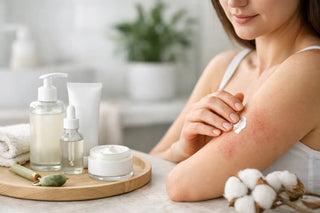
When skin is already tight, sore and reactive, a complicated routine is rarely the answer. A well-judged eczema skincare routine should do three things exceptionally well - cleanse without stripping, hydrate without irritation, and support the skin barrier so that flare-prone skin has the best possible conditions to settle.
Eczema is a medical condition, not simply dry skin. The skin loses moisture more easily and can become vulnerable to irritants, temperature shifts, friction and fragranced or highly active formulas. Regular use of emollients is a cornerstone of eczema management and helps reduce dryness, improve skin barrier function and may reduce flare frequency. However, skincare alone cannot control all eczema, and prescription treatments such as topical corticosteroids and other prescription treatments for delicate areas like the face or eyelids may still be needed during flares ups. Topical corticosteroids are commonly prescribed to reduce inflammation during eczema flares. When used as directed, they are safe and effective with continued use of emollients alongside steroid treatment unless your healthcare professional has advised otherwise.
This article is a worked example of what that routine looks like across a day. If you are still deciding which products suit you, our companion article on which skincare suits eczema best goes through ingredients and product types in detail. This one assumes you have chosen, and shows you how to use them. The products named below are illustrations of the kind of formula each step calls for, not recommendations for any individual - if you are unsure what suits you, our pharmacy team is the better starting point.
It is important to introduce new skincare products one at a time and patch test them on a small area of skin for several days before wider use, particularly if your eczema is active.
A note on emollients before you start
The most important product in an eczema routine is usually the emollient, and it is worth understanding what that word covers. Some emollients sold in a pharmacy are licensed medical products rather than cosmetics, formulated and regulated specifically for dry and eczema-prone skin. Others are cosmetic moisturisers. Both can be useful, but they are different things, and a moisturiser chosen on texture alone is not the same as an emollient intended for regular, generous use.
Familiar examples on our shelves include Epaderm Cream and Cetraben Emollient Cream, both fragrance-free and made to be applied liberally and often. If you are unsure which is appropriate for you, our pharmacy team can talk you through the emollients and barrier creams we carry, alongside the wider eczema and medicated skincare ranges. Anyone using a prescribed emollient or topical treatment should follow the directions they were given rather than substituting a cosmetic product for it.
The everyday routine: morning
Start with the assumption that skin needs support, not correction.
Cleanse only if you need to. If your skin feels comfortable on waking, rinsing with lukewarm water may be enough. If you prefer to cleanse, choose a fragrance-free, low-foaming cream or lotion formula intended for sensitive skin - La Roche-Posay Cicaplast Lavant B5 Gentle Soothing Wash is a good illustration of the texture to look for, and our cleansing skincare and cleansing milks ranges hold the alternatives. Hot water is best avoided along with prolonged bathing, as it can increase water loss through the skin and leave the face feeling tighter within minutes. Cleanse once daily, or less frequently if your skin becomes irritated.
Moisturise while skin is still slightly damp. This is the single most useful piece of timing in the whole routine. Damp skin gives an emollient a better opportunity to hold on to water, so apply within a few minutes of washing rather than later. For the face, a lipid-replenishing cream such as Avène XeraCalm A.D suits skin that is dry and easily irritated; the moisturisers for dry skin range covers the alternatives.
Then sunscreen, if the face or any exposed area is affected. The difficulty is that many sunscreens sting compromised skin. Fragrance-free sunscreens formulated for sensitive skin are often better tolerated, although individual preferences vary. The aim is broad-spectrum protection in a formula you can wear daily without discomfort - our sun care for sensitive skin range is curated with that in mind.
If the skin around the eyes is affected, use the same bland moisturiser there rather than an eye cream containing actives. Where you would rather use something formulated for the area, La Roche-Posay Toleriane Dermallergo Eye Cream is made for reactive skin, and sits within our wider eye cream range.
The everyday routine: evening
Cleanse gently to remove sunscreen, pollution and the day's build-up, using the same wash as the morning. For most people with eczema, a single gentle cleanse is sufficient.
Moisturise again, using the same cream. If your skin feels especially depleted, layer something richer over the driest patches to limit overnight moisture loss - this is where an emollient such as Epaderm earns its place.
That is the core routine. It may sound simple, but for eczema-prone skin simplicity is what allows consistency, and consistency is where comfort is usually found.
Body eczema: the same logic, larger surface
Keep showers short and warm rather than hot. Pat skin dry rather than rubbing. Moisturise within a few minutes of getting out, while skin is still damp.
For washing, a soap-free option matters more than it sounds, since ordinary soap is alkaline and tends to strip the skin. La Roche-Posay Lipikar Shower Gel and the fragrance-free Avène XeraCalm Oil both cleanse without that squeaky finish, and Hope's Relief Soap Free Cleansing Bar is a bar-format alternative. The wider body washes and soaps and bar soap for sensitive skin ranges cover the rest.
Follow with a generous body moisturiser. La Roche-Posay Lipikar Balm AP+M is a long-standing choice for atopic-prone skin, while colloidal-oatmeal creams such as Aveeno Cream suit those who prefer a lighter texture - both sit in our body moisturisers and bodycare for sensitive skin ranges.
Hands need particular attention, because they are washed most often and are the first place cold weather shows. Reapply after each wash if you can - our hand moisturisers range covers the richer textures.
How the routine changes during a flare
Flare days call for a different mindset. Skin that is red, broken, itchy or hot will often tolerate fewer products, not more. This is the moment to pare back to essentials and avoid experimental formulas, potent actives and anything heavily fragranced, however luxurious it usually feels.
Cleanse as infrequently and as gently as is practical. If the skin is not dirty, a full cleanse twice daily may be unnecessary.
Apply emollient more often, particularly after washing, and in a thicker layer than usual. Epaderm and Cetraben are both intended for exactly this kind of frequent, generous use. Ointments and heavier creams can help on cracked or visibly compromised areas because they limit water loss so effectively, though some people find them too occlusive on the face, where a dense cream is usually the better compromise.
If you have been prescribed a topical treatment, use it exactly as directed, and ask your pharmacist, GP or dermatologist about the order and timing alongside your emollient. Usually when using both an emollient and a prescribed topical treatment, they should be applied separately, allowing around 20–30 minutes between applications where practical. This helps avoid diluting or spreading the prescribed medicine. Apply emollients generously. Adults with widespread eczema often need several hundred grams each week. Skincare supports comfort and the skin barrier; it does not replace medical treatment when eczema becomes persistent, infected or severe. Avoid scratching where possible, as scratching further damages the skin barrier and increases the risk of infection.
It is also worth paying attention to triggers outside the bathroom. Wool scarves, central heating, long hot showers, harsh laundry detergents, sweat, occupational irritants and stress can all influence how skin behaves. A careful routine will only go so far if everything around it remains aggravating.
A short word on what to avoid
The companion article covers this in depth, but the headlines are worth repeating. Fragrance is one of the most common problems, whether synthetic or essential-oil based - a product can smell botanical and still be irritating, which is why fragrance-free formulas are so often the safe default. High-strength acids, physical scrubs and strong retinoids can disrupt an already fragile barrier. And if skin feels taut after cleansing, that is not a sign of purity; it usually means the barrier has been over-cleansed.
None of this means active skincare is permanently off-limits. It means that while eczema is active, comfort comes first. Our guide to skin barrier repair covers how and when to reintroduce actives once skin has settled.
When a routine is not enough
There is a point at which no skincare routine will be sufficient on its own. **Seek advice promptly if eczema is weeping, crusting, blistering, becoming painful, rapidly spreading redness, increasing pain, pus, or fever or if you feel unwell with it ** - these can be signs of infection, which needs treatment rather than a change of moisturiser. The same applies if eczema is disturbing sleep, covering large areas, or steadily worsening despite consistent care.
It is also worth having a rash checked if it is not clearly eczema, particularly around the eyes, mouth or neck, because several skin conditions look similar while needing quite different treatment.
Persistent eczema often benefits from a broader plan that may include prescription topicals, a review of triggers and a more detailed assessment of irritants or allergens. Asking early is not excessive; it is sensible.
Consistency over intensity
People often abandon a routine because it feels too basic to be effective. Yet eczema-prone skin usually responds best to repetition rather than intensity. A cleanser you trust, an emollient you use generously, and a sunscreen that does not sting will do more for long-term comfort than a shelf full of ambitious formulas.
The most useful eczema skincare routine is not the one with the longest ingredient list or the highest price. It is the one that respects the skin barrier every day, adapts gracefully during a flare, and leaves enough room for skin to recover rather than constantly react. When in doubt, choose comfort, choose consistency, and let calm skin be the measure of success.