
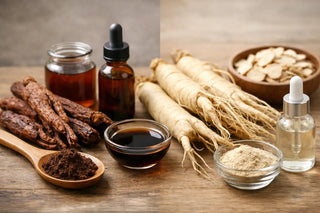
A ginseng guide (Panax red vs white, whole root vs extract) should begin with a simple distinction: these terms describe both the plant and the way it has been prepared. That difference affects flavour, convenience, concentration and the information available on the label. For a considered choice, look beyond the word 'ginseng' and assess the botanical name, processing method and extract specification.
Start with Panax ginseng
The name ginseng is used for several plants, but Korean or Asian ginseng is usually Panax ginseng. It has a long history of traditional use and contains naturally occurring compounds known as ginsenosides. These are often used as quality markers in modern supplements, although they are not the only constituents present in the root.
The key thing to check is the botanical name. True ginseng is Panax ginseng, and this guide is about the most widely used member of that family, Korean ginseng (Panax ginseng). It is worth not confusing it with American ginseng (Panax quinquefolius), a related but distinct species, or with so-called Siberian ginseng, which despite the name is a different plant altogether and not a true ginseng. For the rest of this guide, ginseng means Panax.
For many people, Panax ginseng appeals as part of a well-chosen wellbeing routine, particularly during demanding periods. However, the effects of ginseng can vary between individuals, and a premium product should be selected for traceability and clarity rather than dramatic promises.
Panax red vs white ginseng
Red and white ginseng usually come from the same species. Their difference lies primarily in processing after harvesting, not in whether one is inherently 'better' than the other.
White ginseng
White ginseng is generally cleaned, peeled or trimmed, then dried. The relatively gentle processing preserves the root in a form close to its original state. It is often sold as sliced root, powder, capsules or an extract.
Its flavour can be mildly bitter, earthy and aromatic, making it a suitable choice for those who enjoy preparing a traditional infusion. White ginseng may also suit shoppers who value a simpler, minimally processed whole-root presentation.
Red ginseng
Red ginseng is steamed before drying, which gives the root its distinctive reddish-brown colour. Heat processing can alter the ginsenoside profile and create additional compounds. This is why red ginseng is often presented as a more intensively prepared form of Panax ginseng. Korean Red Ginseng whole root is graded by the size and quality of the roots selected, from a premium earth grade to a more accessible good grade.
That does not automatically make red ginseng stronger in every context. The final concentration depends on the age and quality of the root, the extraction method and the manufacturer's testing standards. Red ginseng is commonly available in capsules, tablets, liquids, sachets and concentrated extracts, and it may have a deeper, more pronounced taste than white root.
When deciding between them, think first about the format you will use consistently. Choose white ginseng if you prefer a traditional root-led approach. Consider red ginseng if you are looking for a heat-processed preparation with a clearly stated standardisation level. Neither colour alone is a reliable shortcut to quality.
Whole root vs extract: what changes?
Whole root and extract are not interchangeable. A whole root product presents ginseng in its broader botanical form; an extract concentrates selected soluble constituents into a smaller serving. The right option depends on whether you prioritise ritual and tradition, or convenience and greater consistency per dose.
Whole root, slices and powder
Whole root is often sliced for steeping in hot water, added to cooking, or supplied as a dried powder. This format offers an appealing sense of provenance: you can see the plant material, assess its appearance and prepare it to your preference. It suits those who value the ritual and tradition of preparing ginseng themselves.
The trade-off is variability. A cup made from root slices will not provide the same measured quantity of ginsenosides every time, and preparation method can influence what is extracted. Whole root also requires more time, and its naturally bitter taste is not for everyone.
Powdered root is more convenient than slices, but it is still not necessarily a concentrated extract. A capsule containing 500 mg of root powder may contain less concentrated ginseng material than a smaller capsule of standardised extract. Comparing milligrams without reading the full label can therefore be misleading.
Standardised extracts
An extract is made by drawing components out of the root using water, alcohol or another controlled process, then concentrating the resulting preparation. Reputable products will identify the plant part used, state the extract ratio where relevant, and often specify a percentage or quantity of ginsenosides.
Standardisation is particularly helpful when consistency matters. Instead of relying solely on the weight of raw root, you can see the intended level of marker compounds in each serving. That said, a high percentage is not the only sign of a well-made product. Extraction conditions, raw-material sourcing and independent quality controls all matter.
Liquid extracts can be useful for people who dislike capsules or want flexible serving sizes. Capsules and tablets offer the most straightforward routine. Sachets, tonics and drinks may be enjoyable, but assess added sugars, caffeine and the actual amount of Panax ginseng before treating them as equivalent to a dedicated supplement.
The brands worth knowing
Two makers account for most quality Korean ginseng, and they represent genuinely different philosophies - which makes the choice between them more interesting than price alone.
Korean Red Ginseng from Jung Kwan Jang is the heritage name, a Korean maker in operation since 1899. It focuses on red ginseng in the traditional manner: roots grown for six years, then steamed and dried, and graded by size, density, shape and colour through Good, Earth and the rare Heaven grades. This is the range to choose if you want red ginseng across the full spread of formats and grades - from a whole Earth-grade root to a concentrated extract or a ready-to-drink Everytime stick. A useful point for comparison: their core products use concentrated extract rather than root powder, which is measured for a more consistent ginsenoside content than powder alone.
Il Hwa takes a deliberately different route, and it is a genuinely distinctive one. Rather than red ginseng, Il Hwa specialises in a white ginseng extract made with a patented low-heat vacuum process instead of high-heat steaming. It harvests roots at four to five years rather than the usual six - on the view that younger roots hold a better balance of the active compounds - and processes the whole root including the fine rootlets, unpeeled, where much of the ginsenoside content sits. The result is an extract with a milder taste and, by Il Hwa's account, a high ginsenoside content. If you prefer an extract or capsule and are drawn to the white-ginseng, low-heat approach, Il Hwa is the specialist.
Neither is simply "better." Jung Kwan Jang is the choice for traditional red ginseng and grade selection; Il Hwa for a distinctive low-heat white ginseng extract. Both are made in Korea to their own exacting standards, and the right one comes down to which philosophy and format suits you.
How to choose a ginseng product well
A refined ginseng purchase is less about choosing the most expensive jar and more about selecting a product that is transparent about what it contains. Look for four details on the label:
- the full botanical name, ideally Panax ginseng C.A. Meyer;
- whether it contains white ginseng, red ginseng, root powder or an extract;
- the extract ratio or standardised ginsenoside content, where applicable; and
- a clear daily serving size with sensible directions for use.
Country of origin can be meaningful, particularly for Korean red ginseng, but it should not replace evidence of quality testing. A brand that provides clear manufacturing information and avoids vague proprietary blends gives you a firmer basis for comparison.
Dosing and sensible use
There is no universal 'best' dose of ginseng. Studies have used different root preparations and extract strengths, so a milligram figure only has meaning alongside the type of product and its standardisation. Follow the manufacturer's directions, and avoid doubling up across capsules, drinks and multivitamins containing ginseng.
Many people prefer to take ginseng earlier in the day, especially if they find it stimulating. If you are assessing whether it suits you, introduce one new product at a time and give attention to sleep, digestion and how you feel during the day. A short, consistent trial is usually more informative than changing several parts of your wellbeing routine at once.
Who should seek advice first?
Ginseng is not suitable for every person or every circumstance. Speak with a pharmacist, GP or qualified healthcare professional before using it if you are pregnant, breastfeeding, preparing for surgery or managing a medical condition.
Particular care is appropriate for anyone taking medicines that affect blood glucose, blood clotting or blood pressure, and for people using stimulant medication. Ginseng may also be unsuitable alongside warfarin or other anticoagulants without professional guidance. If you experience insomnia, palpitations, headache, digestive upset or any unexpected symptom, stop taking the product and seek advice.
A well-chosen ginseng product should feel like an informed addition to your routine, not a substitute for sleep, balanced meals or medical care. Whether you favour the ceremony of whole white root or the precision of a standardised red ginseng extract, let transparent labelling and professional guidance shape the choice.