
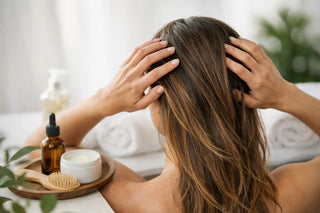
The scalp is skin first and hair territory second. When it is uncomfortable, congested or inflamed, even the most carefully chosen shampoo, styling product or treatment can struggle to deliver its best results. This guide to scalp care focuses on a considered routine: one that respects the scalp barrier, addresses visible concerns without over-treating, and supports the conditions in which hair can look and feel healthier.
Start by reading your scalp
A healthy scalp is not necessarily one that feels squeaky-clean. It should feel comfortable between washes, without persistent itching, tightness, soreness or a noticeable build-up of flakes. Hair can become oily at the roots while the scalp itself is dehydrated or irritated, so it is worth looking beyond shine alone when choosing products.
Dryness often presents as fine, pale flakes and a feeling of tightness, particularly after washing. Dandruff may appear as more noticeable white or yellowish flakes, sometimes with itchiness and an oily scalp. Product build-up can leave roots flat, heavy or difficult to cleanse. Sensitivity may show up as stinging, redness or discomfort after colouring, fragranced products or vigorous cleansing.
These concerns can overlap. A person with an oily scalp, for example, may use increasingly strong cleansers, which can leave the skin feeling stripped and reactive. The aim is not to remove every trace of oil. Natural sebum helps protect the scalp and hair fibre. The aim is to remove excess oil, sweat, pollution and styling residue while keeping the skin's protective barrier in good order.
A guide to scalp care: build the right wash routine
Frequency is personal. Fine hair or an oilier scalp may benefit from washing daily or every other day, while textured, curly or dry hair may be more comfortable with less frequent washing and targeted cleansing. There is no virtue in stretching washes if the scalp feels greasy, itchy or coated, and no need to wash daily if it remains calm and comfortable.
Choose shampoo according to the scalp concern rather than the ends of your hair. If roots are oily or prone to flakes, a balancing or anti-dandruff formula may be appropriate. Look for established active ingredients designed to reduce flaking and support scalp comfort, such as piroctone olamine, selenium sulphide, salicylic acid or ketoconazole. Their suitability depends on the formula and the concern, so follow the pack instructions carefully, particularly where a treatment shampoo specifies a contact time.
For a dry or sensitive scalp, seek a gentle, low-irritation cleanser and avoid treating every wash as a deep cleanse. Fragrance-free options can be useful where sensitivity is suspected, although fragrance is not the only possible trigger. A soothing formula with ingredients such as glycerin, panthenol or niacinamide may help support comfort without leaving the roots overloaded.
Technique matters as much as product choice. Thoroughly wet the hair, then apply shampoo mainly to the scalp rather than the lengths. Massage gently with the pads of your fingertips in small movements. Nails can scratch the skin, create irritation and make existing flaking feel worse. Rinse for longer than you think necessary, especially if you use dry shampoo, hairspray or rich styling creams.
Conditioner and masks belong principally on mid-lengths and ends. Applying richer formulas directly to the scalp can be helpful only when the product is specifically designed for this purpose. Otherwise, it may contribute to residue and make fine or oil-prone roots look limp sooner.
Treat flakes, build-up and dryness with restraint
A dedicated scalp treatment can be valuable, but more is not always better. Exfoliating acids, scrubs and purifying treatments can lift dead skin cells and product residue, yet frequent use may aggravate a dry, inflamed or compromised scalp.
If your main concern is build-up, use a clarifying shampoo or gentle scalp exfoliant occasionally rather than automatically at every wash. Once a week may be sufficient for many people, while those who use minimal styling products may need it less often. Pause if you notice increased sensitivity, tightness or persistent redness.
For dandruff, consistency generally matters more than intensity. Use an appropriate medicated or active shampoo for the recommended period, then reduce frequency once the scalp is settled if the instructions allow. Alternate it with a gentle everyday shampoo if your hair lengths need more conditioning. Dandruff is common and is not a sign of poor hygiene, but it does respond best to a regular, targeted approach.
Where dryness is the issue, consider a leave-on scalp serum or pre-wash treatment formulated to hydrate and calm - our hair care for a flaky and itchy scalp range covers gentle options. Lightweight humectants can draw water into the outer layers of skin, while carefully selected oils may help soften dry flakes. Oils are not universally beneficial, however. On a scalp prone to seborrhoeic dermatitis or significant dandruff, heavy oiling can occasionally make flaking feel worse. Introduce one product at a time so that you can judge the response clearly.
Protect the scalp between washes
Scalp care extends beyond the shower. Heat styling, tight hairstyles, frequent colouring and ultraviolet exposure can all affect comfort. Allow the scalp to dry properly after washing, particularly at the roots, rather than leaving it damp beneath a hat or tied-up hair. This is especially useful for those who experience recurrent flaking.
Avoid wearing very tight ponytails, braids or extensions for prolonged periods. Tension can cause tenderness and, over time, may contribute to breakage or traction-related hair loss around the hairline. If a style hurts, it is too tight. Similarly, detangle with patience and avoid aggressive brushing over an irritated scalp.
Dry shampoo can be a useful finishing product, but it is not a substitute for cleansing. Use it sparingly, brush it through thoroughly and wash it out when the scalp begins to feel coated. Residue is more likely when several styling products are layered together, so a simpler routine can often improve scalp comfort.
If your parting is exposed, protect it from strong sun. A hat is a practical option, while scalp-friendly sun protection products can suit occasions when hair is worn in a defined parting or with less coverage. This small step is often overlooked until the scalp feels tender after a day outdoors.
Consider hair loss in context
Shedding is normal, and it can become temporarily more apparent after illness, stress, major weight change, childbirth or a change in medication. Hair care products may improve the appearance and condition of the hair, but they cannot always address the reason for increased shedding.
A balanced diet that provides sufficient protein, iron, zinc and essential vitamins supports normal hair growth, but supplements are not a replacement for investigating a deficiency or underlying health concern. Excessive supplementation can also be unhelpful. A pharmacist or healthcare professional can offer guidance where you are considering a targeted supplement or are concerned about changes in your hair.
Seek professional advice if hair loss is sudden, patchy or accompanied by pain, scaling, weeping, pustules or marked redness. The same applies if dandruff or itching does not improve after a reasonable period of appropriate treatment. Conditions such as eczema, psoriasis, fungal infection and contact dermatitis can resemble one another but require different management, and gentle scalp condition care is best used alongside, not instead of, professional advice.
A refined routine is usually a simpler one
The most effective scalp routine is often a small, well-chosen collection: a cleanser matched to your usual concern, a treatment used consistently where needed, and conditioning care reserved for the lengths. Give new products time, but do not persist with anything that burns, causes a rash or leaves the scalp increasingly uncomfortable.
At John Bell & Croyden, the breadth of specialist hair and wellbeing care makes it possible to choose with precision rather than add products at random. A calmer, cleaner and better-supported scalp is not an overnight transformation. It is the quiet result of paying attention to the skin beneath the hair, then treating it with the same discernment you would give the rest of your skincare routine.