
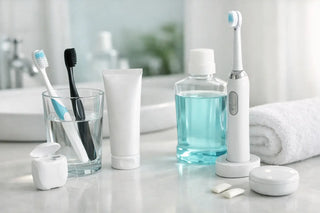
A bright smile is only part of the picture. If you are considering how to build an effective oral care routine, the real aim is consistency that protects teeth, supports gum health and keeps everyday discomfort, sensitivity and costly dental treatment at bay.
Oral care is often treated as basic maintenance, yet the difference between a hurried brush and a considered routine can be significant. Plaque begins to form quickly, acids challenge enamel throughout the day and early gum irritation can develop quietly before it becomes obvious. A well-built routine does not need to be complicated, but it should be deliberate.
How to build an effective oral care routine at home
The most effective oral care routines are built around a few essentials done properly and at the right time. Brushing twice daily remains the foundation, but technique matters as much as frequency. A soft-bristled manual toothbrush can work very well when used carefully, while an electric toothbrush may suit those who prefer more guidance and a more uniform clean.
Brush for two full minutes, reaching the outer, inner and chewing surfaces of each tooth. Angle the bristles gently towards the gumline rather than scrubbing across the teeth with force. Aggressive brushing is a common mistake, particularly among people who assume harder cleaning means better cleaning. In practice, it can contribute to gum recession and enamel wear.
Toothpaste deserves more attention than it usually gets. Fluoride toothpaste remains the standard choice for most adults, ideally at a strength of 1350–1500 ppm fluoride, as this level is widely recommended to help strengthen enamel and reduce the risk of tooth decay. If you experience sensitivity, a formula designed for sensitive teeth may help over time, though it usually requires regular use rather than a few days of application. Whitening toothpastes can improve surface staining, but they vary. Some are gentle enough for ongoing use, while others can feel too abrasive for those with delicate enamel or sensitivity.
Spitting after brushing rather than rinsing immediately is often recommended because it allows fluoride to remain on the teeth for longer. It can feel unfamiliar at first, but it is one of the simpler ways to get more from the toothpaste you are already using.
The step many routines miss
Interdental cleaning is where many otherwise careful routines fall short. Toothbrush bristles do not adequately clean the tight spaces between teeth, which means plaque and food debris can remain in place even after a thorough brush. Over time, that can contribute to cavities between teeth, gum inflammation and unpleasant breath.
Floss is a reliable option, particularly for tighter contacts, while interdental brushes can be more effective and easier to manage for wider gaps or around dental work. The best choice is often the one you will use consistently and correctly. If flossing feels fiddly, that does not mean you should abandon interdental cleaning altogether. It may simply mean another format is better suited to you.
This stage should happen once a day. Evening is often ideal because it removes the build-up from the day before you sleep, when saliva flow naturally decreases and the mouth becomes more vulnerable to bacterial activity.
Where mouthwash fits - and where it does not
Mouthwash can be useful, but it should support your routine rather than stand in for the essentials. A fluoride mouthwash may be helpful if you are prone to decay, while an antibacterial formulation can be appropriate in certain cases of gum irritation or after professional advice. Cosmetic mouthwashes that freshen breath have their place, though their effects are usually shorter-lived if the cause of bad breath is not addressed.
Timing matters here. Using mouthwash immediately after brushing can reduce the benefits of fluoride toothpaste by washing it away too soon. If you use mouthwash, it is usually best at a separate time from brushing, ideally at least 30 minutes later or during another part of the day. Many people benefit more from using mouthwash at another point in the day, such as after lunch or mid-afternoon.
Alcohol-free formulas are often preferable for those who experience dryness or irritation. A mouthwash that leaves the mouth feeling intensely minty is not necessarily the most beneficial one. As with many personal care products, a more refined formulation may offer better long-term comfort.
Tailoring your oral care routine to your needs
There is no single answer to how to build an effective oral care routine because individual concerns matter. Someone with strong enamel and minimal dental work may need a straightforward routine of fluoride toothpaste, daily interdental cleaning and regular check-ups. Someone with braces, implants, crowns, veneers, sensitivity or recurring gum problems will usually need a more tailored approach.
If you have braces or fixed orthodontic appliances, cleaning becomes more time-consuming and more important. Interdental brushes and specialist orthodontic tools can help remove plaque around brackets and wires where a standard toothbrush struggles. If you have implants or bridges, careful cleaning around the gumline is essential to preserve both the restoration and surrounding tissues.
For sensitivity, look beyond the obvious. It may be linked to whitening products, acidic diets, over-brushing or exposed root surfaces. A desensitising toothpaste can help, but it should not become a way to ignore persistent pain. Ongoing or localised sensitivity warrants professional assessment.
Dry mouth also deserves attention. Saliva plays a crucial role in protecting teeth and soft tissues, so reduced saliva can raise the risk of decay, bad breath and irritation. Dry mouth is commonly linked to medicines, including antidepressants, antihistamines and some blood pressure treatments, as well as stress, ageing and certain medical conditions. Gentle oral care products, hydration and products specifically designed for dry mouth may all help, but the cause is worth understanding.
Daily habits that influence your mouth more than you think
An effective oral care routine does not begin and end at the bathroom sink. Daily habits shape the condition of your teeth and gums in ways that are easy to underestimate. Frequent snacking, sugary drinks and acidic foods all create repeated challenges for enamel. It is not only how much sugar or acid you consume, but how often your teeth are exposed to it.
If you enjoy coffee, red wine or tea, staining may become a cosmetic concern even if your oral health is otherwise sound. In that case, whitening products may help reduce surface staining, though results vary depending on the cause and severity of discolouration but they are best approached with care. Stronger is not always better, particularly if sensitivity is already an issue. Persistent, severe or localised sensitivity should be assessed by a dentist, especially if triggered by hot, cold or sweet foods.
Smoking and tobacco use remain among the most significant factors in gum disease, staining and oral health complications. Even a well-designed oral care routine cannot fully offset the risks associated with smoking or tobacco use.
Hydration matters too. A dry mouth feels uncomfortable, but it also creates a less protective environment. Drinking water throughout the day supports comfort and helps rinse away food debris, particularly when brushing is not possible.
When to brush - and when to wait
One of the most useful refinements in any routine is knowing when not to brush immediately. After acidic foods and drinks such as citrus, fizzy drinks or wine, enamel can be temporarily softened. Brushing straight away may increase wear. Waiting around 30 minutes before brushing is generally the better approach.
This is a good example of why oral care is not simply about doing more. It is about doing the right things in the right order. Precision often protects better than enthusiasm.
Professional care is part of the routine
Even the most disciplined home care has limits. Regular dental examinations and hygienist visits remain essential because they catch issues that are easy to miss at home, from early decay to gum disease and signs of grinding or wear. Professional cleaning can also remove hardened deposits that brushing and flossing cannot shift.
The right interval varies. Some people do well with standard six-monthly reviews, while others may need more frequent support depending on their history, risk factors and current oral health. Bleeding gums, during brushing or flossing, persistent unpleasant breath, or you notice tooth mobility or loosening, pain or changes in the mouth all should not be ignored, particularly if it happens regularly. Persistent bleeding can be an early sign of gum disease and warrants professional assessment.
For those who value curation and efficacy across personal care, oral health deserves the same considered approach as skincare or supplementation. At John Bell & Croyden oral care is best approached in the same considered way as skincare or supplementation: choosing products with purpose, quality and suitability rather than adding unnecessary complexity.
Building a routine you will actually keep
The best oral care routine is not the one with the longest list of steps. It is the one that fits your life well enough to remain consistent when work runs late, travel disrupts your schedule or you are simply tired. Two minutes of proper brushing, once-daily cleaning between the teeth (interdental cleaning) and thoughtful product selection will usually do more for long-term oral health than an elaborate routine you abandon after a fortnight.
If you are upgrading your routine, make one or two changes first. Swap an overly harsh toothbrush for a softer option. Introduce floss or interdental brushes at the same time each evening. Choose a toothpaste that matches your actual concern rather than the loudest claim on the packaging. Small refinements tend to last.
A good oral care routine should feel less like a chore and more like intelligent maintenance - quietly protecting comfort, confidence and health every day.