
Seeing pink in the sink after brushing can be surprisingly easy to dismiss. Yet if you are wondering what causes bleeding gums (and what helps), the answer is rarely just that you brushed too hard. Gum bleeding is usually a sign that the tissues around the teeth are irritated, inflamed or under strain - and knowing which of those is happening matters.
For many adults, the cause is straightforward and treatable. For others, bleeding gums can point to a lapse in oral hygiene, an unsuitable brushing technique, a new medication, hormonal changes or, less commonly, an underlying health concern. The useful news is that mild gum bleeding often responds well to consistent care. The more important point is not to ignore it if it keeps returning.
Because bleeding gums are often connected to wider oral care habits, it can also be helpful to understand how to choose a mouthwash properly and recognise what causes tooth sensitivity and how to treat it, particularly where gum irritation, brushing technique and product choice overlap.
This article is for general information only and does not replace professional medical, dental or pharmacy advice.
What causes bleeding gums (and what helps) most often?
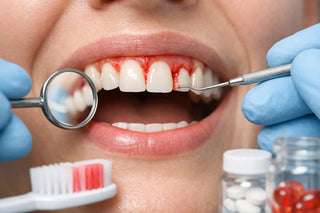
The most common cause of bleeding gums is plaque build-up along the gum line. Plaque is a soft film of bacteria that forms on the teeth every day. If it is not removed thoroughly, it can irritate the gums and lead to gingivitis, the earliest stage of gum disease. At this stage, gums may look redder than usual, feel tender and bleed during brushing or flossing.
What helps in this situation is not stopping brushing where it bleeds. That instinct is understandable, but it tends to make matters worse. Gentle, thorough cleaning allows inflamed gums to settle over time by removing the bacteria that triggered the irritation in the first place. A soft-bristled toothbrush, careful daily interdental cleaning and a toothpaste formulated for gum care can all support this.
If plaque is left in place for too long, it can harden into tartar, which cannot be removed by brushing alone. Once tartar is present, home care still matters, but a professional clean is often needed before the gums can improve properly.
When brushing technique is part of the problem
Not every case of bleeding gums begins with poor cleaning. Sometimes the issue is overzealous cleaning. Brushing too hard, using a hard-bristled brush or snapping floss into the gums can cause small areas of trauma, especially if the gums are already sensitive.
In these cases, what helps is a change in technique rather than less cleaning. Use light pressure, angle the brush towards the gum line and move it in small circular motions rather than aggressive back-and-forth scrubbing. Interdental brushes or floss should slide gently between the teeth, not forcefully. The aim is precision, not pressure.
A fresh brushing routine can also trigger some temporary bleeding if you have only recently restarted flossing or interdental cleaning. This can improve within several days as inflammation settles, provided the technique is gentle and consistent. If it does not, there may be more than technique involved.
Other reasons gums may bleed
Bleeding gums are not always about plaque or brushing habits. Several wider factors can make the gum tissue more reactive.
Hormonal changes are one example. Pregnancy can make gums more sensitive and prone to bleeding, even with otherwise good oral care. Some people notice similar changes around menstruation or menopause. The mechanism is different, but the effect is much the same - the gums respond more strongly to plaque and minor irritation.
Medication is another consideration. Blood-thinning medicines such as warfarin, apixaban or rivaroxaban and antiplatelet medicines such as aspirin can make bleeding more noticeable, while some medicines can contribute to dry mouth. When saliva is reduced, the mouth has less natural protection against bacterial build-up, which can in turn affect the gums.
Diabetes, particularly if poorly controlled, can increase the risk of gum inflammation and periodontal disease.
Nutritional deficiencies such as low vitamin C (less common in UK), iron or vitamin B12 can occasionally contribute to gum problems such as gum inflammation. Smoking is another important factor. It can mask visible bleeding in some people while still worsening gum disease beneath the surface, which means the absence of obvious blood is not always reassuring.
Ill-fitting dental appliances, grinding, mouth breathing and significant stress can all complicate the picture as well. Bleeding gums are often multifactorial, which is why persistent symptoms deserve a closer look rather than guesswork.
What helps bleeding gums at home?
If the bleeding is mild and recent, a few measured changes at home can make a genuine difference. The first is consistency. Brush twice daily for 2 minutes with a soft brush and fluoride toothpaste containing 1350–1500 ppm fluoride (avoid rinsing with water immediately after brushing, as this helps fluoride remain on the teeth for longer), paying attention to the gum line without scrubbing. Clean between the teeth once a day with floss or interdental brushes suited to the spaces between your teeth.
The second is choosing products with purpose. Toothpastes and antiseptic mouthwashes aimed at gum care may help reduce plaque and support healthier gums, but they are usually most effective when chosen for a specific purpose as part of a routine and may not be suitable for long-term daily use unless advised by a dental professional. If your gums are sensitive, alcohol-free formulas may feel more comfortable. Some people also prefer an electric toothbrush because it helps regulate pressure and improve technique.
The third is recognising the limits of home care. If bleeding is caused by tartar, developing gum disease or a restoration that traps plaque, products alone will not resolve it. They can support healthier gums, but they cannot replace professional assessment where it is needed.
For those looking to refine their routine, choosing appropriate oral care products can be easier with advice from a pharmacist, dentist or dental hygienist, particularly if you have sensitive gums, dry mouth or ongoing irritation. At John Bell & Croyden, customers can also explore a curated range of premium oral care solutions tailored to sensitive gums, dry mouth and daily gum care.
Signs it may be gingivitis - or something more advanced
Gingivitis is common and reversible, but it should still be taken seriously. Typical signs include bleeding when brushing, redness, puffiness and occasional bad breath. There is often little or no pain, which is one reason people let it drift.
If gum disease progresses, it can begin to affect the structures supporting the teeth. This stage, often called periodontitis, may involve gum recession, persistent bad breath, tenderness when chewing, loose teeth or pockets forming around the teeth. At that point, the issue is no longer just surface inflammation.
This is where timing matters. The earlier gum disease is addressed, the simpler and more effective treatment tends to be. Waiting for pain is not a reliable strategy because gums can deteriorate quietly.
When to seek professional advice
If your gums bleed for more than a week despite gentle, thorough care, it is sensible to arrange a dental appointment. The same applies if the bleeding is frequent, heavy or accompanied by swelling, pain, loose teeth or visible recession.
You should also seek advice sooner if you are pregnant, have diabetes, have started a new medication linked to bleeding, or have not had a dental clean for some time. Dentists and dental hygienists can identify whether the problem is plaque-related gingivitis, deeper gum disease, mechanical irritation or something less common.
In rare cases, bleeding gums can be associated with broader medical issues. Seek urgent medical advice if bleeding gums are accompanied by unusual bruising, nosebleeds, prolonged bleeding from cuts, extreme fatigue, recurrent infections, or unexplained weight loss. A premium oral care routine does not need to be complicated, but it should be well chosen. A soft brush, fluoride toothpaste, the right interdental tool and, where appropriate, a targeted mouthwash are usually enough to build a strong foundation.
It also helps to think beyond the bathroom shelf. Smoking cessation, managing dry mouth, staying on top of routine dental visits and paying attention to diet all support gum resilience. If you wear retainers, aligners or dentures, keeping them clean matters too. Any surface that sits in the mouth can harbour bacteria if neglected.
There is also a practical point many people miss: if a product stings, feels harsh or makes you avoid brushing thoroughly, it may not be the right choice for you. The best routine is one you will use properly, every day.
Bleeding gums are common, but they are not a normal part of brushing. In most cases, they are an early nudge rather than a crisis - a sign that the gums need better support, gentler technique or professional attention. Treat that small signal promptly, and your mouth is far more likely to reward you with comfort, stability and confidence rather than a problem that grows quietly in the background.