
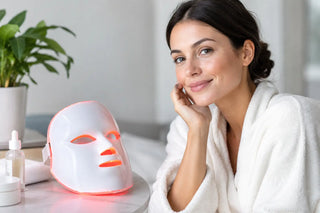
A few minutes of red or blue light can feel like a considered addition to an evening skincare ritual. Yet an LED device is a significant investment, and the results depend far more on the wavelength, consistency and your skin concern than on a mask's appearance or price alone. This LED face mask review considers what these devices can realistically do, how to judge their quality and when a different approach may be more appropriate.
LED face mask review: what is the technology?
LED face masks use low-level light energy at specific wavelengths to support particular skin processes. Unlike lasers or intense pulsed light, they do not rely on heat or controlled skin injury. The treatment should feel comfortable, and most masks are designed to be used at home for a prescribed number of sessions each week.
Red light, often in the region of 630-660 nanometres, is the wavelength most commonly associated with supporting collagen production and improving the appearance of fine lines, tone and firmness over time. Near-infrared light reaches deeper than visible red light and is often combined with it in devices designed for ageing concerns. Blue light is generally selected for blemish-prone skin because it can act on the bacteria associated with acne.
This distinction matters. A mask that performs well for persistent breakouts will not necessarily be the most relevant choice for someone focused on loss of radiance or fine lines. Multi-light devices can be appealing, but a broader range of settings is only useful when the wavelengths and treatment protocols are clearly explained.
What results can you expect?
The most credible benefit of an at-home LED mask is gradual improvement, not an overnight transformation. With regular use, red and near-infrared light may help skin look more even, calmer and subtly firmer. Fine lines can appear softened, particularly when light therapy is paired with daily broad-spectrum SPF and a well-chosen moisturising routine.
For acne, blue light may help reduce mild inflammatory breakouts. However, it is unlikely to resolve deep, painful or scarring acne on its own. Those concerns often need a more comprehensive plan, which may include a targeted active skincare routine and advice from a pharmacist, dermatologist or skincare professional - our article on salicylic acid and purging covers one common starting point.
Clinical studies of LED therapy can be encouraging, but their relevance depends on the actual device. Treatment parameters vary greatly between professional panels, handheld tools and masks. A premium mask is not automatically more effective, just as a lower-priced model is not automatically inadequate. Look beyond before-and-after imagery and consider whether the brand provides meaningful information about wavelength, treatment time and recommended frequency.
Consistency is the deciding factor
Most home devices ask for use three to five times a week, usually for around 10 minutes per session, over several weeks. Results are cumulative. Missing occasional sessions is unlikely to undo progress, but using a mask only when your complexion feels dull is unlikely to reveal its full potential.
This is also where mask design becomes a practical consideration rather than a luxury detail. A device that is heavy, uncomfortable around the nose or difficult to secure is less likely to become part of your routine. Flexible silicone masks can be easier to wear while resting, while rigid designs may offer a more structured fit. Our electrical skincare devices range covers both. The best choice is the one you will use correctly and regularly.
How to assess an LED face mask before buying
Start with your primary concern. For signs of ageing and overall luminosity, prioritise red light and, where appropriate, near-infrared light.

Red and near-infrared
FOREOFAQ 202 Silicone Near-Infrared And Red Light Therapy Led Face Mask 1 Item

Red and near-infrared
HIGHERDOSERed Light Face Mask
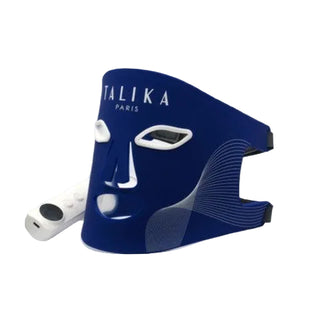
Red and near-infrared
TALIKALED Therapy Mask
For blemish-prone skin, blue light is the more relevant option. If you have both concerns, a device offering separate or combined programmes may be worthwhile, provided the instructions make clear how each should be used.

Including blue light
FOREOFAQ 201 Silicone Near-Infrared And Red Light Therapy Led Face Mask 1 Item

Including blue light
DR IVYAlphapro Light Therapy Mask
Next, examine the specifications. The brand should state its wavelengths in nanometres and give clear guidance on session length and frequency. Irradiance, often expressed as milliwatts per square centimetre, can also be useful, though it should not be treated as a standalone measure of quality. Higher output does not always mean better outcomes, particularly if it compromises comfort, treatment precision or safety. The total energy delivered over a session, alongside wavelength and uniform coverage, gives a more useful picture.
Consider the treatment area too. A full-face mask offers convenience and consistent facial coverage, whereas a targeted device may be more suitable for a smaller area of concern - and the neck, décolleté and hands, which show visible ageing readily, are often left out of a facial routine altogether.
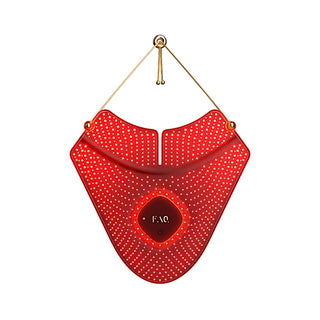
Beyond the face
FOREOLED Neck & Decollete Mask

Beyond the face
HIGHERDOSERed Light Neck Enhancer
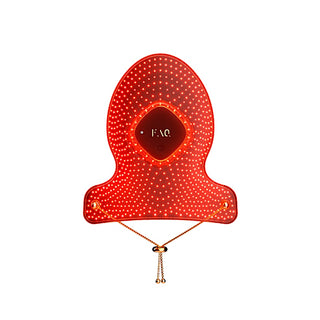
Beyond the face
FOREOLED Hand Mask
Finally, expect transparent safety information. A quality device should include eye protection guidance, contraindications, charging and cleaning instructions, a warranty, and suitable conformity marking for the UK market. It should also make realistic claims. Promises to erase wrinkles, cure acne or replace professional treatment are a reason to proceed with caution.
Safety and skin compatibility
For many people, LED masks are well tolerated, but light therapy is not suitable for every skin situation. Follow the manufacturer's instructions carefully and begin with the recommended schedule rather than extending treatment times in pursuit of faster results.
Speak to a healthcare professional before use if you take medication that can cause photosensitivity, have a light-sensitive condition, or are receiving treatment for a skin disorder. This is particularly relevant for some antibiotics, retinoids and medicines used for mood, inflammation or other medical conditions. Anyone with a history of seizures triggered by light should also seek medical advice before using an LED device.
If your skin is irritated, sunburnt or compromised after a peel, resurfacing treatment or strong active skincare, allow it to recover before beginning LED sessions. Light therapy is generally best used on clean, dry skin, before skincare products. Applying potentially photosensitising or irritating formulas immediately beforehand can make it harder to identify the cause of a reaction.
Eye protection deserves particular attention. Some masks have built-in eye guards, while others provide separate goggles. Do not assume that closed eyes are sufficient protection, especially with blue light. Use the device exactly as directed and stop if you experience discomfort, headache, visual disturbance or persistent redness.
Where LED fits within an advanced skincare routine
An LED mask works best as a supporting treatment, not as a replacement for the fundamentals. Daily sunscreen remains the most valuable step for preventing visible photoageing. A gentle cleanser, moisturiser appropriate to your skin type and evidence-led actives such as vitamin C, retinoids or exfoliating acids can all have a meaningful role, but they need to be introduced thoughtfully - our guide to layering active skincare explains the order.
The timing is straightforward: cleanse, use the LED mask on dry skin, then apply the rest of your evening or morning routine. If you are using potent prescription treatments or have reactive skin, simplify the routine around your sessions and seek personalised advice. More products do not always produce better skin.
For those seeking a curated approach to advanced skincare, our skincare specialists can help place light therapy within a broader routine that reflects both your goals and skin tolerance. Where medication, a light-sensitive condition or a diagnosed skin disorder is involved, a pharmacist or GP should be your first call. This is particularly valuable when you are balancing breakouts with early signs of ageing, or want to introduce active ingredients without overloading the skin barrier.
Is an LED face mask worth the investment?
An LED face mask can be worthwhile for someone prepared to use it consistently and whose expectations are measured. It offers a convenient, non-invasive way to support concerns such as mild breakouts, uneven-looking tone and early visible signs of ageing. Its value rises when it becomes a regular, enjoyable part of a disciplined skincare routine.
It may be less compelling if you want rapid correction of deep wrinkles, significant pigmentation, severe acne or scarring. In those cases, professional assessment and treatment may offer a more targeted route. The most considered purchase is not necessarily the mask with the longest feature list, but the one with credible specifications, clear safety guidance and a programme you can genuinely maintain. Give it time, observe your skin carefully and let steady use, rather than marketing claims, guide the verdict.