
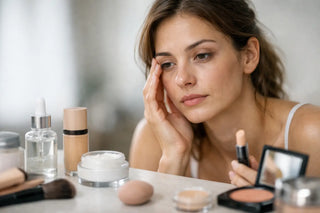
A late train, an early meeting or a run of disrupted sleep can show on the face long before it is felt elsewhere. Thoughtful make-up & skincare for tired-looking skin is less about masking every sign of fatigue than restoring the qualities that make a complexion appear well: hydration, even tone, comfortable texture and a little strategic luminosity.
The most convincing result comes from preparation. A full-coverage base applied over dehydrated skin can settle into fine lines and look heavier as the day goes on, while too much brightening product beneath the eyes can draw attention to puffiness. A considered routine allows complexion products to sit more naturally and keeps the finish refined rather than overworked.
Start with skincare that supports tired-looking skin
Fatigue can leave skin looking dull for several reasons. A compromised moisture barrier can make the surface appear less smooth and reflective; dehydration may accentuate fine lines; and poor sleep, stress, alcohol or seasonal allergies can contribute to puffiness or darker-looking under-eyes. Genetics and natural facial anatomy also play a substantial part, particularly around the eye area. No single product can alter these factors completely, but the right selection can noticeably improve how the skin looks and feels.
Cleanse without stripping
In the morning, choose a gentle cream, gel or milk cleanser that removes overnight skincare without leaving the face tight. Skin that feels squeaky-clean is often being deprived of the lipids and water it needs to look comfortably plump. If you cleanse thoroughly the night before and your skin is dry or reactive, a rinse with lukewarm water may be sufficient in the morning.
Avoid very hot water, vigorous towelling and multiple exfoliating cleansers in one routine. These can create temporary redness and dryness - neither is helpful when the aim is a rested-looking complexion.
Replenish moisture, then seal it in
A hydrating serum beneath moisturiser is a useful starting point, particularly one containing humectants such as hyaluronic acid or ceramides. Applied to slightly damp skin, these ingredients help draw water into the upper layers of the complexion. Follow with a moisturiser suited to your skin type: a lighter lotion may suit oilier skin, whereas dry or mature skin may prefer a richer cream containing ceramides, squalane or nourishing oils.
Give each layer a moment to settle. This small pause matters when make-up follows, reducing pilling and helping foundation adhere evenly. During colder months, central heating and wind may call for a more emollient formula; in humid weather, a lighter hydrating texture is often more comfortable.
Daily broad-spectrum SPF is equally worthwhile. Consistent sun protection helps address the cumulative uneven tone and textural change that can make skin appear less bright over time. Choose an SPF that wears well under your preferred base product, as the best formula is the one you will apply generously and regularly.
Treat the eye area with restraint
A cooling eye gel can feel particularly pleasant in the morning, while a hydrating eye cream may help concealer glide on more smoothly. Store a gel formula in the fridge if you enjoy a cooling effect, then apply with a light press rather than rubbing. Caffeine is often included in products designed for puffiness - our guide to eye creams for puffiness covers this - while humectants and peptides can support a smoother-looking finish.
Be realistic about dark circles. Blue, purple or brown-toned under-eyes may be linked to pigmentation, visible blood vessels, hollowness, allergies or hereditary structure. Skincare can hydrate and improve surface quality, but colour correction and carefully placed concealer are usually the more immediate answer.
Make-up for tired-looking skin: use light, not layers
The aim is a complexion that looks fresh at conversational distance and still resembles skin up close. Begin only after skincare has settled. If your base separates, the issue may be too many layers, incompatible textures or insufficient time between application - not necessarily the foundation itself.
Choose a flexible, luminous base
A tinted moisturiser, skin tint or medium-coverage foundation with a natural or radiant finish is often more flattering than a flat matte formula when skin looks tired. Apply a small amount from the centre of the face and blend outwards, adding coverage only where needed. This preserves the natural variation in the skin and avoids a mask-like result.
If redness or pigmentation is the main concern, use a targeted concealer before or after base rather than applying several layers of foundation everywhere. A peach or apricot corrector can soften blue or violet shadows beneath the eyes, but use the smallest amount possible. On deeper skin tones, richer orange or red-orange correctors may be more appropriate. The correct shade depends on the depth and undertone of the discolouration, so daylight is the most reliable place to assess it.
For under-eyes, choose a concealer with enough pigment to correct but enough slip to remain comfortable. A shade close to your foundation, or marginally brighter, tends to look more credible than a dramatically pale triangle of product. Press it in gently, concentrating on the inner corner and the area of darkness rather than coating the entire eye contour.
Bring back dimension
Cream blush is one of the quickest ways to make a tired complexion appear more awake. Soft rose, peach, berry or warm terracotta shades can bring life back to the face, depending on your natural colouring. Place it slightly higher on the cheeks and blend towards the temples for a subtly lifted effect.
A cream bronzer can add warmth where the sun naturally reaches the face, but a heavy contour may look severe on skin lacking sleep. Likewise, choose a finely milled, low-shimmer highlighter or luminous balm over obvious glitter. Tap it onto the high points of the cheekbones and perhaps the brow bone, keeping it away from areas with pronounced texture.
Powder is useful, but selective application is key. Set the sides of the nose, chin and centre of the forehead if shine is a concern, leaving the cheeks and under-eye area less powdered where possible. This helps retain the fresh finish created by skincare and cream products.
Open up the eyes and define the face
When the eyes look weary, soft definition generally works better than a highly graphic look. Curl lashes and apply a lengthening mascara, concentrating at the roots and outer corners. A taupe, brown, plum or charcoal liner smudged close to the upper lash line can define the eyes without the hardness of a thick black line.
Well-groomed brows create useful structure, particularly when you are wearing minimal make-up elsewhere. Brush them upward, fill only sparse areas with fine strokes, then use a clear or tinted gel to hold the shape. A touch of cream or satin shadow in a neutral tone can add polish, but avoid overly frosted shades if they emphasise creasing.
Finish with a nourishing lip balm, tinted balm or satin lipstick. A little colour on the lips can balance the complexion and make the overall effect feel intentional, even on days when time is limited.
Adjust the routine when skin is stressed
It can be tempting to respond to dullness with strong acids, scrubs and multiple active ingredients. Yet overtired or dehydrated skin often benefits more from simplification. If it stings, flakes or feels persistently tight, pause unnecessary exfoliation, prioritise gentle cleansing and barrier-supporting moisturisation, and introduce actives gradually once comfort returns.
For longer-term brightness, ingredients such as vitamin C, niacinamide, azelaic acid, retinoids and carefully chosen exfoliating acids can be valuable, but they should be selected according to skin sensitivity and used consistently rather than all at once. Retinoids and exfoliating acids may increase irritation if overused, and some active treatments are unsuitable during pregnancy or breastfeeding. Our skincare specialists can help you choose between formulas and build a routine that suits your skin; professional advice from a pharmacist, GP or dermatologist is sensible if you are managing a skin condition, persistent discolouration or irritation.
Puffiness that is new, severe, one-sided or accompanied by pain, visual changes or swelling elsewhere in the body should not be treated as a cosmetic concern alone. Seek advice from a healthcare professional. For everyday tiredness, however, a cool compress, adequate hydration, gentle movement and a little more sleep where possible remain valuable companions to any skincare routine.
A rested-looking face need not rely on a complicated ritual. Well-hydrated skin, a flexible base, precisely placed colour and a light hand are often enough to make the mirror look kinder before the day properly begins.