
The Rise of Gourmand Fragrances and Why We Love Them
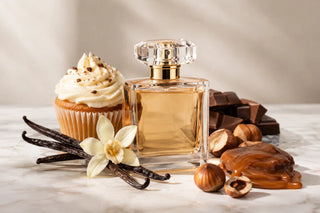
A fragrance that calls to mind warm pastry, vanilla custard or a square of dark chocolate is rarely trying to smell literally edible. The pleasure lies in recognition: something familiar appears for a moment, then woods, florals, musk, smoke or spice pull it back into the world of perfume. That tension has helped gourmand fragrances move from curiosity to one of modern perfumery’s most expressive families.
Gourmand once suggested obvious sweetness, but today it can be creamy, roasted, salty, smoky, boozy, woody or unexpectedly dry. Vanilla may still be one of its great signatures, but contemporary gourmand has travelled a long way beyond the dessert trolley.
When perfume discovered dessert
Perfumery has borrowed from food for centuries. Vanilla, spices, fruit, honey and aromatic herbs were part of fragrance long before anybody thought to group perfumes under the word gourmand. What changed was the intention: rather than using an edible note quietly within a composition, perfumers began making the idea of something delicious part of the fragrance itself.
The modern history of gourmand perfume is closely associated with Mugler’s Angel, launched in 1992. Its striking combination of patchouli, fruit and confectionery-like notes challenged expectations of what a fine fragrance could smell like. It was bold, recognisable and difficult to mistake for anything else, but more importantly it helped establish the idea that references to chocolate, caramel and other edible pleasures could belong in serious perfumery rather than novelty scent.
Gourmand had found a place in contemporary fragrance. What followed was far more interesting than simply making perfume sweeter.
Gourmand does not simply mean sweet
The word gourmand still invites images of caramel, vanilla and confectionery, but sweetness is only one part of the family. Coffee can introduce bitterness and roasted depth, cacao may feel dry, dark and earthy rather than chocolate-box sweet, while nuts can be creamy or toasted. Tea can bring tannic freshness, and rice or milk accords can suggest softness and texture without becoming sugary at all.
Even vanilla is far less predictable than its reputation suggests. In one composition it can feel soft, creamy and comforting; surrounded by woods, smoke, leather or resin, it can become darker, drier and considerably less innocent. The edible reference draws us in, but contrast is often what stops the perfume becoming too literal.
If you want to explore how perfumers build these effects into a fragrance family, our guide to gourmand fragrance goes deeper into the structure and character of the category.
Why edible smells feel so personal
Food and memory are difficult to separate. Vanilla may recall baking, though not necessarily the same baking for everyone. Coffee might mean an early morning, a favourite café, travelling somewhere unfamiliar or simply the reassurance of preparing the same cup every day. Almond can be nostalgic to one person and elegant to another, while coconut might immediately suggest a holiday to someone else.
That personal history gives gourmand fragrance an intimacy that is difficult to manufacture. There is texture in the language too: we describe these scents as creamy, whipped, toasted, milky, syrupy, velvety or buttery. A perfume cannot literally have the texture of warm milk or toasted hazelnuts, yet a skilful composition can suggest it remarkably well. That illusion is part of the pleasure and one reason edible references can feel so immediate even in highly sophisticated compositions.
The association does not need to be obvious to anyone else. A particular coffee accord might remind its wearer of somewhere very specific while simply smelling dark and aromatic to the person sitting beside them. Gourmand fragrance can therefore feel personal without having to be quiet or understated.
How gourmand escaped the dessert trolley
For a while, gourmand became almost synonymous with overt sweetness. The larger and more interesting change came when perfumers began asking what that sweetness might become when placed alongside salt, smoke, leather, wood, tea, pepper or something distinctly bitter.
Caramel becomes more interesting with salt because the sweetness develops an edge. Coffee beside woods can feel dark and polished, while vanilla against leather may become smooth, warm and slightly provocative rather than confectionery-like. Cacao and patchouli can share an earthy darkness, fruit can add brightness to something otherwise dense, and transparent florals can give an edible accord more air.
A gourmand composition therefore does not need to smell like a particular pudding. Some of the most sophisticated examples simply borrow the idea of something edible before taking it somewhere food itself could never go. Familiarity provides the invitation; contrast is what gives the perfume shape.
Vanilla became a language of its own
It is difficult to discuss the rise of gourmand fragrance without returning to vanilla. Part of its appeal is familiarity: almost everybody knows its smell, yet perfumery can take it in radically different directions.
In a soft composition, vanilla may feel creamy or almost powdery. Alongside amber and balsamic materials it can become warm and resinous, while woods can dry it out and smoke can darken it. Florals can reveal a lighter side; rum, tobacco-like notes and leather move it towards something richer and more nocturnal.
This versatility explains why vanilla fragrances now appears far beyond what most people would immediately describe as gourmand. It can support amber, floral and woody compositions without turning them into dessert. Modern gourmand perfumery has become less interested in asking whether a perfume is sweet and more interested in what that sweetness is doing within the wider composition.
Salt, smoke and woods changed the conversation
Contrast is one of the reasons gourmand perfumery feels more sophisticated than its early reputation sometimes suggests. Sweetness layered upon sweetness can become overwhelming; sweetness placed against something dry, bitter, smoky or mineral gains tension.
Salt can sharpen sweetness and make caramel or vanilla feel less dense. Woods provide structure, while smoke introduces something darker and less comfortable. Musk can soften the whole composition and bring it closer to the skin. Leather can give an edible note a sleek, polished edge that feels very different from the warmth of a traditional dessert-inspired fragrance.
This is also where woody fragrances become natural neighbours to gourmand. A dry woody base can transform how an edible accord feels without removing its identity, while a touch of vanilla, cacao or another gourmand facet can soften woods without turning the entire perfume sweet. Fragrance families are useful starting points rather than walls, and some of the most interesting perfumes exist precisely because those boundaries are allowed to blur.
Gourmand moved beyond gender
Gourmand fragrance was once particularly associated with feminine marketing, helped by its connections with sweetness, vanilla and confectionery. The fragrance itself never really agreed with that limitation.
A boozy vanilla with tobacco-like notes and leather can feel dark and tailored. Coffee, woods and spice can create something dry and architectural, while pistachio, salt and musk might feel playful and contemporary without fitting neatly into older ideas of masculine or feminine fragrance. Even familiar dessert-like notes can change personality completely depending on the composition around them.
The same is true across modern perfumery. Ingredients do not have genders; their character comes from the composition and the person wearing it. Gourmand’s expansion is partly the result of people becoming more comfortable following what smells interesting rather than what a fragrance counter once suggested they should wear.
Why gourmand suits changing ideas of luxury
Luxury fragrance has changed too. Formality once carried much of the language of luxury: polished bottles, restrained compositions and scents connected with particular occasions. Contemporary luxury has made far more room for personality, pleasure and things that are enjoyable on an ordinary day.
A perfume can be technically sophisticated and still make you smile. It can reference coffee, warm bread, dark chocolate or toasted nuts without losing craftsmanship. In fact, achieving those impressions elegantly requires considerable skill. A milky accord that feels soft rather than synthetic, a vanilla that moves gradually from sweetness into smoke, or a coffee note that remains wearable rather than smelling like breakfast all depend on balance.
That combination of immediate pleasure and technical craft suits gourmand beautifully. Luxury does not have to keep the wearer at a respectful distance; sometimes the very familiarity of a fragrance is part of what makes it compelling.
Choosing gourmand without choosing by pudding
If you are exploring gourmand fragrance for the first time, the edible note on the label is only the beginning. Someone who loves vanilla in food may dislike very sweet vanilla perfume but adore it against woods or incense. A coffee lover may prefer something bitter and roasted to a creamy latte effect, while a fragrance described as chocolate might have more in common with dark woods and patchouli than a box of truffles.
Think about the contrasts you enjoy as much as the gourmand note itself. If you prefer restrained fragrance, look for edible notes alongside woods, musk, tea or something mineral. If warmth and richness are the attraction, amber, resin, spice and boozy facets may provide more depth.
For a wider view of how Gourmand sits alongside Amber, Woody, Floral, Fresh and other styles, our guide to choosing fragrance by scent family provides the broader map. Sampling on skin then allows the composition time to reveal what the headline note does not tell you. Gourmand perfumes can change considerably after their first sweet, creamy or fruity impression has faded.
Why gourmand is likely to stay
Gourmand perfumery began by borrowing pleasures we already understood: vanilla, chocolate, coffee, caramel, fruit, nuts and spice. Its evolution has been about what perfumers discovered they could do with those references once they stopped treating edible notes as the finished idea.
Vanilla can become smoky, cacao can sit beside leather, salt can sharpen caramel and coffee can become almost woody. Something recognisably edible can gradually turn into something that could only really exist as perfume. That freedom is what has allowed gourmand fragrance to move so successfully from novelty to a permanent part of the modern fragrance wardrobe.
The pleasure begins with familiarity. The perfume becomes interesting when it surprises us.