
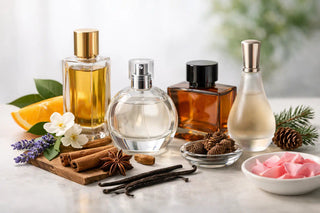
A fragrance can smell exquisite on a blotter and entirely different once it has settled on your skin. That is why learning how to choose a fragrance by scent family is more useful than simply following a best-seller list or choosing by bottle alone. Scent families give you a considered starting point: a way to recognise the moods, ingredients and styles that you are naturally drawn to.
Rather than searching for one universally 'good' perfume, begin by considering how you want to feel when you wear it. Crisp and composed for work, perhaps; softly sensual for evening; or comforted by something warm, familiar and close to the skin. From there, a fragrance family can narrow an extraordinary choice into one that feels distinctly yours.
What is a scent family?
A scent family is a broad group of fragrances linked by their dominant character. Most perfumes contain several types of note, unfolding over time, but they are usually classified according to the impression that remains most prominent.
The traditional families are citrus, floral, woody, amber and chypre, with aromatic, gourmand, fruity and musky styles often considered important sub-families. Modern perfumery regularly blends these boundaries. A floral fragrance may have a woody base, for example, while an amber scent may open with bright citrus. The family is therefore a useful guide, not a restriction.
It also helps to separate fragrance families from fragrance notes. Bergamot, rose, sandalwood and vanilla are notes or accords that may appear in many compositions. A family describes the overall architecture and atmosphere of the perfume.
How to choose a fragrance by scent family
Start with the fragrances, candles, body products or even places you already enjoy. If you favour the clean lift of lemon, neroli or green tea, fresh citrus and aromatic scents are a sensible direction. If you are drawn to rose gardens, orange blossom or a beautifully scented face cream, explore florals. If your preference is for cashmere, polished wood or the warmth of spices, woody and amber fragrances may be more rewarding.
Then consider when and where you will wear it. This is not a rule that light scents belong only in summer and deeper ones only in winter, but temperature and setting do affect how a perfume performs. A dense, sweet scent can feel enveloping on a cold evening yet overpowering during a crowded commute. Conversely, a sheer citrus may be ideal in warm weather but feel too fleeting if you want an evening signature.
Finally, allow for personal contrast. Some people prefer fragrances that mirror their style: tailored, minimal dressing paired with a clean musk or crisp vetiver. Others enjoy the tension of opposites, such as a pared-back wardrobe with an opulent white floral. The best choice is the one that feels believable on you, not the one that follows a prescribed personality type.
Fresh and citrus fragrances
Citrus and fresh fragrances are built around ingredients such as bergamot, lemon, mandarin, grapefruit and bitter orange. This family includes the classic eau de cologne style - the light, zesty original of which 4711 is the best-known example, available in our 4711 range. They often feel energetic, polished and transparent, making them a natural choice for daytime, travel, warmer months and anyone who dislikes obvious sweetness.
Many fresh scents are more sophisticated than their sparkling opening suggests. Look for citrus paired with herbs, tea, neroli, vetiver or soft woods if you want brightness with greater depth. Aromatic fragrances, which can feature lavender, rosemary, sage and basil, sit comfortably alongside this family and often have a clean, assured character.
The trade-off is longevity. Citrus materials tend to evaporate more quickly than woods, resins and vanilla. If you love this family but want a scent to last, choose an eau de parfum with a musky, woody or amber base rather than repeatedly applying a very light cologne.
Floral fragrances
Floral fragrances range from airy and dewy to rich, creamy and dramatic. Rose, jasmine, iris, peony, tuberose, violet and orange blossom each create a very different effect, so 'floral' should never be treated as one simple category.
For an understated floral, seek out rose with citrus, iris with soft woods, or peony with clean musks. These compositions often feel refined without becoming overtly sweet. If you prefer a more expressive scent, white florals such as jasmine, tuberose and gardenia offer warmth and presence, particularly in an evening fragrance.
Those who think they do not like floral perfume may simply have encountered a style that was too powdery, too sweet or too heady for their taste. Try a floral combined with green leaves, tea, pepper or cedarwood before dismissing the family altogether. A well-balanced floral can be both elegant and unexpectedly modern.
Woody fragrances
Woody scents tend to feel grounded, textural and quietly luxurious. Cedar, sandalwood, vetiver, patchouli, guaiac wood and cashmeran are common elements, though each has a different personality. Vetiver is often dry, grassy and mineral; sandalwood can be smooth and creamy; cedar is clean and pencil-shaving-like; patchouli may feel earthy, dark or surprisingly fresh depending on its treatment.
This family suits those seeking a fragrance with composure rather than obvious sweetness. Woods frequently work well in professional settings because they sit close to the skin while retaining character. They are also an excellent bridge for someone moving beyond fresh scents but not yet ready for a richer amber perfume.
A woody fragrance is rarely just wood. Citrus can make it brisker, spices can add warmth, and iris or violet can give it a soft, suede-like finish. Pay attention to these supporting notes, as they can determine whether a scent feels crisp, smoky, creamy or earthy.
Amber and spicy fragrances
Amber and spicy fragrances create warmth through accords of resins, balsams, vanilla, tonka bean, labdanum, incense and spice. They can be golden and softly sensual, smoky and contemplative, or sweet enough to feel almost edible. In older fragrance language, this family is sometimes called oriental, but amber is now the clearer and more widely preferred term.
If you like the feeling of a fragrance that lingers on knitwear and develops throughout the evening, amber is worth exploring. Vanilla does not automatically mean youthful or sugary: paired with woods, incense, leather or dry spices, it can feel polished and complex. Likewise, pepper, cardamom and saffron can bring lift and structure rather than simply heat.
Because these scents are often powerful, application matters. Begin with one spray on the chest, wrists or the back of the neck and allow it to settle before adding more. The goal is a fragrance that is noticed at close range, not one that arrives before you do.
Chypre, green and leather styles
Chypre, green and leather fragrances are defined by contrast: sparkling citrus at the top, floral or fruity facets in the heart, and a dry, mossy, woody base. Contemporary chypres may use modern moss accords and patchouli in place of traditional oakmoss, but the effect remains elegant, structured and slightly enigmatic. They often appeal to those who find straightforward florals too soft and straightforward woods too austere.
Green fragrances evoke crushed leaves, stems, sap, herbs and damp earth. They can feel invigorating, intellectual and beautifully distinctive, particularly for people who enjoy botanical skincare or the scent of a garden after rain.
Leather perfumes add another intriguing option. Suede, birch, tobacco, saffron and smoky woods can create anything from a supple, skin-like softness to a darker, more assertive composition. They are not always an easy blind buy, but on the right wearer, leather can become a compelling signature.
Gourmand, fruity and musk fragrances
Gourmand scents reference edible notes such as vanilla, cocoa, coffee, caramel, almond and praline. The finest examples balance sweetness with salt, woods, spice or musks, preventing the fragrance from becoming one-dimensional. If you enjoy gourmand scents but want something more grown-up, look for tonka, roasted nuts, incense or sandalwood in the base.
Fruity fragrances can be bright and juicy, but they need not resemble sweets. Fig, pear, blackcurrant, plum and quince are often paired with florals, woods or tea for a more nuanced result. Fig with green leaves and cedar, for instance, has a very different character from a tropical fruit cocktail.
Musks are frequently used in the base of a fragrance, lending softness, warmth or a freshly washed quality. A musk-led perfume can be an excellent choice if you want intimacy over projection. It may be less immediately dramatic, but it can become remarkably personal as it mingles with the skin.
Test before you decide
A fragrance should be tested in stages. Use a blotter first to rule out anything that immediately feels unsuitable, then wear your strongest candidates on skin. Avoid testing more than three or four at once, as the distinctions become difficult to judge.
Give each scent time. The opening notes appear within minutes, the heart develops over the next hour or two, and the base can remain for many hours. A perfume chosen solely for its first burst of bergamot or its first impression of rose may not be the perfume you are wearing by lunchtime.
Your skin's warmth, natural oils, environment and even seasonal changes can influence how a fragrance wears. Do not rely on the idea that skin chemistry will transform a scent beyond recognition, but do trust your own experience of its development. Ask yourself whether it remains pleasing, whether it suits the occasion, and whether you would be happy to catch it on a scarf at the end of the day.
At John Bell & Croyden, fragrance discovery is best approached with the same care as skincare: consider the composition, test thoughtfully and choose for the result you want to live with. The most memorable fragrance is rarely the loudest. It is the one that feels entirely at home in your life. If you are choosing scent as a present, our beauty gift ideas and wellness gift guide offer more inspiration.