
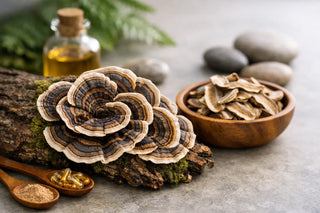
A mushroom with a fan-like shape and bands of soft brown, cream and rust is not the first thing most people associate with modern wellness. Yet turkey tail has become one of the most discussed functional mushrooms for those taking a more considered approach to daily health. The interest in turkey tail mushroom benefits centres largely on immune support, but that is only part of the picture. For a broader view of how these ingredients are used, explore our guide to functional mushrooms.
Turkey tail, known scientifically as Trametes versicolor, has a long history of use in traditional herbal practice. Today, it sits at the meeting point of heritage and research, which is precisely why it attracts sustained attention. For those taking an evidence-led approach to wellbeing, it is worth understanding both its potential and its limitations.
What is turkey tail mushroom?
Turkey tail is a type of medicinal fungus that grows naturally on decaying wood. Its layered appearance resembles the tail feathers of a wild turkey. Unlike culinary mushrooms, it is typically not eaten as a whole food. Instead, it has traditionally been prepared as teas, powders and extracts.
Its reputation comes largely from its polysaccharide content, particularly beta-glucans, alongside other naturally occurring antioxidants. Extracts such as PSK and PSP have been studied for their interaction with immune response, which explains the continued scientific interest in this ingredient.
Turkey tail mushroom benefits: what people are looking for
Interest in turkey tail tends to centre on three areas: immune function, digestive balance and antioxidant support.
Immune function
Turkey tail is most closely associated with immune health. The beta-glucans found in mushrooms are understood to interact with immune cells in ways that support normal immune activity rather than simply increasing it. This distinction is important, as balance is often more relevant than stimulation.
Research has explored its role alongside conventional care in specialist settings, which has contributed to its reputation. For most consumers, however, immune health is better supported through a combination of lifestyle factors and well-established supplements, including vitamin D, balanced nutrition and, where appropriate, clinically supported immune support supplements.
Gut health and the microbiome
Turkey tail has also been discussed in relation to digestive health. Some of its compounds may act as prebiotics, helping to support beneficial gut bacteria. This links gut health with broader wellbeing, including immune resilience and comfort after eating.
For those focusing on this area, established options such as probiotics and fibre-led nutrition often provide a more direct and accessible foundation.
Antioxidant support
Like many plant and fungal compounds, turkey tail contains antioxidants that help protect cells from oxidative stress. While this contributes to its appeal, antioxidants are widely available through diet and supplementation. Products within antioxidant supplements can offer more consistent intake in everyday routines.
Availability and regulatory considerations
One important factor often overlooked in discussions of turkey tail is availability. In the UK, turkey tail is currently classified under “Novel Food” regulations. This means it cannot be legally sold for human consumption without specific authorisation, which is a lengthy and costly process.
As a result, while interest in turkey tail mushroom benefits continues to grow, appropriately authorised consumer products are not widely available through reputable UK retailers. This makes it particularly important to approach the category with caution and to focus on legally compliant alternatives where appropriate.
What the research does and does not say
Turkey tail is one of the more researched functional mushrooms, but the evidence base still requires careful interpretation. Much of the work has focused on laboratory settings or specialised clinical contexts rather than general use.
This does not diminish its scientific interest, but it does reinforce the importance of perspective. For most people, the benefits associated with immune health, digestion and antioxidant support are better supported through well-established approaches that are both accessible and regulated.
Practical alternatives for similar goals
For those interested in the areas commonly associated with turkey tail, there are several practical and effective alternatives.
- For immune health, vitamin D, zinc and broader immune support formulations provide a strong, evidence-based foundation.
- For digestive balance, probiotics and fibre-rich nutrition remain central to microbiome support.
- For antioxidant intake, a diet rich in plant foods alongside antioxidant supplements offers a more consistent approach.
For those specifically interested in functional mushrooms, other varieties such as reishi, lion’s mane and cordyceps are more widely available and can be explored within a regulated environment.
Who might still be interested in turkey tail?
Turkey tail continues to attract interest from consumers who follow developments in functional ingredients or who are drawn to traditional wellness practices. Its appeal lies in its combination of heritage, emerging research and distinctive biological profile.
However, in a practical retail context, its role is currently more academic than functional. Understanding its potential can still be useful, particularly when evaluating alternative ingredients or broader supplement strategies.
Turkey tail mushroom benefits in context
Turkey tail reflects a wider shift in how people approach wellbeing. There is increasing interest in ingredients that support resilience and balance over time.
At the same time, regulatory frameworks and evidence standards matter. The most effective approach is not to pursue every emerging ingredient, but to focus on those that are both accessible and appropriate for regular use.
In that sense, turkey tail serves as a useful reference point. It highlights the importance of combining scientific curiosity with practical judgement, and of choosing supplements that align not only with interest, but with quality, availability and everyday usability.