
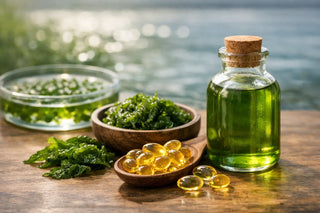
For those who do not eat fish, vegan omega-3: algae oil explained begins with a simple but often overlooked fact: the EPA and DHA in oily fish and krill originate from the marine algae that form the base of the ocean food pyramid. Algae oil goes straight to that source, providing a direct, plant-based supply of the long-chain omega-3s most associated with heart, brain and eye health.
It is an increasingly considered choice for vegans and vegetarians, and anyone who prefers a marine-free supplement. Yet not every omega-3 product delivers the same form, dose or standard of purity, so understanding the label is the key to choosing well. Our guide to choosing an omega-3 supplement covers the fundamentals.
Why omega-3 matters
Omega-3 is a family of essential fats. They are called essential because the body cannot produce enough of them on its own, so they must come from food or supplements. The three names you are most likely to encounter in an omega-3 supplement are ALA, EPA and DHA.
ALA, or alpha-linolenic acid, is found in plant foods such as flaxseed, chia seeds, walnuts and rapeseed oil - our explainer on EPA, DHA and ALA sets out how the three forms differ. These are valuable additions to a balanced diet, but ALA is not the same as EPA or DHA. The body can convert a small amount of ALA into these longer-chain forms, although this conversion is typically limited and can vary considerably between individuals and is influenced by factors including sex, age and overall diet.
EPA, or eicosapentaenoic acid, and DHA, or docosahexaenoic acid, are the forms traditionally associated with oily fish. DHA contributes to the maintenance of normal brain function and normal vision with a daily intake of 250mg DHA. EPA and DHA also contribute to the normal function of the heart. These authorised health claims apply at specified intake levels, so it is worth looking beyond broad front-of-pack language to the actual amount supplied per daily serving.
What is algae oil?
Algae oil is extracted from carefully cultivated microalgae, usually grown in controlled conditions rather than harvested from the sea. Selected strains - most commonly Schizochytrium - naturally produce DHA and, depending on the formulation, EPA too. The oil is then purified and encapsulated, commonly in softgel form.
This makes it distinct from flaxseed oil or other plant oils. While those products are generally rich in ALA, algae oil can supply preformed DHA and EPA directly. For a vegan shopper looking for a direct source of preformed DHA and EPA, that distinction is central. However, not all algae oils contain the same balance of these fatty acids, making it important to compare labels.
The controlled cultivation process can also be appealing from a quality perspective. It enables manufacturers to monitor the growing environment and produce oil with a consistent fatty-acid profile. As with any supplement, standards differ between brands, so a clear label and transparent quality information remain worthwhile markers.
Is algae oil truly vegan?
In most cases, yes. The source oil is derived from microalgae and is not fish-derived. However, it is sensible to check the full product specification if you follow a strict vegan lifestyle. The capsule shell should be plant-based rather than gelatine, and the formula should not contain animal-derived processing aids or flavourings.
Some algae-based products are marketed as vegetarian but use gelatine softgels. A product labelled vegan should make the status of both the oil and capsule clear.
Algae oil versus fish oil
The principal nutritional question is not whether an omega-3 comes from algae or fish, but how much EPA and DHA it provides. Some concentrated fish oils provide higher amounts of EPA and DHA per capsule. Algae oil has historically focused more heavily on DHA, although modern formulations increasingly provide meaningful amounts of both, although some products still contain DHA only.
For people who eat oily fish regularly, a supplement may not be necessary. For those who avoid fish entirely, algae oil is one of the most direct ways to increase dietary EPA and DHA without changing their dietary principles.
There are practical considerations too. Algae oil is generally free from the fishy taste or aftertaste some people experience with fish oil. Because algae oil is not derived from fish, it may be suitable for some people with fish allergy. However, anyone with a food allergy should carefully check the product label and seek advice from their pharmacist or allergy specialist if unsure. The trade-off is that vegan EPA-and-DHA formulas can be more expensive, and a higher-strength product may require more than one capsule a day.
How much EPA and DHA should you look for?
Rather than focusing on the total amount of algae oil, compare products by the amount of EPA and DHA they provide. EPA and DHA contribute to the normal function of the heart with a daily intake of 250mg EPA and DHA combined. Products designed specifically for pregnancy, cognitive support or more targeted nutritional needs may have a different balance and dose, particularly with regard to DHA.
Do not assume that the number on the front of the pack is the amount of omega-3 you are receiving. A label may state the total quantity of algae oil, which is not necessarily the same as the EPA and DHA content. For example, a 1,000mg algae oil capsule may contain a substantially smaller amount of DHA and EPA combined.
When comparing products, focus on the nutrition panel and ask three questions: how much DHA is supplied per daily serving, how much EPA is supplied, and how many capsules are needed to reach that amount? Our article on how much omega-3 you need goes into the target intakes. This approach gives a more accurate comparison than capsule size alone.
DHA-only or EPA-and-DHA formulas?
A DHA-led formula can be a sensible choice where dietary DHA is the priority, including for those who simply want to address the gap left by avoiding fish. An EPA-and-DHA formulation is often the more rounded option for everyday supplementation, as it reflects the combination found in oily fish.
There is no universal best choice. Your usual diet, life stage and reason for supplementing all matter. During pregnancy and breastfeeding, DHA deserves particular consideration. Women choosing a supplement at this stage should seek advice from their midwife, GP or pharmacist to ensure it is appropriate for their individual needs. A midwife, GP or pharmacist can offer individual guidance, especially if you are choosing a supplement for a specific health concern.
What to look for in a quality vegan omega-3 supplement
A premium supplement should make informed choice easy. Look first for a stated amount of DHA and EPA per serving, rather than vague references to 'omega oils'. The serving size matters just as much as the amount per capsule.
You may also wish to consider whether the product uses an antioxidant, such as vitamin E, to help protect the oil from oxidation. Reputable manufacturers may also provide evidence of purity, oxidation testing or independent quality certification. Omega-3 oils are delicate fats and should be stored according to the manufacturer's instructions, away from excessive heat and direct light. Respect the use-by date, particularly once a bottle has been opened.
Taste, capsule size and formulation can influence whether you take a supplement consistently. Softgels are convenient for many people, while liquid options may suit those who dislike capsules. If you follow a restricted diet, check for soya, gluten and allergen statements alongside the vegan certification.
At John Bell & Croyden, a considered omega-3 selection means looking beyond a fashionable ingredient and towards the details that affect suitability: source, dose, formulation and quality assurance.
Can you get enough omega-3 from food alone?
A well-planned vegan diet can provide ample ALA through foods such as ground flaxseed, chia seeds, hemp seeds, walnuts and rapeseed oil. Including these regularly is beneficial regardless of whether you take an algae oil supplement.
The more nuanced question is whether ALA alone provides enough EPA and DHA for you. Because conversion is limited, many vegans choose an algae oil supplement as a dependable source of preformed long-chain omega-3. This is not a substitute for a varied diet, but a targeted addition where diet alone may leave uncertainty.
Safety and everyday use
Take algae oil exactly as directed on the pack. Taking it with a meal may be more comfortable for digestion and can help make it part of a reliable routine. More is not automatically better: high-dose omega-3 products are not appropriate for everyone.
Speak to a pharmacist, GP or other qualified healthcare professional before starting a supplement if you are pregnant, breastfeeding, preparing for surgery, have a medical condition, or take anticoagulants (such as warfarin or DOACs), antiplatelet medicines or other regular medicines. This is particularly relevant where a product provides a high dose of EPA and DHA.
Algae oil is a refined answer to a genuine nutritional question, rather than a trend-led replacement for fish oil. Our carefully selected vegan omega range includes formulations designed to suit different dietary preferences and nutritional needs. Choosing a clearly labelled product with an appropriate amount of EPA and DHA can help you supplement with confidence.