
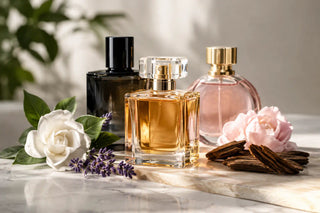
Why Niche Fragrance Continues to Capture Our Attention
A fragrance counter can offer hundreds of bottles, yet the scents people remember are rarely those that try to please everyone.
That is part of the enduring appeal of niche fragrance. The most interesting houses tend to have a recognisable point of view: a particular way of telling stories, choosing materials, interpreting places or deciding how a fragrance should feel on the skin. They do not all smell unconventional, and niche does not automatically mean better, but the category makes room for perfumes that are comfortable being specific.
The attraction is not simply rarity. It is difference: discovering a fragrance that does not immediately remind you of something half the room is already wearing, then finding a house whose particular way of making perfume feels surprisingly close to your own taste.
What do we actually mean by niche fragrance?
“Niche” is one of those fragrance terms that becomes less precise the more widely it is used.
It can describe houses devoted primarily to perfume, smaller independent brands, fragrances with selective distribution or collections that sit outside the familiar designer-fragrance world. None of those characteristics automatically tells us whether the perfume itself is good, unusual or worth its price.
A beautifully constructed fragrance can come from a globally recognised name. A niche bottle can still feel derivative.
What niche perfumery often offers is greater room for a house to establish its own identity without every fragrance needing to appeal to the widest possible audience. A bitter green note can remain bitter. Smoke does not necessarily have to be softened by sweetness. A skin scent can remain quiet, while something more theatrical can be allowed to divide opinion.
That freedom matters because fragrance is deeply subjective. One person’s beautiful austerity is another person’s unfinished perfume, and the fragrance that stops somebody else in their tracks may leave you completely unmoved.
Niche fragrance makes space for that disagreement.
There is pleasure in not smelling like everyone else
Part of niche fragrance's appeal is very simple: it is less familiar.
Mass-market perfumery often needs to appeal to a very large audience. That does not make those fragrances inferior, but it can encourage recognisable structures and styles that customers already understand and enjoy. When a successful fragrance becomes widely worn, that familiarity becomes part of its character too.
Niche perfumery offers a different pleasure. Selective distribution, smaller fragrance houses and more individual compositions make it less likely that somebody across the room will be wearing exactly the same scent.
There is something quietly luxurious about that.
You may still wear rose, vanilla, amber or woods, but perhaps not in the way everyone expects them. A familiar material can be made stranger, darker, greener, drier or more intimate. The point is not simply to find something obscure; it is to find something that feels recognisably yours.
The house behind the fragrance has become part of the pleasure
As fragrance customers become more knowledgeable, the question increasingly moves beyond What notes does this contain?
Who made it? What does the house tend to do well? Is there a recognisable creative language running through the collection? Does it return repeatedly to particular textures, materials, places or ideas?
Miller Harris, for example, moves comfortably across very different fragrance characters while retaining the sense of a considered fragrance house rather than a single hero scent. A collection can move from bright bergamot and tea to rose, leather, oud, vetiver and more atmospheric woody compositions, giving the wearer several routes into the same house.
Contes de Parfums approaches the relationship between perfume and storytelling particularly directly. Its fragrances are built around places and perfumers’ memories, with Reykjavik, Tokyo, Sevilla, Dubai, Marrakesh and other destinations acting as creative starting points rather than simply names on bottles.
The important point is not that one approach is more authentically niche than another. It is that the house itself begins to mean something.
Niche does not have one aesthetic
It is easy to imagine niche perfumery as a wall of dark bottles filled with oud, smoke and mysterious resins.
The reality is much broader.
A house can specialise in beautiful simplicity, theatrical excess, unusual contrast, storytelling, heritage or a highly contemporary interpretation of familiar ingredients. Some fragrances whisper. Some absolutely do not.
Scent of Africa broadens the picture particularly well. The Ghanaian fragrance house builds its identity around Africa, its materials and cultural references, providing a perspective very different from the predominantly European history against which fine fragrance is often discussed.
Maison Noir offers another side of contemporary niche perfumery. Its collection moves between bright citrus and woods, fruit, rose, amber, leather and gourmand contrasts, showing how a relatively small fragrance house can explore very different moods without losing its own identity.
That breadth is part of the pleasure of niche fragrance. A house does not need to commit to one recognisable smell; it can build a world broad enough to surprise you while still feeling coherent.
Modern niche fragrance has become more playful
Serious perfumery does not have to behave seriously all the time.
Discothèque demonstrates that particularly well. The house builds its world around nightlife and club culture, and even the fragrance names are in on the fun: Call For A Good Time, Baise Moi, All Night, Until First Light and Sweat, Tears, Paradise.
There is something refreshing about a fragrance house being willing to have that much personality. The names are provocative, playful and deliberately memorable, but they also tell you immediately that this is not a brand interested in reproducing the usual language of restrained luxury.
That playfulness matters because luxury itself has changed. A beautifully made fragrance can be witty, hedonistic or a little outrageous without becoming less sophisticated. In fact, part of niche perfumery's appeal is precisely that a smaller fragrance house can develop a creative world this specific without worrying whether everybody will understand it.
You may love it or decide it is absolutely not for you. Either response is more interesting than indifference.
Heritage can be niche too
The language around niche fragrance sometimes makes it sound inherently new, independent and disruptive.
That overlooks another important part of specialist perfumery: heritage.
Trudon offers an especially good counterpoint. Its history is rooted in French candlemaking, yet its contemporary fragrance collection sits naturally within the niche world. Heritage here is not the opposite of experimentation; it gives the house an established sensory language from which to create something new.
The same consideration complicates any attempt to divide fragrance neatly into “niche” and “mainstream”. Houses such as Floris London bring substantial heritage and a distinctive identity, while larger luxury names can produce fragrances every bit as interesting and beautifully constructed as those from smaller perfume specialists.
Niche is therefore most useful as a route into discovery, not a quality badge.
Familiar materials become unfamiliar again
One of niche perfumery’s pleasures is discovering just how many interpretations can hide behind apparently familiar language.
Rose does not tell you whether a perfume will be transparent, green, powdery, spicy or dark. Vanilla can move from soft sweetness into woods, smoke, leather or resin. Citrus can be sparkling and cheerful, but it can also become dry, bitter or herbal.
Even the term woody covers an enormous range. Woody fragrances can move from the dryness of vetiver and cedar towards sandalwood, aromatic materials, amber and oud.
This is where understanding fragrance families becomes particularly useful. Families give us a way into the conversation without pretending that they fully describe what is inside the bottle.
Our guide to choosing fragrance by scent family provides the broader map, but niche perfumery often becomes most interesting at the points where those families start to overlap.
Storytelling works when the perfume earns it
Niche fragrance is particularly fond of a story.
The inspiration might be a city, a book, a journey, a historical figure, a landscape, a nightclub or an imagined encounter. At its best, that context gives the wearer another route into understanding the perfume.
Contes de Parfums makes that relationship unusually explicit. Reykjavik interprets contrasts of cold air, landscape and warmth; Tokyo draws on cherry blossom and Hanami; while Dubai moves towards dates, saffron, amber and vanilla.
The fragrance still has to work once the story has been forgotten.
A beautiful description cannot rescue a perfume you do not enjoy wearing, and an elaborate concept should never become a substitute for composition. But when the idea and fragrance reinforce one another, the story adds another layer of pleasure.
This is one reason niche perfume rewards time. The first spray introduces the scent; living with it reveals whether the idea continues to hold together.
Modern niche fragrance has become more playful
Serious perfumery does not have to behave seriously all the time.
Beneath the wit, the fragrances themselves still have to work. Jasmine, iris, amber, vetiver, musk, sandalwood, saffron and woods give the collection recognisable perfumery foundations, but the house wraps them in a world that feels anything but traditional.
That is perhaps the more interesting expression of modern luxury. Craft and quality no longer have to arrive with solemnity. A fragrance can be beautifully composed while also being witty, hedonistic, provocative or deliberately excessive.
Niche perfumery has helped create space for that freedom. The difference is not simply that the bottle may be harder to find; it is that the house behind it can afford to have a personality strong enough that not everybody needs to like it.
Creative freedom still needs good perfumery
The romance around niche fragrance can occasionally make rarity sound like an ingredient.
It is not.
Selective distribution, an independent founder, a beautiful bottle or an unusual story can all make a fragrance more intriguing, but they do not automatically make the composition better.
Natural materials are not inherently superior to modern aroma molecules either. Contemporary perfumery depends on both. Natural extracts can provide extraordinary richness and variation, while modern materials can create effects that are difficult or impossible to achieve through naturals alone.
What ultimately matters is whether the composition works: its balance, development, texture, character and the simple question of whether you want to smell it again.
That is why mainstream and niche perfumery do not need to be opponents. The growing appetite for more individual fragrance has encouraged experimentation throughout the premium market.
Everybody benefits when customers become more curious.
Discovery does not require a box of samples
The renewed interest in niche fragrance is often linked to discovery sets, but they are only one way of exploring perfume.
Trying fragrances from different houses can be more illuminating than working methodically through miniatures from one brand. Start with something you already know you enjoy, then move sideways.
If woody fragrance appeals, compare what happens when different houses introduce smoke, herbs, amber, leather or florals. If rose is familiar territory, explore what happens when it is made cleaner, darker or less traditionally floral.
Even within one house, contrast can be revealing. Maison Noir moves from the citrus, mint and woods of Vertigo 236 to the much richer vanilla, leather, oud and resinous character of Quandoley 805. Those fragrances tell you far more about the possibilities within modern niche perfumery than a simple list of notes ever could.
And there is no obligation to immediately find a new signature scent. Discovery can simply be enjoyable.
A more personal relationship with fragrance
Perhaps niche fragrance has arrived at exactly the right moment because the idea of how we wear perfume is changing too.
A fragrance no longer needs to represent a person in every setting, season and stage of life. People can be loyal to one beloved bottle, build a small wardrobe, move between houses or change what they wear simply because something different suits the day.
Our guide to finding a signature fragrance explores that more personal approach in greater depth.
Niche fragrance adds another possibility. Instead of asking which perfume everybody else will recognise, the question becomes whether a particular house, composition or idea repeatedly draws you back.
Why niche fragrance continues to matter
The most interesting thing about niche fragrance is not rarity for its own sake. It is variety. Miller Harris can move through tea, rose, leather and woods, while Contes de Parfums turns places and personal memories into perfume. Trudon approaches modern fragrance through the lens of a house with centuries of scent heritage.
Elsewhere, Scent of Africa brings a different cultural perspective to the fragrance counter, while Discothèque draws on nightlife and club culture with considerably less reverence for traditional perfume conventions. These houses do not need to have much in common. The fact that they do not is precisely why niche fragrance remains interesting.
None of those approaches needs to become the definition of niche. Together they demonstrate why the category continues to hold our attention: different ideas, histories and personalities are allowed to sit beside one another without every fragrance needing to arrive at the same answer.
Explore the wider fragrance range, but allow yourself to wander between houses rather than immediately searching for the bottle you think you are supposed to like. The pleasure of niche fragrance is not knowing exactly where you will end up.