
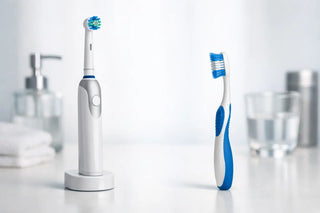
A toothbrush tends to be chosen quickly, then used twice a day for years. That makes the question of electric vs manual toothbrush: which is better? more worthwhile than it first appears. The right choice can influence plaque control, gum comfort, consistency and, just as importantly, whether brushing feels like a chore or part of a well-considered self-care routine.
For guidance on selecting the right toothpaste to use alongside your brush, see our guide to how to choose the best toothpaste for your needs.
For most adults, an electric toothbrush has the edge by generally providing a modest but consistent advantage in plaque removal and gingivitis reduction. It generally improves brushing technique and makes effective brushing easier to achieve, particularly if technique is not perfect. That said, a manual toothbrush can still deliver excellent results when used properly, and for some people it remains the more practical, comfortable or cost-conscious option. The better toothbrush is the one that suits your mouth, your habits and your willingness to use it well every day.
Electric vs manual toothbrush: which is better for cleaning?
If the comparison is based on ease and efficiency, electric brushes usually come out ahead. Their oscillating, rotating or sonic movements do much of the mechanical work for you, which can help remove plaque more consistently along the gumline and around harder-to-reach areas. For people who brush too quickly, press too hard or miss sections of the mouth, the built-in motion can be a genuine advantage.
Manual brushes rely entirely on your own technique. That is not a flaw in itself. With the right brush head, the correct angle and a full two minutes of careful brushing, a manual toothbrush can clean very well. The difficulty is that many people overestimate how thoroughly they brush. In practice, manual brushing often becomes rushed, uneven or overly forceful.
Electric models also tend to encourage better habits. Many include timers, quadrant pacers and pressure sensors, which help users maintain a dentist-recommended routine. Those features are not essential, but they can quietly improve results over time.
Gum health matters as much as polished teeth
A toothbrush should not simply make teeth feel smooth. It should support gum health without causing irritation. This is where the choice becomes more nuanced.
An electric toothbrush can be excellent for gums because it promotes consistent plaque removal at the gumline, where inflammation often begins. Pressure sensors are especially valuable for anyone who scrubs aggressively, as brushing too aggressively may contribute to abrasive enamel wear and can worsen gum recession, especially in susceptible individuals. For patients with early gum concerns, an electric model may make a noticeable difference to daily care.
Manual brushes, however, can feel gentler in the hand because you control every movement. If you already have very good technique and use a soft-bristled brush with a light touch, there is no reason a manual brush cannot be kind to the gums. Problems tend to arise when people equate effort with effectiveness and brush with too much pressure.
Whichever type you choose, a soft brush head is usually preferable. Hard bristles are rarely necessary and can be counterproductive, particularly if you have sensitive gums, exposed dentine or a history of overbrushing.
If you have sensitive teeth
Sensitivity changes the equation slightly. An electric toothbrush with a sensitive mode can be helpful because it offers controlled movement without requiring vigorous manual action. For some, this results in a cleaner mouth with less discomfort.
Others may prefer the tactile control of a manual toothbrush, especially during periods of heightened sensitivity after whitening, dental treatment or gum irritation. In these cases, comfort and technique matter more than the technology itself.
Persistent sensitivity should be assessed by a dentist, as brushing adjustments alone may not address the underlying cause.
The case for electric toothbrushes
Electric toothbrushes appeal for good reason. They are not merely a more modern version of a manual brush. At their best, they reduce the margin for error.
For adults with busy routines, they can make oral care more dependable. You are less reliant on perfect hand movements, and features such as timers can bring structure to brushing that would otherwise be inconsistent. This is particularly useful for those who travel frequently, work long hours or know they tend to rush through the basics.
They are also often easier to use for people with reduced dexterity. Arthritis, hand weakness and certain neurological conditions can make manual brushing more difficult. An electric handle can offer better grip and require less intricate movement, turning a daily task into something far more manageable.
Then there is the subjective element. Many people simply prefer the clean feeling an electric brush provides. If that sensation encourages better adherence, it matters. The most sophisticated brush in the bathroom is of little value if it is rarely used.
Where electric brushes may fall short
Cost is the clearest drawback. The initial purchase price is higher, and replacement heads tend to be more expensive than manual brushes. Over time, that difference can be significant.
There is also the issue of charging, storage and travel convenience. A manual toothbrush is uncomplicated. An electric model introduces another device to maintain, and not everyone wants that. Some users also dislike the vibration or noise, particularly if they have sensory sensitivities.
The case for manual toothbrushes
Manual toothbrushes remain a sound choice, and not simply because they are cheaper. A well-designed manual brush with soft, densely packed bristles can offer precise, comfortable cleaning. There is elegance in that simplicity.
They are easy to replace, easy to pack and available in a wide range of head sizes and handle designs, with many options within toothbrushes suited to different preferences.
For frequent travellers, minimalists or anyone who prefers a straightforward routine, manual brushing has obvious appeal.
Manual brushes can also work very well for people who are already disciplined about oral care. If you know how to angle the brush properly, clean each surface methodically and brush for the full two minutes, a manual brush can be entirely sufficient.
There is another practical consideration: some users prefer the control of a manual brush when cleaning around dental work, sore areas or specific spots that need extra care. While electric brushes are generally safe around fillings, crowns and many other restorations, preference and confidence still play a part.
Where manual brushes ask more of you
The limitation is not the brush itself so much as the person using it. Manual toothbrushes leave more room for inconsistency. You may miss the back molars, neglect the inner surfaces or spend ten seconds too long scrubbing one area while ignoring another.
That does not mean manual brushes are second-best. It means they reward good technique and offer less correction when habits are poor.
Which is better for braces, crowns and dental work?
If you have braces, bridges, implants or extensive restorative work, electric toothbrushes often prove easier to use effectively. The movement of the brush head can help clean around brackets and margins more efficiently, although interdental cleaning is still essential.
For crowns, veneers and implants, either type can work well if the brush is soft and the technique is appropriate. The goal is thorough but gentle cleaning, not force. Anyone with recent dental treatment, implant surgery or significant gum disease should follow the guidance of their dentist or hygienist, as individual recommendations may differ.
Cost, sustainability and long-term value
Price matters, particularly for products used indefinitely. Manual toothbrushes are more affordable upfront and simpler to replace. Electric toothbrushes require a larger investment, plus replacement heads and occasional charging or battery changes.
Yet value is not only about cost per item. If an electric toothbrush helps someone clean more effectively, reduce plaque build-up and maintain healthier gums, the extra spend may feel justified. Premium personal care is often less about novelty and more about sustained performance. Long-term value should be judged by effectiveness, comfort and whether the brush supports consistent oral hygiene.
Sustainability is more complex than it first appears. Manual brushes create regular plastic waste, while electric systems combine a reusable handle with replaceable heads and electronic components. Neither option is perfect, so it is reasonable to consider durability, replacement frequency and product design when choosing.
So, which toothbrush should you buy?
For most adults, an electric toothbrush is the better option if you want reliable, efficient cleaning with less dependence on flawless technique. It is especially worth considering if you have gum concerns, tend to brush too hard, wear braces or simply want more support in maintaining a consistent routine, with options available across electric toothbrushes designed for everyday use.
A manual toothbrush is still an excellent choice if you brush carefully, prefer a simpler approach or want an effective option at a lower cost. It can also suit those who dislike the sensation of an electric brush or want complete control over pressure and movement.
Oral care sits comfortably within a broader view of well-being: everyday rituals should be effective, considered and easy to maintain. A toothbrush may seem modest, but used well, it is one of the most important tools in your bathroom.
The best choice is the one you will use properly every morning and evening with a fluoride toothpaste, a soft brush head, sound technique, and along with enough care to make the routine count.