
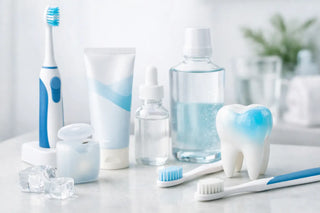
That sharp sting when cold water hits a tooth is hard to ignore. If you are searching for the best products for sensitive teeth: what works, the answer is rarely a single miracle item. Relief usually comes from choosing the right combination of toothpaste, toothbrush and supporting care, then using them consistently enough to let the ingredients do their job.
Building that routine often becomes clearer when you understand how choosing the right formulation influences daily care, and how brushing approach shapes long-term comfort, which is explored further in our guides to choosing the best toothpaste for your needs and electric vs manual toothbrush: which is better.
Tooth sensitivity tends to happen when the protective enamel is worn down or when gums recede, exposing dentine beneath commonly caused by teeth grinding, recent whitening, cracked tooth, caries, or periodontal disease to mention a few. Dentine contains tiny channels that lead to the nerve of the tooth, which is why ice cream, hot coffee or even brushing can trigger pain. The right products can reduce that response, but they work best when they match the cause of the sensitivity rather than simply masking it.
Tooth sensitivity is common, but persistent or severe symptoms may indicate an underlying dental problem requiring assessment rather than self-treatment alone.
Best products for sensitive teeth: what works first
The first place to look is toothpaste. For most people, this is where many people first notice improvement, because a properly formulated sensitive toothpaste is designed either to calm the nerve response or to block the exposed dentine tubules that allow sensation to travel.
Potassium nitrate remains one of the most established ingredients in this category. It works by helping to reduce the nerve's response to stimuli over time. This means it is not always instant, usually requiring regular twice-daily use for at least 2–4 weeks before significant benefit is seen. If your sensitivity is mild to moderate and linked to general exposure rather than a single cracked tooth or untreated decay, a potassium nitrate toothpaste can be an effective option.
Stannous fluoride is another well-established option, particularly for those who want both sensitivity relief and cavity protection. It helps create a protective layer over exposed areas while strengthening enamel and providing anti-caries protection. Some people prefer it because it offers broader oral care benefits, although formulations can vary in texture and taste and some formulations may cause temporary staining. If you are choosing between active ingredients, the best option depends on whether you want rapid nerve-calming support, broader enamel defence, or both.
There are also toothpastes formulated with arginine and calcium compounds, designed to seal open dentine channels. These can be useful for people who want a more immediate feeling of protection, especially after professional cleaning or whitening. The trade-off is that not every formula feels equally refined in daily use, so texture, flavour and foaming level can influence long-term adherence.
Which sensitive toothpaste is worth choosing?
A premium dental routine should still be practical. Look for a toothpaste that combines sensitivity support with fluoride and a formulation you will genuinely want to use morning and evening. A beautifully packaged product is of little value if it is so strongly flavoured or gritty that you stop reaching for it after a week.
Adults should generally use toothpaste containing 1350–1500 ppm fluoride. Higher fluoride toothpaste (e.g. 2800 ppm or 5000 ppm) may be prescribed by dentists for patients high-risk of cavites.
If your sensitivity flares mainly with cold food and drink, a classic daily toothpaste for sensitivity is often enough. If you also have concerns about enamel erosion, frequent staining or gum irritation, it is worth selecting a more targeted formula. Not because every sensitive tooth needs an elaborate routine, but because better category navigation makes it easier to match ingredient profile to concern across a wider range of toothpaste designed for different needs.
It is worth avoiding highly abrasive whitening toothpastes if sensitivity is already an issue. Whitening products vary enormously, and some are perfectly suitable, but others can worsen discomfort if enamel is compromised. If brightening is a priority, it is usually wiser to stabilise sensitivity first and then introduce whitening cautiously.
The toothbrush matters more than many people think
A sensitive toothpaste can only do so much if you are brushing with the wrong tool. Hard bristles and an aggressive brushing style are common reasons sensitivity persists. A soft toothbrush or extra-soft toothbrush is usually the better choice, particularly if you have gum recession or tend to scrub near the gumline.
Electric toothbrushes can be extremely helpful because many are designed to deliver effective cleaning with less manual pressure because of their pressure sensors and may help people who brush too aggressively. They help prevent the kind of over-brushing that gradually wears enamel and irritates gums. If you prefer a manual brush, choose one with a small head and densely packed soft bristles that allow for controlled, gentle cleaning, with options across toothbrushes to suit different preferences.
Technique is just as important as brush type. Short, light strokes angled towards the gumline are usually more effective than forceful back-and-forth movements. For someone investing in premium oral care, this is one of the clearest examples of where refinement meets efficacy: a gentler tool, used well, often outperforms a more aggressive approach.
Mouthwash and targeted extras
Mouthwash can support a sensitive-teeth routine, but it should not replace toothpaste. An alcohol-free fluoride mouthwash is generally the most useful choice, particularly if you want extra enamel support without the sharp burn that can make a tender mouth feel worse.
Some mouthwashes are designed specifically for sensitivity and may include ingredients that complement sensitive toothpastes. Best to avoid rinsing immediately after brushing because this washes away concentrated fluoride. Using a fluoride mouthwash can be particularly helpful for people who snack frequently, drink acidic beverages or struggle with dry mouth, as all three can contribute to discomfort. However, if a mouthwash is strongly flavoured or acidic itself, it may feel unpleasant on already sensitive teeth.
Desensitising gels and serums are another option, especially for localised sensitivity. These are often applied directly to the affected area and may be useful after dental procedures or during periods when sensitivity is more pronounced. They are not essential for everyone, but they can be worthwhile if you want a more intensive layer of care without changing your whole routine.
What to avoid if teeth feel suddenly sensitive
The most common mistake is trying too many products at once. If you switch toothpaste, add whitening strips, start a new mouthwash and use a polishing paste all in the same week, it becomes almost impossible to tell what is helping and what is irritating the problem.
Be cautious with charcoal toothpastes, abrasive polishing products and highly acidic oral care formulas. These may appeal from a cosmetic standpoint, but they are rarely the best starting point for a mouth that is already reactive. The same applies to brushing immediately after citrus, wine or fizzy drinks. Enamel is softer after acid exposure, so brushing straight away can worsen wear. It is best to leave 30 minutes before brushing.
If sensitivity appears suddenly in one tooth, or the pain lingers after hot or cold exposure, do not assume it is routine sensitivity. A filling may need attention, a tooth may be cracked, or there may be decay. Product choice has limits, and pain with a clear pattern deserves assessment. Seek prompt dental assessment if pain is severe, localised, throbbing, associated with swelling, or persists after hot/cold exposure.
Some medications can cause dryness in the month which increases chances of erosion and caries and can worsen sensitivity. Speak to your pharmacist if your dryness or sensitivity has started at the same time as starting medication.
Best products for sensitive teeth: what works in a full routine
The most effective routine is usually simple. Use a sensitive toothpaste with a clinically recognised active ingredient twice daily. Brush with a soft or pressure-controlled brush. Add an alcohol-free fluoride mouthwash if you need extra support. If sensitivity is concentrated in one area, consider a targeted desensitising treatment.
Consistency matters more than complexity. Many people abandon a suitable product too quickly because the result is not immediate. Some formulas do offer fast relief, but meaningful improvement often builds over days and weeks. Equally, if you use the right toothpaste only in the morning and then a harsh whitening paste at night, you are working against yourself.
Diet and habits also shape results. Frequent acidic drinks, clenching, over-whitening and vigorous brushing can all undermine even the best product selection. This is why sensitive teeth are not just a product issue. They are a care-routine issue.
When premium products are genuinely worth it
Not every expensive product is better, but some premium oral care formulas do justify their place. Better texture, a less abrasive base, more elegant flavour systems and thoughtfully combined actives can make daily use more pleasant and therefore more sustainable. For customers who value efficacy without sacrificing the experience of care, that matters.
The best products for sensitive teeth are the ones that combine well-established ingredients with a format you will use properly. Clinical performance is the foundation, but comfort, taste and brush feel influence adherence more than people admit. An oral care routine should feel precise and supportive, not punitive.
If your teeth are mildly sensitive, start with the essentials and give them time. If the pain is intense, localised or worsening, let a dental professional assess the cause before investing in more products. The right solution is often reassuringly straightforward - and when you find it, everyday things like a chilled drink or a careful brush stop feeling like a test.