
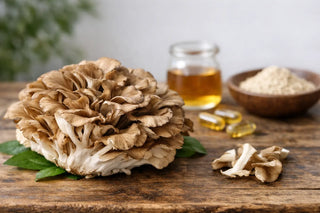
A mushroom with a long culinary history is now appearing in more carefully formulated wellness supplements, and the interest is easy to understand. Maitake mushroom benefits are often discussed in relation to immune support, metabolic health and everyday resilience, but the useful question is not whether maitake is fashionable. It is whether it deserves a place in a well-considered health routine. For a broader view of how these ingredients are used, see our guide to functional mushrooms.
Maitake, known scientifically as Grifola frondosa, is an edible mushroom traditionally used in Japan and China. In food, it is valued for its rich, savoury flavour. In supplementation, attention tends to centre on its naturally occurring beta-glucans and other bioactive compounds that may influence immune function and broader wellbeing. For a customer seeking targeted, high-quality supplements rather than wellness trends for their own sake, that distinction matters.
What are maitake mushroom benefits really about?
Most conversations around maitake begin with immunity, and with good reason. Maitake contains polysaccharides, particularly beta-glucans, which have been studied for their interaction with immune cells. These compounds may help support the body's normal immune response rather than simply "boosting" it, a phrase that is often too blunt to be useful.
That nuance is worth keeping in mind. A healthy immune system is not one that is permanently switched to maximum activity. It is one that responds appropriately. Maitake is therefore better understood as a mushroom with potential immunomodulating properties, meaning it may help the immune system function in a more balanced way.
Interest in maitake also extends to blood sugar regulation, metabolic support and antioxidant activity. Early and emerging research is promising, but it does not mean every product will deliver the same effect, or that supplementation replaces medical care, diet or lifestyle. As with many botanicals and fungi, the quality of the extract, the dose and the individual all shape the outcome.
Maitake mushroom benefits for immune support
Immune health is the best-known area for maitake, largely because of its beta-glucan content. Beta-glucans are naturally occurring fibres found in certain mushrooms, oats and yeasts, though not all beta-glucans are identical in structure or activity. In maitake, specific fractions have attracted scientific interest for the way they may interact with macrophages, natural killer cells and other parts of innate immune defence.
For the consumer, that translates into a relatively simple point. Maitake may be worth considering if you are looking to support normal immune function as part of a broader routine that includes sleep, nutrition and stress management, often alongside immune support supplements. It is not a shortcut, and it is not a replacement for clinical treatment when you are unwell.
This is especially relevant during periods of seasonal pressure, frequent travel, high workload or disrupted routines. Many people in those circumstances look for well-chosen supplements that can support resilience without overcomplicating their regimen. Maitake can fit into that space, particularly in formulas designed with evidence-led ingredients and clear standardisation.
Can maitake support blood sugar and metabolic health?
This is where interest in maitake becomes especially compelling, though it is also where caution is needed. Some research suggests maitake may help support healthy glucose metabolism and insulin sensitivity. That possibility has made it attractive to those taking a preventative approach to wellbeing, particularly people who are already attentive to nutrition, weight management and cardiometabolic health.
Still, the phrase "may help" matters. Blood sugar is influenced by sleep, body composition, activity levels, stress, alcohol intake, meal structure and underlying medical conditions. No mushroom extract can outpace those fundamentals. Maitake may offer supportive value within a well-managed lifestyle, but it should not be positioned as a stand-alone solution.
Anyone with diabetes, prediabetes or a history of blood sugar instability should be especially thoughtful. If you are taking medication that affects glucose levels, adding a supplement with metabolic effects should be discussed with a pharmacist or GP first. Premium supplementation should feel tailored and informed, not impulsive.
Maitake and antioxidant protection
Like many functional mushrooms, maitake contains compounds that may contribute to antioxidant defence. Oxidative stress is part of normal physiology, but when it accumulates beyond what the body can comfortably manage, it is associated with ageing and a wide range of health concerns.
Antioxidants are often marketed in broad, glamorous terms, yet the reality is more measured. They do not stop ageing, nor do they cancel out chronic stress, poor diet or lack of sleep. What they may do is support the body's own protective systems. In that context, maitake can be viewed as one component in a wider strategy for cellular wellbeing, often supported by antioxidant-focused supplements.
For customers interested in healthy ageing, skin vitality and long-term wellness, this broader perspective is often more useful than dramatic claims. The value lies in consistency, formulation quality and choosing ingredients with a credible rationale.
Other maitake mushroom benefits that may matter
Maitake is also sometimes explored in relation to energy, fatigue and general vitality, although the mechanism is usually indirect. People may feel better supported when immune balance, metabolic steadiness and nutritional habits are all working together. That does not make maitake a stimulant, and it should not be confused with ingredients designed for immediate energy.
Some emerging discussions also consider maitake in the context of cardiovascular wellness and weight management support. Again, the evidence is still developing and should be interpreted carefully. These are not headline claims, but they may add to maitake's appeal for those building a rounded preventative health routine.
The most credible way to think about maitake is not as a miracle ingredient but as a functional mushroom with several areas of potential relevance. That framing is less dramatic, but far more useful. For comparison, other mushrooms such as chaga are more often associated with antioxidant support.
Choosing a maitake supplement well
Not all mushroom supplements are equal, and this is one category where quality control makes a real difference. Some products rely heavily on powdered mushroom with limited information about active compounds. Others use standardised extracts designed to concentrate key constituents such as beta-glucans.
When assessing a maitake product, it is sensible to look at the form used, whether the brand specifies fruiting body or mycelium, the level of extract standardisation and the clarity of dosing guidance. Transparency is a good sign. So is restraint. Brands that explain what the ingredient may support, without promising implausible transformation, tend to inspire greater confidence.
You may also find maitake combined with other mushrooms such as reishi, shiitake or lion's mane. Combination formulas can be useful, especially where the aim is broad-spectrum support, but they should still provide meaningful amounts of each ingredient. A long ingredient list is not automatically a better one.
For many customers, a curated retailer such as John Bell & Croyden offers an advantage here. In a category crowded with broad claims and uneven standards, trusted selection matters almost as much as the ingredient itself.
Who should be cautious?
Maitake is generally well tolerated, particularly when taken as directed, but there are sensible caveats. If you are pregnant, breastfeeding, immunocompromised, preparing for surgery or taking anticoagulants, diabetes medication or immune-related treatment, professional advice is advisable before starting any new supplement.
This is not merely a legal nicety. Functional mushrooms can be biologically active, which is precisely why informed use matters. Even high-quality wellness products should be chosen in the context of personal health, not just popularity.
It is also worth remembering that tolerance varies. Some people prefer to begin with a lower dose and monitor how they feel. That approach is often prudent, especially if you are introducing maitake alongside other supplements aimed at immunity or metabolic support.
How to make maitake part of a sensible routine
Maitake tends to work best when it sits within a deliberate routine rather than a reactive one. If your goal is immune support, pair it with the less glamorous fundamentals that actually shape resilience: sufficient sleep, adequate protein, a varied diet, regular movement and stress management. If your interest is metabolic health, keep the focus on meal quality, fibre intake and physical activity first.
Timing and format are usually secondary to consistency, though following the product directions is important. Some people prefer capsules for convenience, while powders may suit those already comfortable with a more expansive supplement routine. What matters most is choosing a format you are likely to use regularly.
There is also a case for patience. Functional ingredients rarely announce themselves overnight. Their value often becomes clearer over time, particularly when they are selected for a defined purpose and used with realistic expectations.
Maitake is not the sort of ingredient that needs inflated language to earn attention. Its appeal lies in something more substantial: a credible traditional background, growing scientific interest and relevance to concerns many people are already trying to manage thoughtfully. If maitake mushroom benefits align with your goals, the wisest next step is not to buy the loudest product on the shelf, but to choose one that reflects the same standards you apply to the rest of your wellbeing.