
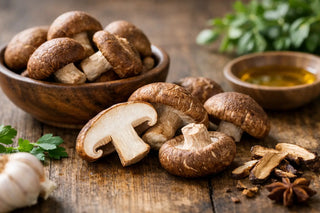
A well-chosen wellness routine often comes down to ingredients that have both tradition behind them and a clear place in modern supplementation. Shiitake mushroom benefits attract attention for precisely that reason. Long valued in culinary and traditional practices, shiitake is now finding a more defined role in contemporary well-being conversations, particularly among those looking for thoughtful support for immunity, vitality and daily resilience. For a broader view of how these ingredients are used, see our guide to functional mushrooms.
What makes shiitake especially interesting is that it sits at the intersection of nourishment and supplementation. It is a food, first and foremost, but it also contains naturally occurring compounds that have prompted growing scientific interest. For the quality-conscious customer, that matters. Not every popular ingredient earns a lasting place in a premium health routine, but shiitake has enough depth to justify a closer look.
What are shiitake mushrooms?
Shiitake mushrooms are edible fungi traditionally used in East Asian cuisine and well-being practices. They are recognised for their rich, savoury flavour, but from a nutritional perspective they offer more than taste alone. Shiitake contains a mix of polysaccharides, beta-glucans, B vitamins, copper, selenium and other naturally occurring compounds that contribute to its reputation in wellness circles.
In supplement form, shiitake is commonly found as a powder, capsule, extract or as part of a mushroom complex blended with ingredients such as reishi, lion's mane or maitake. The form matters because concentration, standardisation and intended use can vary considerably. A culinary mushroom added to supper is not quite the same as a carefully prepared extract designed for targeted supplementation.
The most credible way to think about shiitake is not as a miracle ingredient but as a functional mushroom with several areas of potential relevance. That framing is less dramatic, but far more useful. For comparison, mushrooms such as maitake are often discussed more specifically in relation to metabolic and immune support.
Shiitake mushroom benefits for everyday wellbeing
The appeal of shiitake mushroom benefits lies in their breadth. This is not an ingredient associated with only one narrow function. Instead, it is often chosen by those building a broader, more considered approach to health maintenance.
Immune support
Shiitake is perhaps best known for its association with immune health. This is largely due to its polysaccharides, including beta-glucans, which are studied for their role in supporting normal immune function. The interest here is not in dramatic claims, but in the idea that certain mushroom compounds may help the body maintain a balanced immune response.
That distinction is worth making. Immune support does not mean preventing illness outright, nor does it replace sleep, nutrition or medical care. Rather, shiitake may appeal as one part of a wider routine, particularly during periods of stress, seasonal change or increased demands on the body, often alongside immune support supplements.
Nutritional support and energy metabolism
Shiitake mushrooms naturally provide several nutrients involved in normal energy-yielding metabolism, including B vitamins and copper. While they are not a stimulant and should not be viewed in the same category as caffeine or fast-acting energy products, they can contribute to a diet that supports day-to-day vitality.
For customers who prefer wellness strategies grounded in nourishment rather than quick fixes, that can be attractive. The effect is more foundational than immediate. It depends, of course, on the wider diet and on whether the individual has any nutritional gaps to begin with.
Heart health considerations
One of the more discussed areas around shiitake is cardiovascular well-being. Some research has explored compounds in shiitake that may help support healthy cholesterol metabolism as part of a balanced diet and lifestyle. This does not make shiitake a treatment for high cholesterol, and it should never replace clinician-led advice, but it helps explain why the mushroom is often included in broader heart health conversations.
For many adults, especially those taking a preventative approach to wellness, this is where shiitake becomes compelling. It offers a food-based ingredient with a long history of use and a profile that aligns with modern interest in long-term health markers rather than short-term promises.
Antioxidant activity
Like many plant and fungal ingredients used in premium supplementation, shiitake contains antioxidant compounds. Antioxidants help protect cells from oxidative stress, which is one reason they remain a consistent point of interest in wellbeing.
This is not a unique selling point on its own, because many foods offer antioxidant value. What gives shiitake its place is the combination of antioxidant activity with immune-supportive compounds and useful micro-nutrients. In other words, the benefit is cumulative rather than isolated, and may sit alongside antioxidant-focused supplements in a broader routine.
Gut and metabolic balance
Some of the fibres and bioactive compounds in shiitake may also support digestive and metabolic health. This area is still developing, and the outcomes are unlikely to be identical for everyone. A person with a diverse, fibre-rich diet may notice little difference from adding shiitake alone, while someone seeking to broaden their intake of functional foods may find it a useful addition.
As ever, context matters. No single ingredient can compensate for a poor overall diet, but thoughtfully chosen additions can support a more complete approach.
Why shiitake appears in premium supplements
There is a reason shiitake is increasingly seen in curated mushroom formulas rather than only as a standalone ingredient. It works well alongside other mushrooms with complementary profiles, and it lends itself to a more elevated, systems-based view of well-being.
For example, a formulation might pair shiitake with reishi for broader immune and stress-related support, or with lion's mane in a product aimed at cognitive performance and daily resilience. In these cases, shiitake is not necessarily the headline act, but it adds substance and nutritional credibility to the formula.
This is also where quality becomes especially important. Extraction method, fruiting body versus mycelium content, and standardisation can all influence what a product meaningfully delivers. For customers shopping in a premium wellness environment, these details are not minor. They are often the difference between a fashionable ingredient and a genuinely well-considered supplement.
Food or supplement - which is better?
It depends on what you want from it. If your aim is general dietary variety, cooking with shiitake mushrooms is an excellent choice. They bring depth of flavour and useful nutrients, and they fit naturally into soups, broths, stir-fries and grain-based dishes.
If your aim is more targeted support, a supplement may be more practical. Extracts can offer a concentrated format, greater convenience and more consistency in daily use. That said, supplements are only as good as their formulation. A low-quality product with unclear sourcing is unlikely to offer the same reassurance as one selected with care.
Many people choose both. Food provides culinary and nutritional value, while supplementation can fit more neatly into a structured well-being routine.
Who may be interested in shiitake mushroom benefits?
Shiitake may appeal to adults who are looking to support immune health, those interested in functional mushrooms more broadly, and anyone refining a preventative wellness routine with ingredients that feel both traditional and current. It also suits shoppers who prefer subtle, sustained support over ingredients marketed with excessive urgency.
That said, it is not automatically suitable for everyone. Individuals with mushroom allergies should avoid it. Those who are pregnant, breastfeeding, managing a medical condition or taking medication should speak to a pharmacist or healthcare professional before introducing a new supplement. This is especially relevant with concentrated extracts, where the dose and compound profile may differ significantly from food use.
What to look for in a shiitake supplement
A premium supplement should be transparent about what part of the mushroom it uses, how it is processed and how it fits within the wider formula. Fruiting body extracts are often preferred by informed shoppers, though this depends on the product philosophy and intended outcome. Clear labelling, sensible dosing and reputable sourcing are all signs of a more trustworthy option.
It is also worth considering whether shiitake is best taken alone or as part of a blend. A standalone product may suit someone who wants precision. A mushroom complex may be better for someone seeking broader support with a simpler routine.
At John Bell & Croyden, this kind of distinction is what turns ingredient shopping into informed selection. The goal is not simply to follow a trend, but to choose products with a rationale behind them.
The place of shiitake in a modern wellness routine
Shiitake is unlikely to be the single most transformative element in your health regimen, and that is part of its appeal. It is not designed to be theatrical. Instead, it belongs to the quieter, more dependable category of wellness ingredients - those that support the bigger picture when used consistently and sensibly.
For some, that may mean adding shiitake to meals several times a week. For others, it may mean selecting a well-formulated supplement that aligns with goals around immune support, nutritional resilience or healthy ageing. The right approach depends on your routine, your preferences and the level of support you are seeking.
The most useful ingredients are often the ones that reward a measured approach. Shiitake sits comfortably in that space - grounded, versatile and well worth considering if you value wellness choices that combine heritage, credibility and everyday relevance.