
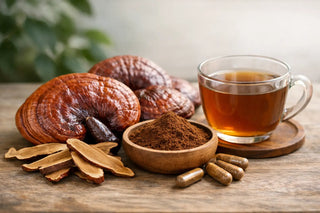
A supplement can become fashionable very quickly. What matters more is whether it earns a place in a well-considered routine. Reishi mushroom benefits are often discussed in the context of stress, sleep and immune support, but the real value of this ingredient lies in how it may fit into a broader, long-term approach to well-being. For a broader view of how these ingredients are used, see our guide to functional mushrooms.
Reishi, also known as Ganoderma lucidum, has a long history in traditional use and now appears in powders, capsules, tinctures and blended formulas aimed at modern wellness concerns. For a discerning shopper, the question is not simply whether reishi is popular. It is whether the ingredient is relevant, credible and worth considering alongside the rest of a premium supplement regimen.
What is reishi and why is it used?
Reishi is a medicinal mushroom traditionally used in East Asian wellness practices. Unlike culinary mushrooms, it is not usually eaten for pleasure. Its taste is notably bitter, and most people encounter it as an extract rather than a food.
Interest in reishi comes from its naturally occurring compounds, including beta-glucans, triterpenes and other polysaccharides. These are the constituents most commonly associated with its potential effects on immune function, stress response and overall resilience. That said, reishi is not a quick-fix ingredient. It is usually chosen by those interested in steady, supportive supplementation rather than an immediate, stimulant-like effect.
Reishi is best understood as part of a wider group of functional mushrooms with different areas of emphasis. For example, varieties such as chaga are more commonly associated with antioxidant support and everyday resilience.
Reishi mushroom benefits for modern wellbeing
The appeal of reishi is that it sits at the intersection of several common concerns. People are often not looking for one dramatic result. They are looking for better balance.
Reishi mushroom benefits and immune support
One of the most widely discussed reishi mushroom benefits is immune support. Research has focused particularly on beta-glucans and related compounds that may interact with the immune system. This does not mean reishi simply “boosts” immunity in a crude or universal way. A more accurate description is that it may help support healthy immune function and balance.
That distinction matters. Immune health is complex, and no supplement should be presented as a cure-all. Reishi may be of interest during periods of stress, seasonal pressure or when someone is aiming to support their wider wellness routine with ingredients that have a long history of traditional use.
For those who already prioritise sleep, nutrition and stress management, reishi can be viewed as part of a layered approach rather than a substitute for those foundations, often alongside immune support supplements.
Stress, calm and daily resilience
Reishi is frequently grouped with adaptogenic ingredients, meaning it is often used to support the body’s response to stress. While the term is popular, it can also be overused. In practical terms, people often choose reishi because they want to feel less frayed at the edges rather than sedated.
This is one of the reasons reishi has gained attention among busy professionals and wellness-focused consumers. It may offer a gentler proposition than ingredients associated with energy spikes or pronounced drowsiness. Some people describe it as supportive during demanding periods, helping them feel more even and less overstretched, often alongside carefully chosen stress support products.
Results are not universal, however. Some notice a subtle shift after a few weeks, while others feel very little. Reishi tends to reward consistency more than intensity.
Sleep quality and evening routines
A further reason people explore reishi is sleep. It is not generally positioned in the same category as direct sleep aids, but it is often included in evening formulas intended to encourage relaxation and support a calmer wind-down.
This can make sense for those whose sleep is affected by a busy mind, late working hours or general pressure rather than a specific sleep disorder. Reishi may complement an evening routine built around lower stimulation, reduced screen time and sensible sleep habits.
It is worth being measured here. Reishi is unlikely to override poor routines on its own. If someone is relying on caffeine late into the day, sleeping irregularly and carrying significant stress, any benefit from a mushroom extract may be modest. In that setting, it works better as part of a more thoughtful routine.
Antioxidant potential and healthy ageing
Reishi also attracts interest for its antioxidant profile. Oxidative stress is a familiar theme in discussions around healthy ageing, recovery and general well-being. Ingredients with antioxidant activity are often selected by consumers who take a preventative view of health and want to support the body’s natural defence systems over time.
This is one area where premium formulation becomes especially relevant. The headline ingredient may be the same, but extraction quality, standardisation and sourcing can vary considerably. A carefully produced reishi supplement is more likely to appeal to those who value evidence-informed curation rather than trend-led purchasing.
This is one area where premium formulation becomes especially relevant. The headline ingredient may be the same, but extraction quality, standardisation and sourcing can vary considerably. A carefully produced reishi supplement is more likely to appeal to those who value evidence-informed curation rather than trend-led purchasing, often alongside antioxidant-focused supplements.
What the evidence does and does not say
Reishi is promising, but it is also an ingredient where claims can easily run ahead of the evidence. Some studies suggest potential benefits in areas such as immune activity, fatigue and overall well-being, yet the quality and consistency of research are mixed. Different preparations are used in different studies, which makes broad comparisons difficult.
That does not make reishi irrelevant. It simply means expectations should be realistic. Reishi is best understood as a supportive supplement, not a treatment for serious medical conditions. Consumers with a premium mindset often appreciate precisely this kind of nuance. The right product is not always the one making the loudest promise.
How to choose a reishi supplement well
If you are considering reishi, format matters less than quality. Capsules may suit those who want convenience and dosing consistency. Powders can work well for those who enjoy adding supplements to drinks, though the flavour can be challenging. Liquid extracts may appeal to shoppers who want flexibility or faster incorporation into a routine.
More important is the specification of the product itself. Look for clear information on whether it uses fruiting body, mycelium or a combination of both. Many experienced shoppers prefer fruiting body extracts, though formulation philosophy varies. Standardisation for active compounds can also be useful, especially where a brand provides transparent detail rather than vague wellness language.
It is also worth paying attention to whether the extract is single-ingredient or part of a broader blend. A standalone reishi product may suit someone who wants a focused trial. A blend may be more appropriate when the goal is a wider brief, such as combining mushrooms with botanicals for relaxation or immune support.
At John Bell & Croyden, this kind of considered selection is part of what makes premium wellness shopping worthwhile. The ingredient itself matters, but so does the judgement behind the assortment.
Who may benefit most from reishi?
Reishi may be worth considering for adults interested in stress support, evening calm or general immune resilience. It often appeals to people who already have a reasonably established wellness routine and want to refine it rather than overhaul it.
It may be less suitable for someone expecting an obvious, immediate effect after one or two doses. Reishi is usually a slower-burn ingredient. The benefits, where they are felt, may emerge through regular use over time.
There is also an element of personal fit. For one person, magnesium or a targeted sleep formula may prove more useful. For another, reishi may slot naturally into a broader regimen that includes other mushrooms, adaptogens or foundational supplements.
When to be cautious
As with any supplement, reishi is not appropriate for everyone. Those who are pregnant, breastfeeding, taking medication or managing a medical condition should seek advice from a pharmacist or GP before use. This is particularly relevant for people taking anticoagulants or medicines that affect immune function.
Some individuals may experience digestive upset, dryness or mild discomfort, especially when starting a new mushroom extract. Beginning with the suggested serving, rather than exceeding it, is the sensible approach.
Quality control is another reason for caution. The mushroom category has grown quickly, and not every product on the market offers the same degree of traceability or formulation integrity. For shoppers investing in premium health, provenance should never be an afterthought.
How to build reishi into a routine
The most effective way to use reishi is usually the simplest. Choose a reputable product, take it consistently and give it time. Many people prefer it in the evening, particularly if they are interested in calm or sleep support, though some use it earlier in the day without issue.
If you are assessing whether it suits you, avoid changing too many other variables at once. A clean trial over several weeks gives a clearer sense of whether it is making a difference. This is especially useful with ingredients whose effects are subtle.
Reishi does not need to be treated as a miracle ingredient to be worthwhile. Its appeal is more refined than that. For the right person, in the right formula, it can be a thoughtful addition to a modern wellness cabinet - one chosen not for drama, but for balance, consistency and quiet support.