
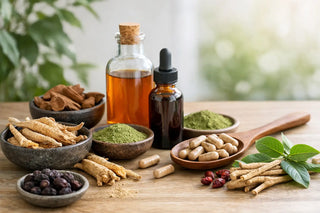
The 3pm coffee, another restless night shown on your sleep tracker, and the feeling of being permanently switched on - these are the modern pressures that have made adaptogens one of the most talked-about wellness trends. But what are adaptogens and do they actually work? The answer is more considered than the marketing often suggests. Some botanicals traditionally described as adaptogens and have been studied for stress, fatigue and mental performance, with research suggesting possible benefits in certain circumstances. However, the evidence remains incomplete, and these products are not a shortcut to resilience or a substitute for good sleep, nutrition, physical activity and appropriate medical care.
What are adaptogens?
Adaptogens are herbs, roots and fungi traditionally used to help the body respond to physical and psychological stress. The term was developed by scientists in the mid-20th century to describe substances thought to support the body's ability to maintain balance, or homeostasis, under strain.
In practical terms, an adaptogen is not intended to sedate you when you are anxious or stimulate you when you are tired in the way that a conventional medicine might. Some researchers have proposed that certain adaptogenic botanicals may influence stress-response pathways, including the hypothalamic-pituitary-adrenal (HPA) axis, although the precise mechanisms remain under investigation.
That said, adaptogen is a broad wellness term rather than a formal medical or regulatory category. There is no single test that proves a plant is an adaptogen, and individual ingredients vary considerably in their active compounds, dosage, quality and evidence base. It is more useful to assess each herb on its own merits than to assume every product carrying the label will produce the same effect.
Which adaptogens are most commonly used?
A few ingredients appear frequently in premium wellbeing formulations. Ashwagandha is perhaps the best known, traditionally used in Ayurvedic practice and now widely chosen in connection with stress and sleep. Rhodiola rosea has a long history of use in northern Europe and Asia, particularly in relation to fatigue and mental stamina. Panax ginseng has traditionally been used in connection with energy and mental performance, while reishi mushroom is frequently marketed for relaxation and evening wellbeing routines, although evidence supporting specific benefits for sleep or stress remains limited. These are traditional and customary uses rather than proven effects.
Other ingredients sometimes described as adaptogens include holy basil, schisandra, eleuthero and cordyceps. Liquorice root is also included in some traditional systems, although it requires particular care because it can raise blood pressure and lower potassium in susceptible people.
The origin of an ingredient matters, but so does the formulation. A supplement containing a named botanical does not necessarily provide a meaningful amount of its characteristic active compounds. Standardised extracts can offer greater consistency, provided the stated standardisation is relevant to the ingredient and supported by sensible dosing.
Do adaptogens actually work for stress and fatigue?
In the United Kingdom, adaptogen supplements are regulated as foods rather than medicines unless specifically licensed as medicinal products. The evidence is encouraging in places, but it is not definitive. Many studies examining adaptogens involve relatively small participant numbers, short follow-up periods and commercially specific extracts, meaning results cannot always be generalised to all products available on the market which makes direct comparisons difficult. Results should not be interpreted as proof that an adaptogen will work equally well for every person or every form of stress.
Ashwagandha has the most substantial body of human research for perceived stress. In several controlled trials, participants taking particular extracts reported lower stress scores over a period of weeks, and some studies also measured changes in cortisol. Some participants reported better sleep quality. It is important to read these as research findings about specific extracts, not as an established health benefit of ashwagandha in general, and they do not mean it is a treatment for anxiety disorders, insomnia or burnout. Those concerns deserve clinical assessment, especially when symptoms persist or affect daily life.
Rhodiola rosea has been studied for stress-related fatigue, concentration and exhaustion. Some studies suggest it may help with mental performance during demanding periods, though the research is mixed and the effects reported are modest. Its effects, if noticed, are generally subtle rather than dramatic. A person who is depleted from chronic poor sleep, low iron or an unmanageable workload is unlikely to find that a supplement alone changes the underlying picture.
For Panax ginseng, research suggests possible benefits for fatigue and certain aspects of cognition, but findings remain inconsistent. Reishi and cordyceps are popular in wellness routines, yet the evidence for broad stress resilience in healthy adults is currently less convincing than online claims may imply.
The most accurate answer is that some adaptogens may modestly support wellbeing in specific contexts, particularly alongside adequate sleep, a balanced diet, movement and realistic recovery time. It is worth knowing that these botanicals do not carry authorised health claims in the way vitamins and minerals do, so any benefit should be treated as promising rather than proven. They are best viewed as a considered addition, not a replacement for the foundations of health.
What results should you realistically expect?
Adaptogens are not designed to create an immediate, caffeine-like lift. If an ingredient is helpful, changes are more likely to emerge gradually over two to eight weeks. If a product proves helpful for you, any effects are likely to be subtle and gradual. Some people report feeling better able to cope with busy periods, experiencing less mental fatigue during the day, or finding it easier to relax as part of an evening routine.
Equally, you may notice no meaningful change. Stress has many drivers: workload, caring responsibilities, hormonal shifts, illness, finances, sleep disruption and mental health can all play a part. The appropriate support will depend on the cause. Persistent or unexplained tiredness or fatigue should not automatically be attributed to stress. Iron deficiency, vitamin B12 deficiency, thyroid disorders, sleep disorders, depression, infection, medication side effects and other medical conditions unexpected weight change, palpitations, low mood or changes in sleep merit a conversation with and may require medical assessment with your GP or pharmacist rather than a trial-and-error supplement strategy.
It is also worth being wary of products that promise to "balance hormones" or "reset cortisol". Cortisol is essential to normal health, fluctuates naturally throughout the day, and cannot be meaningfully interpreted through vague wellness language. A responsible supplement should make measured claims and clearly identify its ingredients. No food supplement has been shown to "reset" cortisol levels in healthy individuals.
How to choose an adaptogen supplement thoughtfully
Start with the outcome you want to support. For a demanding period at work, a daytime formula featuring rhodiola may be more appropriate than a product designed for a relaxing evening ritual. If stress is affecting sleep, an ashwagandha preparation should be discussed with a healthcare professional if you have a medical condition, take medicines or are unsure whether it is appropriate for you. Our sleep supplements range covers the wider options.
Choose a product that states the full botanical name, the plant part used and the amount per serving. Where relevant, look for information about the extract and standardised active compounds rather than relying on a proprietary blend that conceals individual quantities. A simple, single-ingredient supplement can be a sensible place to begin, as it is easier to assess both benefit and tolerance.
Quality is especially important with herbs and mushrooms. Trusted manufacturers should provide clear dosing, batch controls and appropriate safety information. Be cautious with products that combine numerous stimulants, herbs and high levels of caffeine under the banner of energy or stress support. More ingredients do not automatically mean a better formulation. Most studies have evaluated these ingredients for only a few weeks to a few months. Long-term effectiveness and safety are less well established.
Who should take extra care with adaptogens?
Natural does not always mean risk-free. Adaptogens can cause side effects and interact with medicines, particularly when used in concentrated extracts. Digestive upset, headache, drowsiness or feeling unusually alert can occur, depending on the ingredient.
Ashwagandha may not be appropriate for people who are pregnant or breastfeeding. People with thyroid disorder, autoimmune conditions or liver disease, or those taking medicines that affect the immune function, blood glucose, thyroid function or sleep should seek professional advice before using ashwagandha.
There have also been rare reports of liver injury associated with ashwagandha supplements. Anyone who develops symptoms such as jaundice, dark urine, severe fatigue, unexplained nausea or abdominal pain while taking ashwagandha should stop using the product and seek medical advice promptly.
Rhodiola may be unsuitable for people with bipolar disorder and should be approached carefully alongside antidepressants or other medicines that affect mood. Ginseng can interact with blood-thinning and diabetes medicines, including anticoagulants and some diabetes medicines.
Avoid liquorice root unless you have checked that it is suitable for you, especially if you have high blood pressure, heart or kidney disease, or take diuretics. Anyone preparing for surgery, managing a long-term condition or taking prescribed medication should speak to a pharmacist, GP or qualified healthcare professional before starting an adaptogen.
If you decide to try one, introduce a single product at the recommended dose and keep a brief note of sleep, mood, energy and any unwanted effects. This is more informative than starting several new supplements at once. Stop using it and seek professional advice if you develop concerning symptoms.
A carefully selected adaptogen may have a place in a refined wellbeing routine, particularly during a temporary period of pressure. If you choose to use an adaptogen supplement, the most appropriate choice is one that fits your health status, medication profile and wellbeing goals.
Important: Food supplements should not be used as a substitute for a varied, balanced diet and healthy lifestyle. If you are pregnant, breastfeeding, have a medical condition, or take prescribed medicines, seek advice from a pharmacist, GP or other qualified healthcare professional before using herbal supplements.