
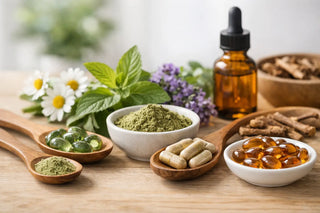
A botanical supplement can look deceptively simple: a capsule, tincture or tea made from a familiar plant. Yet the suitability of a product often depends on details such as the plant part used, extract strength, dose, quality controls and your own health circumstances. In the UK, most botanical supplements are regulated as foods rather than medicines unless specifically licensed as herbal medicinal products or medicines. This practical guide to botanical supplements is designed to help you assess those details with the care they deserve.
Botanical supplements sit at the meeting point of traditional use, modern formulation and personal wellbeing. They can be appealing for concerns such as sleep, stress, digestion or joint comfort, but 'natural' is not a synonym for risk-free, nor a guarantee of effectiveness. The stress-focused subset, for instance, is covered in our guide to what adaptogens are and whether they work. A measured approach helps you choose products that are appropriate, traceable and realistic in their purpose.
What counts as a botanical supplement?
Botanical supplements are products made using plants, algae, fungi or parts of plants, including leaves, roots, flowers, seeds, bark and berries. They may be supplied as powders, capsules, tablets, liquids, lozenges or herbal teas. Some contain a whole plant powder; others use an extract, which concentrates selected constituents from the plant.
That distinction matters. Two products carrying the same botanical name may differ substantially in their composition. Turmeric powder, for example, is not the same as an extract standardised for curcuminoids. Likewise, a peppermint leaf tea delivers a different preparation from an enteric-coated peppermint oil capsule formulated for the digestive tract.
Evidence supporting botanical supplements varies considerably between ingredients. Some botanicals have been studied in clinical trials, whereas others rely primarily on traditional use and historical experience. Research findings may not apply to every product because formulations, doses and active constituents can differ substantially.
The label should make the botanical clear. Look for both the common name and, where provided, the Latin name, as this reduces confusion between closely related plants. It should also state the plant part used, the amount per daily serving and whether the ingredient is a powder or an extract. For extracts, a ratio or standardisation may be shown, although neither is automatically a mark of superiority. The relevant question is whether the information is clear, meaningful and suited to the intended use.
Start with the concern, not the trend
The most useful way to choose a supplement is to define what you are hoping it will support. 'Better wellbeing' is understandably broad, but it does not give you a reliable basis for comparing formulations. A more focused goal - supporting digestive comfort, supporting a bedtime routine or complementing an active lifestyle - makes it easier to consider the right category and ingredients.
Be wary of products that claim to solve many unrelated problems at once. Food supplements are not medicines and should not be presented as a replacement for diagnosis, treatment or prescribed care. If you have persistent symptoms, new symptoms, severe discomfort or an existing condition that is changing, speak to a pharmacist or GP rather than attempting to manage it with supplements alone.
It is also worth considering whether the concern has a practical cause that needs attention first. A sleep supplement will not fully compensate for repeated late-night caffeine, an irregular schedule or untreated snoring. Similarly, digestive products may have a place in a considered routine, while a marked or ongoing change in bowel habit deserves clinical advice.
A practical guide to botanical supplements: reading the label
A premium-looking bottle is not, by itself, evidence of a well-made product. The label and the manufacturer's transparency offer more useful clues. Before purchasing, check four essentials:
- the exact botanical, plant part and quantity provided in the recommended daily serving;
- whether an extract is standardised where relevant, and if so, which constituent and percentage are specified;
- the full ingredient list, including allergens, sweeteners, capsules and flavourings;
- clear directions, cautions, batch information and a best-before date.
A standardised extract can offer consistency from batch to batch, Standardisation does not necessarily indicate superior effectiveness, but it may be valuable where research has focused on a particular constituent. However, it is not always necessary.
Pay particular attention to serving size. A front-of-pack figure can refer to one capsule, while the suggested daily intake may be two or three. More is not necessarily better. Taking above the labelled dose can increase the likelihood of unwanted effects without improving the result you hoped for.
For products marketed around a specific compound, consider whether the formula provides sufficient context. Some botanical constituents are poorly absorbed or may be better tolerated in a particular delivery format. This does not mean every formulation needs a long list of supporting ingredients. It means the format should have a clear rationale rather than relying on impressive-sounding quantities.
Quality is about traceability as well as strength
Plants vary naturally according to species, growing conditions, harvest timing and processing. Responsible sourcing and manufacturing help manage that variation. Established brands should be able to identify the ingredient used and apply appropriate quality checks for identity, purity and contaminants.
Choose products with a complete label, credible manufacturer details and sensible storage instructions. Avoid supplements that conceal doses in vague proprietary blends or make dramatic claims about curing disease, rapid weight loss or replacing medication. These are warning signs, not signs of innovation. Where available, independent quality testing or certification may provide additional reassurance regarding product quality and manufacturing standards.
Format matters, too. Capsules offer convenience and accurate portioning, while liquid extracts can be easier for some people to take and adjust within the label directions. Herbal teas create a slower, more sensory ritual but are usually less concentrated than extracts. A product that fits your routine is more likely to be used consistently and correctly.
At John Bell & Croyden, we believe our informed choice of botanical range is supported by being able to compare ingredients, formats and intended uses with confidence.
Safety deserves the same attention as efficacy
Botanical ingredients can interact with medicines, alter how the body processes certain treatments or be inappropriate in particular health circumstances. This is especially relevant if you take regular medication, use blood-thinning medicines, have liver or kidney disease, are preparing for surgery, or are pregnant or breastfeeding.
St John's wort is a familiar example: it can interact with a wide range of medicines, including certain antidepressants, anticoagulants and hormonal contraceptives and some medicines used for heart conditions, epilepsy and transplant care. Ginkgo, garlic and high-dose ginger may be unsuitable alongside medicines that affect blood clotting. Green tea extracts have also been associated with liver concerns in some circumstances, particularly when taken in high doses or on an empty stomach. These examples are not a reason to avoid all botanicals; they are a reason to seek individual advice before combining them with treatment.
Use extra caution with products for stress and sleep. Ingredients such as valerian, passionflower and ashwagandha may be appealing, but they are not interchangeable and may not suit everyone. Avoid combining several calming formulations simply because each is sold as a supplement. The combined effect, and the possibility of drowsiness or interactions, should be considered.
If you are unsure, take the product label and a current list of your medicines to a pharmacist. This is particularly useful where a product contains several botanicals, as interaction checks are more difficult when there are multiple active ingredients.
Introduce one product at a time
When you have selected a suitable supplement, begin with the recommended dose and keep the rest of your routine stable where possible. Starting several new products at once makes it difficult to know what is helping, what is unnecessary and what may be causing an unwanted effect.
Give yourself a defined review period. The appropriate length depends on the product and your goal, but a simple note of sleep, digestion, energy or other relevant observations can be more informative than relying on a general impression. Many botanical supplements are used for several weeks before any meaningful effect might reasonably be assessed. If you experience a reaction, stop taking the product and seek advice. Urgent symptoms such as difficulty breathing, swelling, fainting or a severe rash require immediate medical attention. If you experience persistent, worsening or unexplained symptoms, seek medical advice rather than relying on supplements alone.
Reviewing is also a useful safeguard against supplement clutter. A cabinet full of half-used products can encourage duplication, expired stock and combinations that no one has properly considered. Store supplements as directed, keep them out of children's reach and check dates periodically.
Keep expectations refined and realistic
The best botanical routine is often modest: a clearly chosen product, taken as directed, for a specific reason, alongside the foundations that support health more reliably - nourishing food, movement, sleep, hydration and appropriate healthcare support. Botanicals may complement these habits; they do not need to carry the entire weight of your wellbeing.
Choose with curiosity, but also with careful consideration. A transparent label, an appropriate dose and a conversation with a pharmacist when circumstances are complex will take you much further than the most fashionable ingredient of the moment.