
A morning coffee, an evening glass of red and a fondness for richly coloured food can all leave their mark on enamel. The best whitening toothpastes offer a considered way to lift everyday surface staining while maintaining the comfort and enamel care expected from a daily toothpaste. The right choice is not necessarily the most abrasive formula or the one promising the quickest visual transformation. It is the one suited to your teeth, your sensitivity level and the type of discolouration you wish to address.
Whitening toothpaste can be an elegant, effective addition to a dental routine, particularly for keeping a professionally cleaned or whitened smile looking fresh. It does, however, have clear limits. Understanding them makes it far easier to shop with confidence and choose a formula that earns its place on your bathroom shelf.
What whitening toothpaste can realistically do
Most whitening toothpastes work by polishing away extrinsic stains - the surface marks caused by tea, coffee, tobacco, red wine and deeply pigmented foods. They commonly use gentle abrasives, such as hydrated silica or calcium-based polishing agents, to help remove these deposits during brushing.
Some formulas also use optical brighteners. These are often blue-toned pigments that create a temporary cooler, brighter-looking appearance by changing how light reflects from the tooth surface. Others include low levels of peroxide or stain-lifting ingredients designed to support a more noticeable brightening effect over time.
What toothpaste cannot usually do is alter the underlying, natural shade of the tooth to the same degree as a professional whitening treatment. It also cannot whiten crowns, veneers, fillings or bonding. If one tooth has darkened after trauma, or if discolouration appeared suddenly, seek advice from a dentist rather than attempting to treat it with whitening products alone.
The best whitening toothpastes start with enamel care
A brighter smile should never come at the expense of tooth comfort. Enamel does not grow back, so the most suitable daily formula balances stain removal with fluoride protection and a texture that feels comfortable to use twice a day.
A toothpaste can be described as whitening because it is more polishing than a standard formula, but that does not automatically make it too harsh. The question is how your teeth respond. If you notice sensitivity, tenderness around the gumline or a rough feeling after brushing, change to a gentler product and discuss persistent symptoms with your dentist or hygienist.
Look for fluoride in a daily toothpaste, unless a dental professional has recommended an alternative. Fluoride helps strengthen enamel and supports protection against decay - a vital consideration when a whitening formula becomes part of your regular routine. Good whitening care is not simply cosmetic; it should respect the health of the whole mouth.
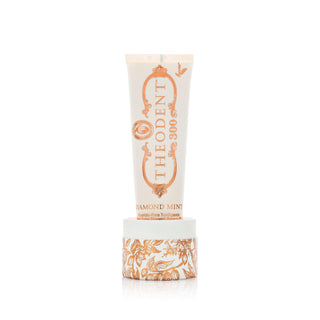
There are fluoride-free alternatives built around different chemistry, of which Theodent is the most distinctive: it uses theobromine, a compound derived from cacao, in place of fluoride. It sits at the luxury end of the category and is worth understanding before buying rather than choosing on novelty, but for those who have decided against fluoride it is a considered option rather than a gimmick.
The fluoride-free alternative
THEODENT300 Whitening Toothpaste 96.4g
For tea, coffee and red-wine stains
If your principal concern is gradual surface staining, choose a daily whitening toothpaste with polishing agents and fluoride. Consistent use matters more than aggressive brushing. Brush for two minutes with a soft-bristled toothbrush, using light pressure, particularly around the front teeth where overzealous brushing can contribute to recession and sensitivity.
This approach tends to suit people whose teeth are otherwise healthy and comfortable. Results are usually subtle and cumulative: a cleaner-looking shade rather than an artificially white finish. It is especially useful after a professional scale and polish, when the natural brightness of enamel is more visible.
Everyday stain management
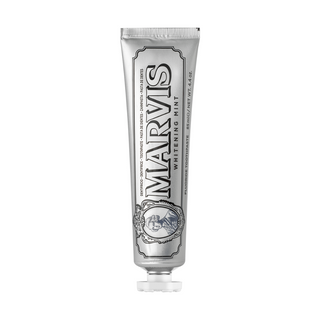
MARVISWhitening Mint Toothpaste 85ml
Everyday stain management
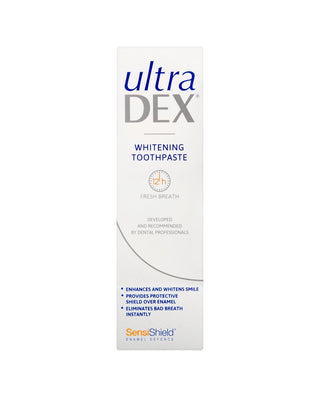
ULTRADEXWhitening Toothpaste 75ml
Everyday stain management
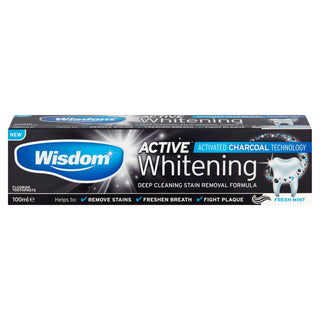
WISDOMActive Whitening Fluoride Toothpaste Fresh Mint 100ml
For sensitive teeth
Sensitivity changes the brief. Rather than reaching immediately for the strongest whitening claim, select a toothpaste formulated for sensitivity that also offers stain removal or gentle whitening. Ingredients such as potassium nitrate, stannous fluoride or arginine may help reduce the sensation triggered by cold drinks, sweet foods or brushing.
It may take several weeks of regular use before sensitivity relief is apparent. During that period, avoid rotating between multiple whitening toothpastes and treatments. A stable routine makes it easier to recognise what is helping and what is irritating your teeth. If discomfort persists, a dentist can check for exposed dentine, decay, a cracked tooth or gum recession. Our sensitive toothpaste range is the better starting point if cold drinks or brushing already cause discomfort.
For a noticeably brighter occasion-ready finish
Optical whitening toothpastes are worth considering when you would like an immediate, though temporary, brightening effect. Their blue pigments can make teeth appear less yellow after brushing, which may be appealing before an event, presentation or photograph.
The effect is cosmetic and short-lived, so it should not be confused with stain removal or a change in tooth shade. These formulas are often best viewed as a finishing touch alongside thorough daily hygiene, rather than a replacement for it.

Optical brightening
SELAHATINBlue Forever Whitening Toothpaste 65ml
After professional whitening
Following professional whitening, a gentle, low-abrasion toothpaste is often the more prudent choice, especially if your teeth feel temporarily sensitive. Avoid assuming that a highly polishing formula will prolong your treatment. It may be more useful to limit stain-causing habits where practical, rinse with water after coffee or wine, and maintain regular hygienist appointments.
Your dentist can advise on the most appropriate aftercare, particularly if you have restorations or have used a higher-strength whitening treatment. Where enamel comfort is the priority, an enamel care formula may suit better than a polishing one. This is one area where personalised guidance is more valuable than a universal recommendation.
Ingredients and claims worth understanding
Packaging language can make whitening seem more complicated than it is. A few details are genuinely useful when comparing formulations.
Hydrated silica and similar polishing agents help remove surface stains. Their effectiveness depends not only on the ingredient but on the overall formulation and how the product is used. Activated charcoal is another familiar ingredient, but its dramatic black appearance does not guarantee superior whitening. Some charcoal formulas can be relatively abrasive, and many do not contain fluoride, so inspect the full formula rather than choosing on appearance alone. If charcoal appeals, choose one that has not simply omitted the fluoride along the way.

If charcoal appeals
CURAPROXBlack is White Charcoal Whitening Toothpaste 90ml
Peroxide is the ingredient most closely associated with true bleaching, yet toothpaste is rinsed away quickly. Even when present, contact time is limited. Whitening strips, trays and professionally supervised treatments work differently because the whitening ingredient remains in contact with teeth for longer. A toothpaste may still be useful for maintaining a polished appearance, but it is wise to keep expectations proportionate.
The Relative Dentine Abrasivity, or RDA, value can offer a technical indication of how abrasive a toothpaste is, although it is not displayed on every pack and does not tell the whole story. If you have sensitivity, erosion, recession or concerns about enamel wear, ask your dental professional for a suitable recommendation rather than pursuing the highest possible whitening claim.
How to use whitening toothpaste well
Technique makes a meaningful difference. Brush twice daily for two minutes with a soft brush and pea-sized amount of toothpaste. Angle the bristles gently towards the gumline and clean each surface methodically. Scrubbing harder does not remove stains more effectively; it can wear enamel and irritate gums.
Spit out excess toothpaste after brushing and avoid rinsing immediately with water, so fluoride has more opportunity to remain on the teeth. If you use a whitening mouthwash, consider whether it is needed in addition to your toothpaste. More products do not always produce better results, particularly if your mouth is prone to dryness or sensitivity.
For stubborn staining, a hygienist appointment may deliver a more satisfying result than repeatedly changing toothpaste. Surface deposits can be removed professionally, while your chosen toothpaste then helps maintain the cleaner appearance between visits.
When toothpaste is not the answer
Not all discolouration is surface stain. Teeth can appear darker because enamel has naturally thinned, exposing more of the yellow-toned dentine beneath. Certain medicines, childhood illness, trauma and ageing can also affect colour from within the tooth. In these cases, a whitening toothpaste may improve surface brightness but will not fully address the cause.
Bleeding gums, persistent bad breath, pain, loose teeth or a new dark patch all warrant dental attention. Whitening should always be secondary to a healthy mouth. Equally, if you are pregnant, breastfeeding, undergoing dental treatment or considering stronger at-home whitening products, seek tailored advice first.
At John Bell & Croyden, a well-chosen toothpaste belongs to a wider approach to oral care: fluoride protection, gentle brushing with a well-chosen electric toothbrush, considered stain management and regular professional checks - our guide to premium dental care sets out the full routine. Choose a formula you enjoy using consistently, and let healthy enamel - rather than an unrealistic shade chart - set the standard for a smile that looks genuinely well cared for.