
Serum vs Moisturiser Order, Explained
If your skincare performs beautifully one day and pills the next, the issue may not be the formula at all. More often, it comes down to serum vs moisturiser order — and whether each product has been given the right place in your routine.
Layering skincare correctly is less about rigid rules and more about helping each formula do its job. If you want a broader view of how each step fits together, see our guide to how to layer active skincare properly.
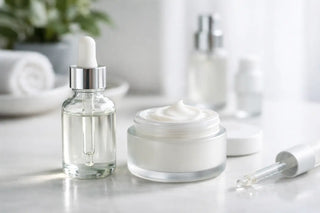
Face serums are typically designed to deliver targeted ingredients such as hyaluronic acid, vitamin C, niacinamide or retinoids. Moisturisers, by contrast, support the skin barrier, reduce water loss and provide lasting comfort.
In most routines, that means serum first, moisturiser second.
The more useful question is why.
Serum vs moisturiser order — which goes first?
Apply serum before moisturiser.
Serums are usually lighter in texture and formulated with a higher concentration of functional ingredients. They are designed to sit close to the skin so those ingredients can be absorbed efficiently. Moisturisers are typically richer and more occlusive, forming a layer that helps seal in hydration and reduce transepidermal water loss.
Reverse the order, and you risk slightly reducing how effectively the serum reaches the skin. Not dramatically in every case, but enough to affect both performance and how refined the routine feels.
Think of it as a simple hierarchy: treat first, then seal.
Why order matters more than most realise
Skincare layering is often summarised as “thinnest to thickest”. It is a useful guide — though not an absolute rule.
Texture offers a strong clue because lighter formulas are generally intended to be applied earlier, before heavier creams or balms. This matters for two reasons:
- Efficacy: Active ingredients targeting concerns like dehydration, pigmentation or blemishes need direct contact with the skin.
- Performance: Incorrect layering can lead to pilling, slipping or an overly heavy finish.
A sophisticated routine does not need complexity — but it does require precision.
When serum vs moisturiser order can vary
There are exceptions worth knowing.
Buffering actives: Potent ingredients such as retinoids or exfoliating acids may be applied after or between layers of moisturiser if skin is reactive.
Hybrid formulas: Some serums are richer, while some moisturisers are extremely lightweight. In these cases, function matters more than the label.
Facial oils: Typically applied after serum, and either before or after moisturiser depending on texture.
How to layer properly
- Cleanse thoroughly
- Apply toner or essence (if using)
- Apply serum to dry or slightly damp skin
- Allow 30–60 seconds to settle
- Apply moisturiser
- Finish with SPF in the morning
Use a modest amount at each step. More product rarely improves results.
Adjusting for your skin type
Dry or dehydrated:
A hydrating serum followed by a nourishing moisturiser is often the most reliable pairing. You can explore options within our hydrating skincare range.
Oily or blemish-prone:
A lightweight serum with niacinamide or salicylic acid followed by a gel moisturiser helps maintain balance. See options within our blemish-prone skincare.
Sensitive:
A gentle serum and a barrier-focused moisturiser may be all that is required. Our sensitive skin edit reflects this approach.
Mature skin:
Antioxidant serums in the morning and reparative formulas in the evening, followed by a moisturiser, can support resilience and radiance. Explore our anti-ageing skincare.
Common mistakes
- Using too many serums at once
- Applying products too quickly
- Over-applying
- Misjudging products due to incorrect layering
Often, performance issues are routine issues — not formulation failures.
Morning vs evening — does it change?
The order stays the same: serum before moisturiser.
What changes is the type of serum you choose:
- Morning → antioxidants
- Evening → repair, hydration or resurfacing
SPF is always the final step during the day.
A more practical way to think about it
Instead of memorising rules, judge products by purpose, texture and tolerance.
If a product is designed to treat or deliver actives, it belongs closer to the skin. If it is designed to protect and seal, it belongs afterwards.
Good skincare does not need to be complicated — just well ordered.
If you are refining your routine, explore targeted face serums alongside moisturisers, organised by skin type and concern.
For a broader understanding of how ingredients fit into a routine, see our guide to active skincare ingredients.